


Middle East

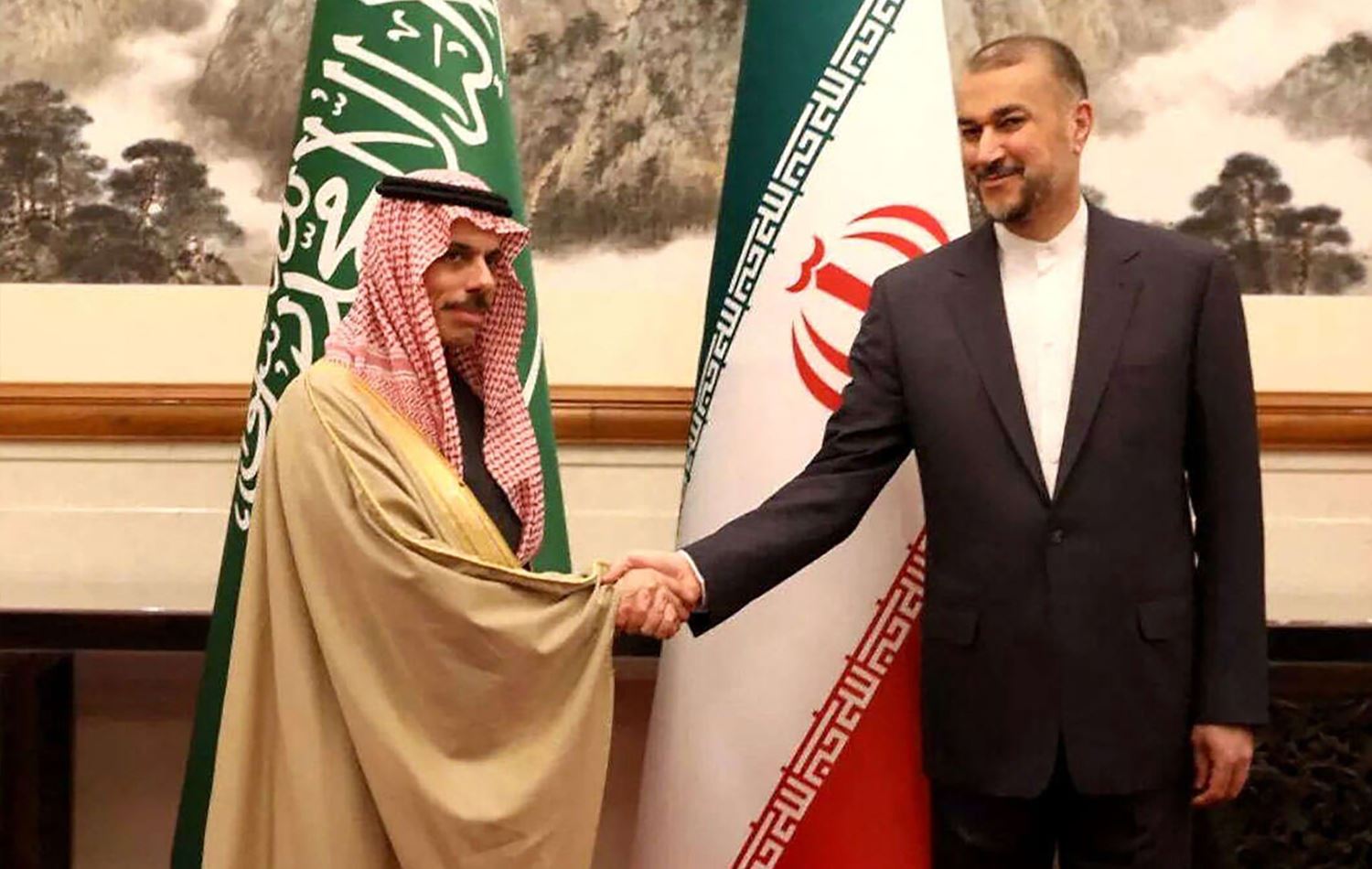
Saudi Foreign Minister Prince Faisal bin Farhan Al Saud (left) and his Iranian counterpart Hossein Amir-Abdollahian (right) in Beijing, China on April 6, 2023. Photo: AFP
ERBIL, Kurdistan Region - Iran on Tuesday announced the resumption of trade ties between Tehran and Riyadh, in the latest step towards implementing the reconciliation deal signed between the two countries last month.
Iran and Saudi Arabia announced in March that they had signed a Chinese-brokered deal to reconcile and restore diplomatic relations around seven years after ties were cut when Iranian protestors attacked the Saudi diplomatic mission in Tehran in outrage to the Sunni kingdom’s execution of Shiite cleric Nimr al-Nimr.
“Considering the agreement between Iran and Saudi Arabia to resume relations between the two countries, the entry of Iranian goods into Saudi is on the agenda,” Iranian trade minister Reza Fatemi Amin told state media.
The minister added that the exportation process has already begun.
Saudi Foreign Minister Prince Faisal bin Farhan Al Saud and his Iranian counterpart Hossein Amir-Abdollahian met in Beijing earlier this month, discussing the executive steps towards the reopening of the embassies and consulates.
Riyadh and Tehran have also hosted delegations from each other over the last month.
Under the agreement, both countries are set to restore their diplomatic missions by reopening embassies within two months.
The Sunni kingdom of Saudi Arabia and Shiite-majority Iran had rocky relations since 1979, when Shiite revolutionaries came to power in Iran and pledged to export their revolution to the world, including Gulf countries.
Both nations have also supported opposing forces in several conflict zones across the region, most notably in Yemen, where Iran backs the Houthi rebels while Saudi Arabia leads a military coalition supporting the government.


Comments
Rudaw moderates all comments submitted on our website. We welcome comments which are relevant to the article and encourage further discussion about the issues that matter to you. We also welcome constructive criticism about Rudaw.
To be approved for publication, however, your comments must meet our community guidelines.
We will not tolerate the following: profanity, threats, personal attacks, vulgarity, abuse (such as sexism, racism, homophobia or xenophobia), or commercial or personal promotion.
Comments that do not meet our guidelines will be rejected. Comments are not edited – they are either approved or rejected.
Post a comment