In late February 2026, the Middle East experienced a major escalation when the United States and Israel launched a coordinated military campaign against Iran, marking the largest American military operation in the region in two decades. What began as diplomatic negotiations over Iran’s nuclear program, ballistic missiles, and regional proxy networks quickly evolved into a broader military confrontation involving airstrikes, regional retaliation, and reports of proxy ground operations.
The campaign appears to have unfolded in three stages. First came a period of diplomacy combined with strategic preparation. Second was a sustained air campaign targeting Iranian leadership and military infrastructure. A third stage has now emerged involving reports that Kurdish opposition groups may be launching or preparing ground operations inside Iran. Together, these developments illustrate how modern conflicts increasingly combine diplomacy, military force, and proxy actors.
Stage one: Diplomacy and strategic preparation
Before the outbreak of hostilities, the Trump administration pursued a dual-track strategy: negotiations with Tehran alongside quiet military planning. While US diplomats engaged Iranian representatives in talks in Geneva and Oman, American and Israeli military planners were reportedly preparing what would later be described as Operation Epic Fury. According to media reports, the decision to launch strikes had already been made weeks before the conflict began.
The negotiations focused on three main demands from Washington and Jerusalem.
The first concerned Iran’s nuclear program. The United States insisted that Iran dismantle its nuclear infrastructure entirely. This position went far beyond the 2015 Joint Comprehensive Plan of Action (JCPOA), which had limited and monitored Iran’s nuclear activities rather than eliminating them outright.
Second was Iran’s ballistic missile program. US officials argued that Iran’s missile capabilities posed a serious threat to Israel and to American allies across the Gulf. As a result, Washington demanded the destruction of Iran’s missile stockpiles and its ability to produce new ones.
The third demand focused on Iran’s network of regional proxy forces, including Hezbollah in Lebanon, the Houthis in Yemen, and militia groups in Iraq. The United States sought to end Iran’s financial and military support for these organizations.
Israeli Prime Minister Benjamin Netanyahu played a central role in shaping this strategy. Following Donald Trump’s return to office in 2025, Netanyahu reportedly held multiple meetings with the president and consistently emphasized the threat posed by Iran’s nuclear and missile programs. According to reports, he also urged Washington to shift its strategic focus away from Israel’s war in Gaza and toward confronting Iran more directly.
Their final pre-war meeting occurred on February 11, 2026. The following day, the aircraft carrier USS Gerald Ford departed for the Mediterranean, a move widely interpreted as a signal that military action was approaching.
Stage two: The air campaign
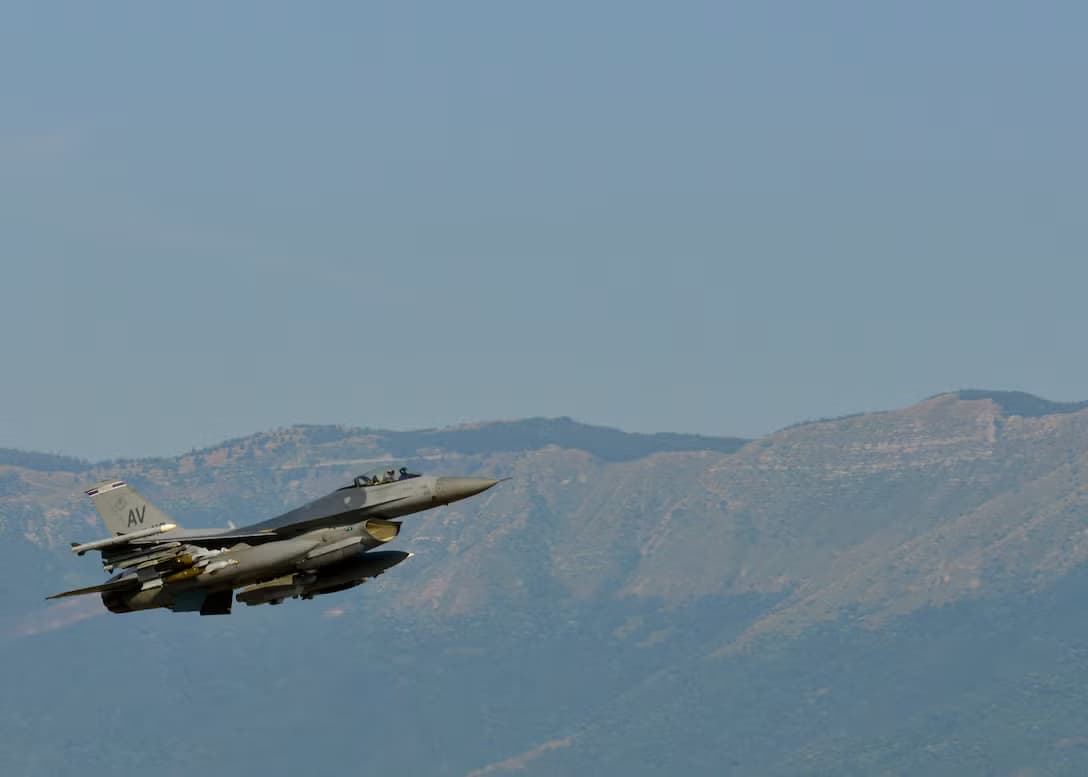
The second stage began on February 28, when US and Israeli forces launched large-scale airstrikes on Iranian targets. The opening attacks reportedly killed Iran’s Supreme Leader, Ayatollah Ali Khamenei, dramatically raising the stakes of the conflict.
In the immediate aftermath, President Trump appeared to frame the campaign in terms that hinted at regime change. He called on the Iranian people to “take back your country,” suggesting that military pressure might create conditions for an internal uprising against the government.
Within days, however, the administration presented a more limited set of official objectives. During a White House appearance on March 2, Trump outlined four goals: destroying Iran’s ballistic missile infrastructure, crippling the Iranian navy, preventing Iran from obtaining nuclear weapons, and halting Tehran’s support for proxy militias across the region.
Despite this clarification, messaging from Washington remained inconsistent. Defense Secretary Pete Hegseth stated that the operation was “not a regime change war,” but added that “the regime sure did change.” Such statements reflected the administration’s ambiguous position: pursuing outcomes that might weaken or destabilize the Iranian leadership while avoiding an explicit commitment to overthrowing it.
The timeline of the war also remained uncertain. Trump initially suggested the campaign might last four or five weeks but later indicated that operations could continue “as long as it takes.” Analysts and lawmakers questioned whether the United States had a clear endgame.
By the fourth day of fighting, the conflict had already begun to expand. Israel sent ground troops into Lebanon following attacks by Hezbollah, while Iranian missile strikes targeted Israeli territory and US facilities in the region. Casualties mounted quickly on all sides.
Stage three: Kurdish proxies and the ground dimension
A potential third stage emerged as reports surfaced that Kurdish opposition groups might be launching ground operations against Iran. Rather than deploying large numbers of American or Israeli troops, the strategy appeared to rely on proxy forces based in the Kurdistan Region of Iraq.
Shortly before the war began, several Iranian Kurdish opposition groups formed a coalition known as the Coalition of Political Forces of Iranian Kurdistan. The alliance includes organizations such as the Kurdistan Free Life Party (PJAK), the Kurdistan Freedom Party (PAK), Komala, and the Democratic Party of Iranian Kurdistan.
Some reports suggested that Kurdish fighters began moving into Iranian territory in early March, particularly near the border city of Mariwan. According to these accounts, Iranian forces withdrew from certain positions along the frontier, allowing Kurdish fighters to take control of nearby high ground.
However, the situation remains contested. Other journalists and officials reported conflicting information about whether a full ground offensive had actually begun. Iranian media denied that Kurdish forces had crossed the border, while some Kurdish figures also disputed the claims.
At the same time, reports indicated that President Trump had spoken directly with Kurdish political leaders, including Masoud Barzani and Bafel Talabani, who represent the two dominant factions in Iraqi Kurdistan. Some sources suggested that Netanyahu helped facilitate these contacts.
Additional reporting suggested that US intelligence agencies had explored the possibility of supporting Kurdish forces in order to spark an uprising inside Iran. While American officials publicly denied arming any specific groups, analysts noted that proxy warfare has often been used to pressure adversaries without deploying large numbers of troops.
Regional reactions and risks
The possible involvement of Kurdish forces has introduced new complications. Iran has reportedly pressured Baghdad to prevent Kurdish fighters from crossing the border and has launched strikes on suspected Kurdish positions in northern Iraq.
Turkey is also closely watching developments. Ankara has long viewed Kurdish militant groups as security threats and has repeatedly carried out military operations against them in Iraq and Syria. Any expansion of Kurdish military activity could therefore strain relations within the broader regional alliance system.
Domestic pressures in the United States may also shape the conflict’s trajectory. Early polling suggested that only about one-quarter of Americans supported the strikes on Iran. Rising fuel prices and regional instability could further weaken public support if the war continues.
Conclusion
The US-Israeli war against Iran has unfolded through three interconnected stages: diplomacy and strategic preparation, a large-scale air campaign, and the possible emergence of proxy ground operations involving Kurdish opposition forces.
This strategy reflects a broader pattern in contemporary warfare, where states combine diplomacy, limited military force, and proxy actors in an attempt to achieve strategic objectives while minimizing direct costs.
Yet the risks remain considerable. Proxy involvement could complicate relations with regional powers such as Turkey, while continued escalation could draw additional actors into the conflict. Whether the campaign will achieve its goals-or instead trigger a wider regional confrontation-remains uncertain.
Dr Rebwar Fattah is a London based MENA expert
The views expressed in this article are those of the authors and do not necessarily reflect the position of Rudaw.