


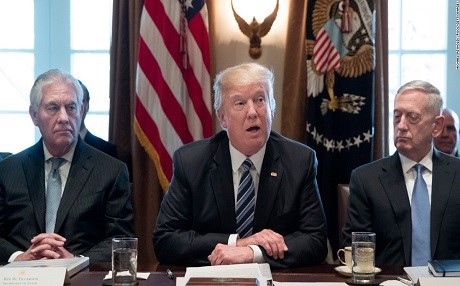
On Friday, Trump is expected to announce that he continues to regard remaining in the Iran nuclear deal not to be in the interests of the United States.
He first announced this in October last year and under the US Iran Nuclear Agreement Act (INARA) of 2015 he is supposed to inform Congress every 90 days.
After he has made his decision -- or leaves his previous decision in place -- Congress may decide to re-impose some sanctions and modify INARA to end the 90-day cycle.
Sanctions
Does this mean new nuclear sanctions are imminent? Not necessarily.
The sanctions imposed on Iran to punish it for pursuing nuclear weapons were never lifted by the US Congress.
Instead, former president Barack Obama and so far Trump have temporarily cancelled them with a waiver in order to meet the US side of the bargain.
Starting this weekend and over the next week, the waivers on the most important packages of sanctions targeting Iran's oil and financial industries come up for renewal.
If Trump does not act to renew them, the sanctions "snap back" and Iranian businesses and foreign banks and traders who deal with them will once again be sanctioned.
Trump's plans
Trump has made it clear that he is no fan of the Iran deal, and he has complained bitterly in the past when obliged to renew waivers on the sanctions packages.
But his most senior advisors, including Defense Secretary Jim Mattis and Secretary of State Rex Tillerson, are said to be urging him to once again renew the waivers.
Washington's European allies, including deal signatories Britain, France and Germany are also desperately lobbying Trump to keep faith with the agreement.
On Wednesday, senior officials told AFP they "expect" Trump will grudgingly renew the waivers, but no-one in Washington is certain what the mercurial president will say.
Trump is also expected, however, to impose new sanctions on Iran targeting human right abuses and support for foreign extremist groups rather than nuclear back-sliding.
Future of deal?
Would new sanctions or a return to old sanctions kill the deal and leave Iran free to resume a full, unmonitored nuclear drive?
Not necessarily. European powers, Russia and China have economic investments in Iran and have said they would remain in the deal if Iran does.
Iran may therefore continue to respect its side of the bargain and limit its nuclear activity to sites and practices that UN watchdog the IAEA deems consistent with the accord.
European banks and businesses would not, however, relish a return of US secondary sanctions excluding them from American markets if the deal with Iran.
This will allow Tehran to further drive a wedge between Washington and its traditional allies.
He first announced this in October last year and under the US Iran Nuclear Agreement Act (INARA) of 2015 he is supposed to inform Congress every 90 days.
After he has made his decision -- or leaves his previous decision in place -- Congress may decide to re-impose some sanctions and modify INARA to end the 90-day cycle.
Sanctions
Does this mean new nuclear sanctions are imminent? Not necessarily.
The sanctions imposed on Iran to punish it for pursuing nuclear weapons were never lifted by the US Congress.
Instead, former president Barack Obama and so far Trump have temporarily cancelled them with a waiver in order to meet the US side of the bargain.
Starting this weekend and over the next week, the waivers on the most important packages of sanctions targeting Iran's oil and financial industries come up for renewal.
If Trump does not act to renew them, the sanctions "snap back" and Iranian businesses and foreign banks and traders who deal with them will once again be sanctioned.
Trump's plans
Trump has made it clear that he is no fan of the Iran deal, and he has complained bitterly in the past when obliged to renew waivers on the sanctions packages.
But his most senior advisors, including Defense Secretary Jim Mattis and Secretary of State Rex Tillerson, are said to be urging him to once again renew the waivers.
Washington's European allies, including deal signatories Britain, France and Germany are also desperately lobbying Trump to keep faith with the agreement.
On Wednesday, senior officials told AFP they "expect" Trump will grudgingly renew the waivers, but no-one in Washington is certain what the mercurial president will say.
Trump is also expected, however, to impose new sanctions on Iran targeting human right abuses and support for foreign extremist groups rather than nuclear back-sliding.
Future of deal?
Would new sanctions or a return to old sanctions kill the deal and leave Iran free to resume a full, unmonitored nuclear drive?
Not necessarily. European powers, Russia and China have economic investments in Iran and have said they would remain in the deal if Iran does.
Iran may therefore continue to respect its side of the bargain and limit its nuclear activity to sites and practices that UN watchdog the IAEA deems consistent with the accord.
European banks and businesses would not, however, relish a return of US secondary sanctions excluding them from American markets if the deal with Iran.
This will allow Tehran to further drive a wedge between Washington and its traditional allies.
Comments
Rudaw moderates all comments submitted on our website. We welcome comments which are relevant to the article and encourage further discussion about the issues that matter to you. We also welcome constructive criticism about Rudaw.
To be approved for publication, however, your comments must meet our community guidelines.
We will not tolerate the following: profanity, threats, personal attacks, vulgarity, abuse (such as sexism, racism, homophobia or xenophobia), or commercial or personal promotion.
Comments that do not meet our guidelines will be rejected. Comments are not edited – they are either approved or rejected.
Post a comment