


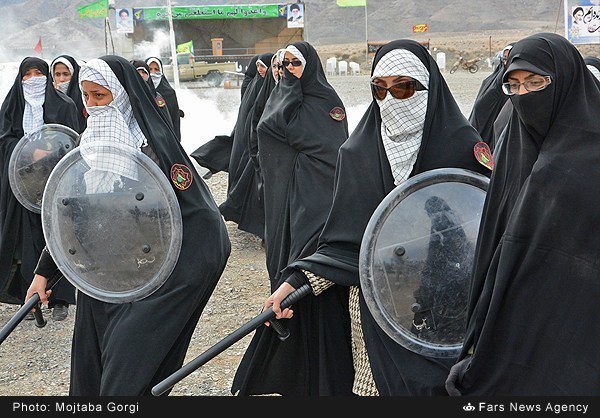
ERBIL, Kurdistan Region— The Iranian militia group known as the Basij has stepped up recruitment of women in Kurdish provinces west of the country, several sources have told Rudaw.
The new round of enlistments follow Tehran’s earlier move to recruit local people in remote Kurdish areas as “border guards” amid an escalation of tensions between the Islamic Republic and the armed Kurdish groups opposed to Tehran.
With nearly 11 million members, the Basij is believed to be a formidable disciplinary organisation enforcing the principles of the state ideology, known as the Islamic Revolution, in the country often through social work and grass-root propagation for the Islamic Republic.
The volunteer paramilitary group has mainly attracted impoverished sections of the Iranian societies by offering them regular financial compositions and social security benefits including medical care.
According to official estimates around 1 million people, women and men, are already members of the Basij in the four mainly Kurdish provinces of Ilam, Kermanshah, Sanandaj and Western Azerbaijan, although the Kurdish opposition groups have consistently rejected that figure.
Tehran has accused its regional rival the Saudi kingdom of funding the Iranian Kurdish groups, a claim the Kurds have rejected.
Last week, the Iranian Kurdistan Democratic Party (KDPI) warned the Kurdish village guards of further “collaboration” with the Islamic Republic and said the recruitments would harm the “Kurdish cause.”
The KDPI, which is based in the Kurdistan Region of Iraq, has said it will bring its campaign for self-rule closer to people in Kurdish areas of Iran following a series of deadly clashes with Iranian security forces last year.
Rights groups have in the past accused the Islamic Republic of influencing the parliamentary and presidential elections in the country through the Basij which is generally under the command of the supreme leader, taking a position in favor of the ruling clergy, known as the hardliners.
Comments
Rudaw moderates all comments submitted on our website. We welcome comments which are relevant to the article and encourage further discussion about the issues that matter to you. We also welcome constructive criticism about Rudaw.
To be approved for publication, however, your comments must meet our community guidelines.
We will not tolerate the following: profanity, threats, personal attacks, vulgarity, abuse (such as sexism, racism, homophobia or xenophobia), or commercial or personal promotion.
Comments that do not meet our guidelines will be rejected. Comments are not edited – they are either approved or rejected.
Post a comment