


By Bakhtiar Qadir
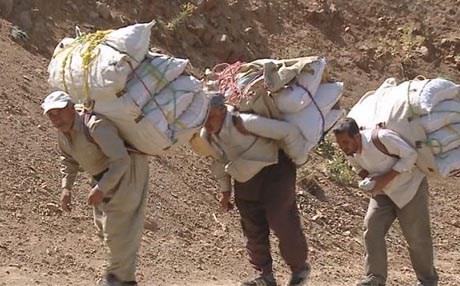
TAMARCHIAN, Kurdistan Region – Four thousand local Kurdish laborers in Iran were granted permits allowing them to bring in goods like chewing gum and walnuts from Iraqi Kurdistan, as Tehran tries to stamp out cross-border smuggling, much of it on foot.
The permits were granted to workers in the border city of Piranshahr, allowing them to carry goods legally without the threat of being charged as smugglers.
"Four thousand laborers like me have received permits. We show the cards when we bring in the goods,” said Tahir Tawana.
Iran’s Kurdish regions bordering Iraq are among the country’s poorest. Many on the border eke out livelihoods and feed their families by carrying goods for small businessmen, on their backs or on donkeys and horses.
The size of that trade is not known, but legal cross-border trade between Iran and Kurdistan reached $4 billion in 2013.
Iran has announced it plans to expand trade but crush the cross- border smuggling of goods by locals. Granting the permits legalizes the entry of many goods, but some of the trade is in prohibited items like alcohol, which is banned in Iran.
“We carry goods which are prohibited from entering Iran through the official border gates and that’s why we take the back door in,” said Hasan Shimshali, a businessman in the Iraqi Kurdish region who hires local laborers to carry his loads to Iran, often on foot.
Shimshali said most goods were legal products like chewing gum and walnuts, but still were not permitted under Iranian customs laws.
The two official border gates of Haji Omran and Parwiz Xanare between Iran and the Kurdistan region are used for larger trade between the countries, with goods crossing on trucks and trailers.
In 2012, restrictions on visitors and vehicles between the two countries were lifted, allowing travelers free movement across the border without visa permits.
Comments
Rudaw moderates all comments submitted on our website. We welcome comments which are relevant to the article and encourage further discussion about the issues that matter to you. We also welcome constructive criticism about Rudaw.
To be approved for publication, however, your comments must meet our community guidelines.
We will not tolerate the following: profanity, threats, personal attacks, vulgarity, abuse (such as sexism, racism, homophobia or xenophobia), or commercial or personal promotion.
Comments that do not meet our guidelines will be rejected. Comments are not edited – they are either approved or rejected.
Post a comment