کوردیKURDÎENGLISHTÜRKÇEعربي
Rudaw Logo
Live
Kurdistan
Middle East
OpinionsAnalysisWorldECONOMYInterviewCultureMultimedia
Live
Rudaw

Download the Rudaw app

App StoreGoogle Play
Privacy Policy•Terms of Use

© 2026 All rights reserved.

Rudaw

Download the Rudaw app

App StoreGoogle Play
Privacy PolicyTerms of Use

© 2026 All rights reserved.

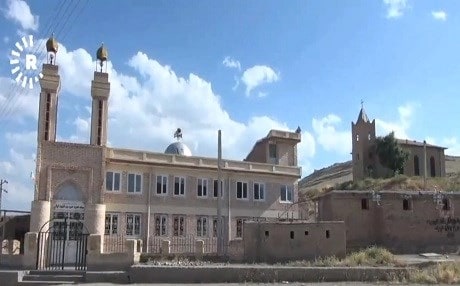
A mosque and church sit side by side in Gawlan village in West Azerbaijan province, Iran. Photo: Rudaw TV

A mosque and church sit side by side in Gawlan village in West Azerbaijan province, Iran. Photo: Rudaw TV

middleeast

A village in Urmia where Kurds, Turks and Assyrians coexist

RUDAW English

RUDAW English

23-06-2018
Listen
0:00
0:00
Text Size
RUDAW English
RUDAW English23-06-2018

Related Articles

Kurdish opposition parties announce initiative to resolve Erbil-Baghdad issues
Iraq26-11-2026

Kurdish opposition parties announce initiative to resolve Erbil-Baghdad issues

Iraqi security official rules out confrontation with Peshmerga
Iraq26-11-2026

Iraqi security official rules out confrontation with Peshmerga

Iran strikes PJAK positions in Kurdistan Region amid escalating border clashes
Iran26-11-2026

Iran strikes PJAK positions in Kurdistan Region amid escalating border clashes

ERBIL, Kurdistan Region — Gawlan village has become a symbol of coexistence between Kurds, Turks, and Assyrians.


In the village, Sunni Kurds, Shitte Turks, and Christian Assyrians live together. The village is located is 55 km north of Urmia in West Azerbaijan province.


"This is a historical village in which people of different religions including Sunni, Shiite, and Christians live together peacefully," Kawais Jafari, the chieftain of Gawlan village, told Rudaw.

Urmia city is the capital of West Azerbaijan and its residents are mainly a combination of Kurds and Turks with a small minority of Assyrian Christians. Kurds often complain about Turks taking governmental posts in the province.


About 300 households live in this village and the residents are mainly doing farming and raising sheep.  

Shiite and Sunni villagers have one mosque and they pray at the same place.

"We live together happily and friendly. When a person at the village has a problem, we all try to help," Saleh Husseini, member of the village's council, told Rudaw.

The village has three churches. Mariukhna Church the oldest, while two others are new.

"We all work together at this village. Our heart is with each other, so we like are brothers with Muslims and Kurds," Benyamin Nikrad, a Christian resident of the village, told Rudaw.

The level of coexistence means Assyrians there even speak Kurdish.

Iran has historically been a diverse place despite strict religious restrictions imposed by the regime after the 1979 revolution, and this is particularly true in northwestern parts of the country like the provinces of Kermanshah, West Azerbaijan and Kurdistan.
Related Articles

Kurdish opposition parties announce initiative to resolve Erbil-Baghdad issues
Iraq26-11-2026

Kurdish opposition parties announce initiative to resolve Erbil-Baghdad issues

Iraqi security official rules out confrontation with Peshmerga
Iraq26-11-2026

Iraqi security official rules out confrontation with Peshmerga

Iran strikes PJAK positions in Kurdistan Region amid escalating border clashes
Iran26-11-2026

Iran strikes PJAK positions in Kurdistan Region amid escalating border clashes

Questions