


Iraq

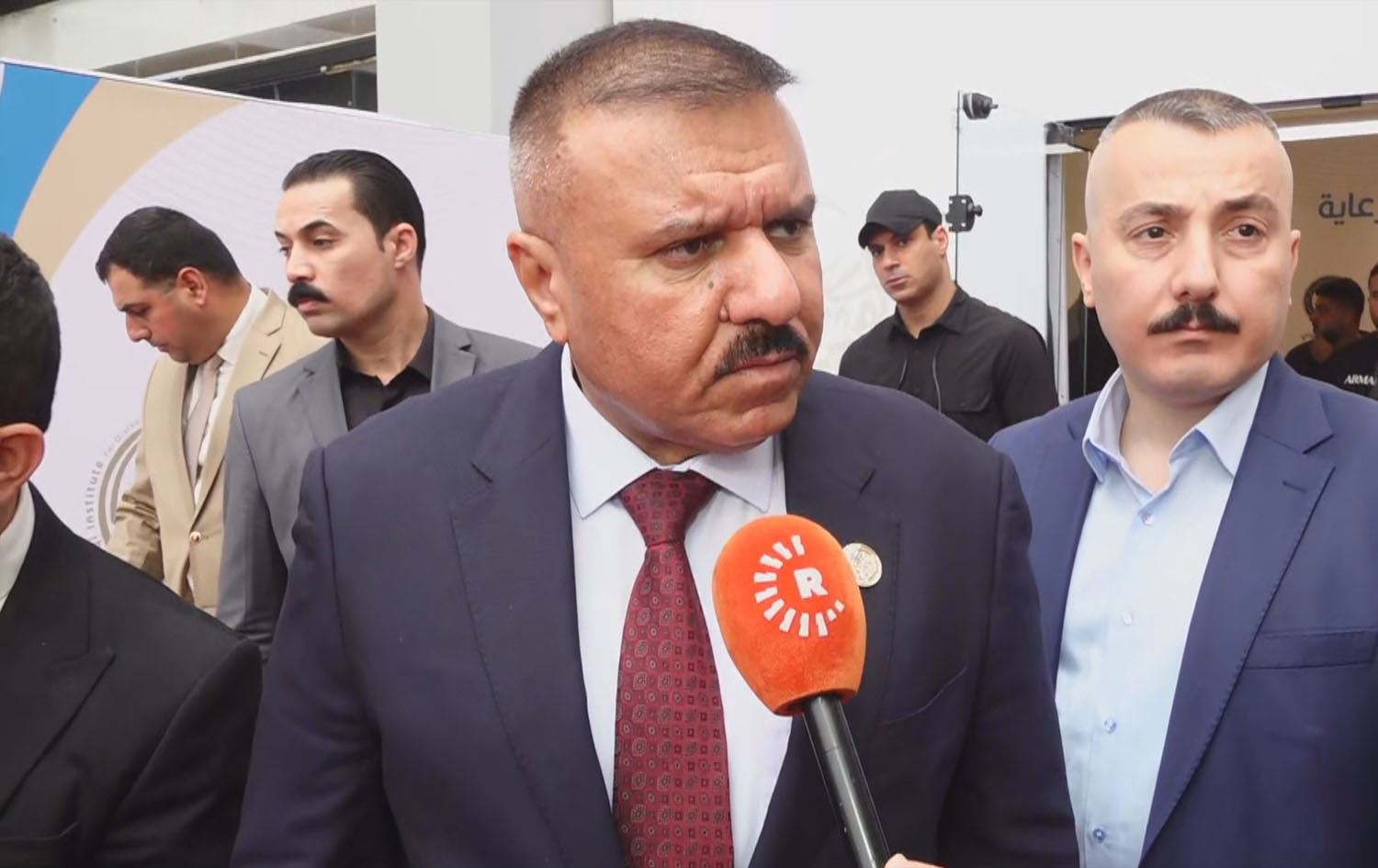
Iraqi Interior Minister Abdul-Amir al-Shammari speaks to Rudaw on February 24, 2024. Photo: Screengrab/Rudaw
ERBIL, Kurdistan Region - More than 300 individuals have been arrested in the southeastern Maysan province over the span of two days, Iraq’s interior ministry said Monday, adding that the push is part of a major security shake-up in the southeastern province.
In a late Monday statement, the ministry cited Interior Minister Abdul-Amir al-Shammari as stating that “intensive security campaigns over the past two days resulted in the arrest of more than 300 suspects and wanted individuals.”
The announcement followed an “expanded meeting” chaired by Shammari and attended by “all military, security and intelligence commanders” in Maysan to “review the security situation” in the province and “adopt decisive measures to enhance stability.”
The ministry added that Shammari had been on the ground in Maysan for three days to personally “monitor the efforts of security forces” on the ground. He further “directed a comprehensive change in the security plan” in the province to “address weaknesses and enhance strengths.”
Maysan has recently witnessed a surge of criminal activity, local officials told Rudaw.
Hussein al-Mariani, a member of Maysan’s security council, said on Monday that the security situation is “getting out of hand,” primarily due to the growing influence of drug gangs, frequent harassment of wealthy individuals and the spread of vehicles with tinted windows.
According to Mariani, the violence has reached alarming levels with two to three murders reported daily.
This comes as tribal conflicts remain the top security concern for the Iraqi authorities in southern Iraq.
Armed clashes among tribes remain a frequent occurrence in Maysan, Basra and Dhi Qar provinces, with some requiring intervention from the Iraqi military. These disputes typically involve light and medium weapons, and in some cases, mortar shells.
The violence is often rooted in deeper issues such as disputes over agricultural land, water resources, and control of border crossings. These conflicts are also compounded by the widespread availability of arms, with tribes in the region possessing millions of weapons, many obtained from military caches of the regime of toppled Iraqi dictator Saddam Hussein and paramilitary groups.
In recent years, the dynamics of tribal violence have been more complex, with political parties sometimes covering for their tribal affiliates, exacerbating the situation. The intricate web of tribal, political, and paramilitary networks makes it difficult for the government to enforce the rule of law.
Between 2019 and 2021, Iraq’s southernmost Basra province alone witnessed 280 armed disputes, resulting in 35 deaths and 74 injuries.


Comments
Rudaw moderates all comments submitted on our website. We welcome comments which are relevant to the article and encourage further discussion about the issues that matter to you. We also welcome constructive criticism about Rudaw.
To be approved for publication, however, your comments must meet our community guidelines.
We will not tolerate the following: profanity, threats, personal attacks, vulgarity, abuse (such as sexism, racism, homophobia or xenophobia), or commercial or personal promotion.
Comments that do not meet our guidelines will be rejected. Comments are not edited – they are either approved or rejected.
Post a comment