
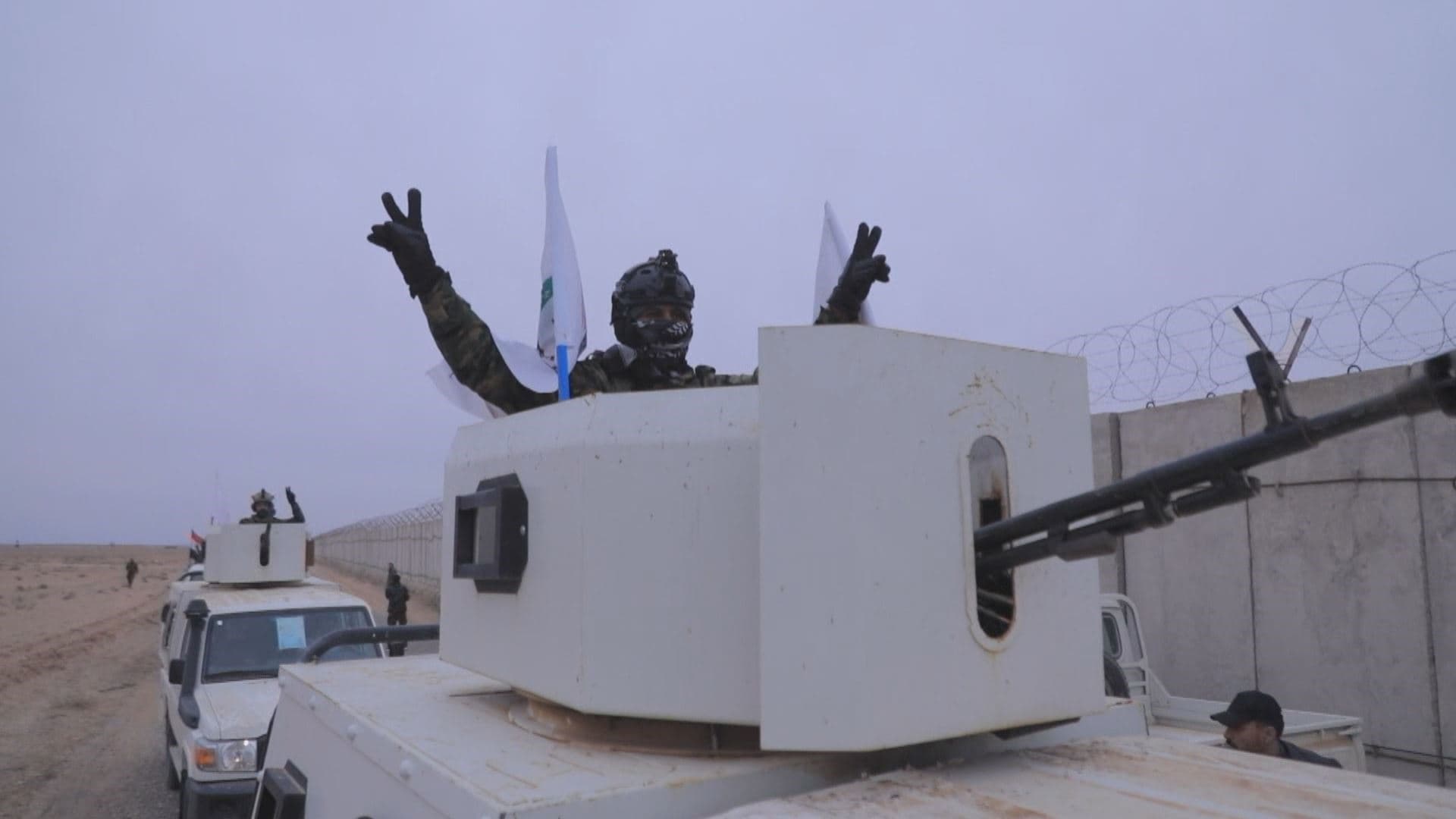

ERBIL, Kurdistan Region - Preparations have intensified among military forces and residents in the Yazidi heartland, Shingal (Sinjar) district, after the Syrian Arab Army reached the border area, raising fears of renewed instability nearly a decade after the Islamic State (ISIS) genocide against the religious minority.
The development has prompted heightened readiness among local armed groups, including the all-Yazidi unit of the Popular Mobilization Forces (PMF, or Hashd al-Shaabi), amid concerns over potential spillover from Syria.
“The people of the area are all ready to cooperate with the security forces,” Khal Ali, commander of the Lalish Brigade of the PMF, told Rudaw. “The Yazidis know very well what happened to them 10 years ago, so today they are fully prepared, with all their strength and capabilities, to defend their area.”
In its assault on Shingal in 2014, ISIS militants abducted 6,417 Yazidi women and children, many of whom were subjected to sexual slavery and forced labor. A large number of them remain unaccounted for.
Ali did not hide his unease over the changing dynamics along the border. “They have become a state. Even though we did not want them to become our neighbors, they have become our neighbors against our will,” he said, referring to Syria's Islamist rulers who overthrew Bashar al-Assad’s regime in December 2024.
Hadi Elias, media spokesperson for the Yazidi-led Shingal Resistance Units (YBS), said his forces are on alert to prevent a repeat of the 2014 atrocities. “Our forces in Shingal are ready to prevent any genocide,” he told Rudaw. “So far there is no immediate threat and they have not taken any step toward us, but one must always remain prepared and vigilant.”
Anxiety has also spread among civilians in the district. Dakhil Mcho, a Shingal resident, said the security situation remains calm for now, but warned against complacency. “At the security level, there is nothing so far, but we ask our people to remain alert,” he said.
Shingal activist Saad Hamo cautioned that the risks extend beyond the district itself. “All countries neighboring Syria are at risk,” he said. “If they finish in Rojava [northeast Syria] today, tomorrow they will come to Iraq and the day after to other countries.”
Shingal district shares nearly 80 kilometers of border with Syria and the Kurdistan Region. After the defeat of ISIS in the district 2015, the border area from the Syrian side came under the control of the Kurdish-led Syrian Democratic Forces (SDF), making it a sensitive flashpoint amid shifting regional dynamics.
Adla Bakir contributed to this article from Shingal.
.png&w=3840&q=75)