


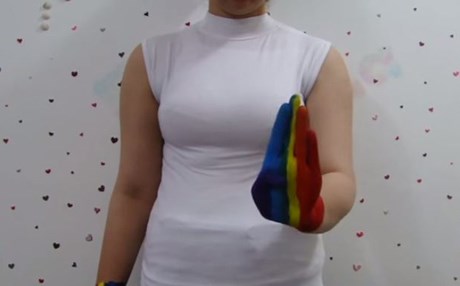
ERBIL, Kurdistan Region — In Iran, like all women there, Mina can be fined or even jailed if she is found alone with a man who is not a relative or her husband. But Mina does not want to be alone with a man; she would rather be alone with a woman: Mina is among the many homosexuals in Iran’s Kurdish region who live hidden lives.
The 33-year-old Kurd lives with her family of six in one of the old neighborhoods south of the city of Saqez in Iran’s Kurdish regions, growing up in a conservative community, going to school there and discovering and experiencing her sexuality.
It is also where Mina, who did not want her real name used to protect her identity, discovered poetry, writing about love, nature and her motherland. But she never shares some of her more intimate verses for fear they might reveal her attraction for other women.
“I keep some of my love poems inside a locked box in my room,” she almost whispered in a Skype conversation from her home, afraid of being overheard. “My family doesn’t know about my situation at all – they can never know,” she added. “I come from a very religious family.”
She has been even more cautious after an incident a few months ago when her secret was almost exposed.
It began when, at the gym, she met a woman she was attracted to.
“I was kind of falling in love with her,” she explained. “I gave her some chocolate one day and a rose a week later. Then, everything changed, everyone was whispering about us. People were looking for signs to prove I am a lesbian.”
She quit the gym, she said, after people – including the girl she liked – began to humiliate her and told her she should be ashamed.
"People think that lesbians or gays come from another planet," Mina told Rudaw.
In Iran, homosexuality is not only taboo, it is outlawed.
In infamous comments at New York’s Columbia University in 2007, then Iranian president Mahmoud Ahmadinejad famously denied the existence of homosexuals in Iran. “We don’t have this phenomenon. I don’t know who has told you that we have,” he said in reply to a question.
Under Iran’s Islamic Shari’a laws gay, bisexual or transgender citizens are denied even the most basic prerogatives, according to international rights watchdogs. They include the right to life, freedom of expression and protection from torture or punishment.
Between 4,000 to 6,000 Iranians have been executed since the 1979 Islamic revolution for their sexual orientation, according to civil and human rights activists.
Compared to big cities like Tehran, life in Iran’s conservative Kurdish regions – which are among the country’s poorest and most deprived areas – is even more difficult for homosexuals, said psychologist and social therapist Ali Panahi.
“Access to various social groups is generally difficult for sexual minorities in Iran,” said Panahi, himself a Kurd and speaking to Rudaw by phone from the Kurdish city of Sanandaj (Sina).
“In a conservative society such as Kurdistan, especially in small cities it is really much more difficult for these people (LGBTs) to have their own social groups,” he said.
In Tehran, where it is still dangerous to be openly gay, bisexual or transgender, there is a vibrant underground community, according to a homosexual man who spoke to Rudaw.
“We have frequent gay parties and gatherings in Tehran,” said Alireza, a 24-year-old who lives in the capital. “Over the last few years we even meet in a café known for its gay clientele,” he explained. “The owner knows we are gays, but only him,” he said.
Srush, a 22-year-old gay Kurd from the city of Bukan that is also in Iranian Kurdistan, shared his experience of a forceful marriage to a girl, after his secret was discovered by his family two years ago.
He said it was in high school that he discovered he was different from other boys.
“I was collecting photos of male models from advertisements for underwear,” he told Rudaw. “Once I had one of these photos inside my math book and my friend saw it. I was scared and felt so ashamed of myself, though at that time I didn’t even have an idea about my sexual orientation,” he said.
He was 18 when his older brother discovered his secret. They forced him into a marriage at 20 “to solve my problem,” he said.
“They forced me to engage a girl they arranged for me. I still feel guilty about my experience with her. She was really a good girl but I could never get close to her, neither physically or mentally. We broke up and the saddest part is that she never knew I am gay,” he explained.
Since then, Srush avoids people as much as possible, including his own family.
“I have no place at family gatherings. When I am there everyone is uncomfortable. I can see it in their eyes,” he explained. “They avoid me as if I have an infectious disease.”
--------
Iran’s Hidden Lives is part of a Rudaw series on Iran.
The 33-year-old Kurd lives with her family of six in one of the old neighborhoods south of the city of Saqez in Iran’s Kurdish regions, growing up in a conservative community, going to school there and discovering and experiencing her sexuality.
It is also where Mina, who did not want her real name used to protect her identity, discovered poetry, writing about love, nature and her motherland. But she never shares some of her more intimate verses for fear they might reveal her attraction for other women.
“I keep some of my love poems inside a locked box in my room,” she almost whispered in a Skype conversation from her home, afraid of being overheard. “My family doesn’t know about my situation at all – they can never know,” she added. “I come from a very religious family.”
She has been even more cautious after an incident a few months ago when her secret was almost exposed.
It began when, at the gym, she met a woman she was attracted to.
“I was kind of falling in love with her,” she explained. “I gave her some chocolate one day and a rose a week later. Then, everything changed, everyone was whispering about us. People were looking for signs to prove I am a lesbian.”
She quit the gym, she said, after people – including the girl she liked – began to humiliate her and told her she should be ashamed.
"People think that lesbians or gays come from another planet," Mina told Rudaw.
In Iran, homosexuality is not only taboo, it is outlawed.
In infamous comments at New York’s Columbia University in 2007, then Iranian president Mahmoud Ahmadinejad famously denied the existence of homosexuals in Iran. “We don’t have this phenomenon. I don’t know who has told you that we have,” he said in reply to a question.
Under Iran’s Islamic Shari’a laws gay, bisexual or transgender citizens are denied even the most basic prerogatives, according to international rights watchdogs. They include the right to life, freedom of expression and protection from torture or punishment.
Between 4,000 to 6,000 Iranians have been executed since the 1979 Islamic revolution for their sexual orientation, according to civil and human rights activists.
Compared to big cities like Tehran, life in Iran’s conservative Kurdish regions – which are among the country’s poorest and most deprived areas – is even more difficult for homosexuals, said psychologist and social therapist Ali Panahi.
“Access to various social groups is generally difficult for sexual minorities in Iran,” said Panahi, himself a Kurd and speaking to Rudaw by phone from the Kurdish city of Sanandaj (Sina).
“In a conservative society such as Kurdistan, especially in small cities it is really much more difficult for these people (LGBTs) to have their own social groups,” he said.
In Tehran, where it is still dangerous to be openly gay, bisexual or transgender, there is a vibrant underground community, according to a homosexual man who spoke to Rudaw.
“We have frequent gay parties and gatherings in Tehran,” said Alireza, a 24-year-old who lives in the capital. “Over the last few years we even meet in a café known for its gay clientele,” he explained. “The owner knows we are gays, but only him,” he said.
Srush, a 22-year-old gay Kurd from the city of Bukan that is also in Iranian Kurdistan, shared his experience of a forceful marriage to a girl, after his secret was discovered by his family two years ago.
He said it was in high school that he discovered he was different from other boys.
“I was collecting photos of male models from advertisements for underwear,” he told Rudaw. “Once I had one of these photos inside my math book and my friend saw it. I was scared and felt so ashamed of myself, though at that time I didn’t even have an idea about my sexual orientation,” he said.
He was 18 when his older brother discovered his secret. They forced him into a marriage at 20 “to solve my problem,” he said.
“They forced me to engage a girl they arranged for me. I still feel guilty about my experience with her. She was really a good girl but I could never get close to her, neither physically or mentally. We broke up and the saddest part is that she never knew I am gay,” he explained.
Since then, Srush avoids people as much as possible, including his own family.
“I have no place at family gatherings. When I am there everyone is uncomfortable. I can see it in their eyes,” he explained. “They avoid me as if I have an infectious disease.”
--------
Iran’s Hidden Lives is part of a Rudaw series on Iran.
Comments
Rudaw moderates all comments submitted on our website. We welcome comments which are relevant to the article and encourage further discussion about the issues that matter to you. We also welcome constructive criticism about Rudaw.
To be approved for publication, however, your comments must meet our community guidelines.
We will not tolerate the following: profanity, threats, personal attacks, vulgarity, abuse (such as sexism, racism, homophobia or xenophobia), or commercial or personal promotion.
Comments that do not meet our guidelines will be rejected. Comments are not edited – they are either approved or rejected.
Post a comment