


ERBIL, Kurdistan Region — Kurdistan Democratic Party’s (KDP) participation in Adil Abdul-Mahdi’s government depends on three key areas centering on inclusivity and adherence to the constitution.
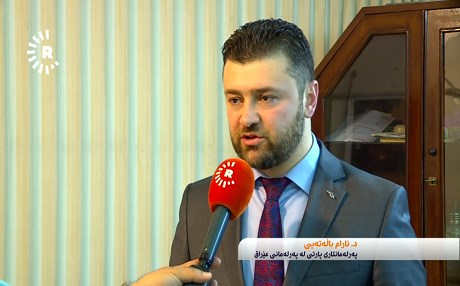
“Our participation depends on the government’s agenda and whether it will guarantee us that the constitution and its three main principles — consensus, balance and actual partnership — will be implemented,” said MP Aram Balatayi of the KDP.
They will join the new government if Abdul-Mahdi, the PM-designate, can assure the largest party in the Kurdistan Region that constitution is implemented and demands are met, explained Balatayi.
“If our participation in the government gains us some posts and ministries then we will not participate because we do not need these posts and ministries,” he said, reiterating that the KDP is not going to Baghdad solely for posts, but for the rights of people in the Kurdistan Region.
Kurds are seeking four ministries including a high profile ministry such as finance or oil.
Sherwan Mirza, an MP for the Patriotic Union of Kurdistan (PUK), said Kurdish parties must make agreements with the Abdul-Mahdi as one team.
“I expect them to request four ministries, including a high profile ministry and others. We as Kurdistani parties still have time to deal with Adil Abdul-Mahdi as one team and with a mutual package,” he added.
An MP from Change Movement (Gorran) said Kurds have to insist on certain issues when making deals.
“The most important thing for Kurds is to insist on such programs which can help resolve Erbil-Baghdad issues, typically regarding disputed areas, the salaries and budget of Kurdistan people and Peshmerga,” said Kawa Mahmud.
Outgoing Prime Minister Haider al-Abadi previously said boundaries were not up for negotiation in government-formation talks.
The new Iraqi new government will consist of 22 ministries. It’s expected eight ministries will go to the Binaa bloc, eight to the Reform bloc, four to the Kurds, and two for minorities.
Binaa draws support from Hadi al-Amiri and Nouri al-Maliki, while Reform is mostly comprised of Ammar al-Hakim, Muqtada al-Sadr, Ayad Allawi, Abadi, and some Sunni politicians.
Comments
Rudaw moderates all comments submitted on our website. We welcome comments which are relevant to the article and encourage further discussion about the issues that matter to you. We also welcome constructive criticism about Rudaw.
To be approved for publication, however, your comments must meet our community guidelines.
We will not tolerate the following: profanity, threats, personal attacks, vulgarity, abuse (such as sexism, racism, homophobia or xenophobia), or commercial or personal promotion.
Comments that do not meet our guidelines will be rejected. Comments are not edited – they are either approved or rejected.
Post a comment