

ERBIL, Kurdistan Region - The chairman of the security committee of Kirkuk Provincial Council is rejecting an idea to send Hashd al-Shaabi to the oil-rich, disputed Kirkuk province.
Azada Jabbari told Rudaw on Thursday that the Iraqi government should send weapons to the Peshmerga; not bring in the Shiite militia, also known as Popular Mobilization Forces.
“Instead of sending Hashd al-Shaabi forces, let them send weapons to the military force that had been protecting Kirkuk, (the Peshmerga),” Jabbari said.
The security chairman said they will not agree on sending Hashd al- Shaabi forces or any other forces to Kirkuk except Peshmerga.
“Every area of Kirkuk province will be protected by Peshmerga, and Kirkuk does not need any other forces,” he said, adding that he has not and will not waver from the hardline stance.
Iraqi officials have held recent talks about sending Hashd al-Shaabi to the Kirkuk province, but Kurdish officials have strongly rejected the idea.
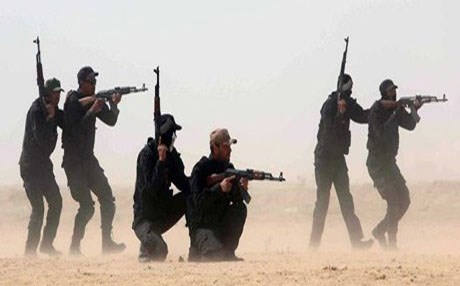
The Hashd al-Shaabi rose up last year following a call from Ayatollah Ali al-Sistani, the highest Shiite cleric in Iraq, to fight back the Islamic State, which overran much of the country's western territory.
The militia took the lead in the liberation of Tikrit earlier this year. Some accused the group of marginalizing Sunni residents in the area.
On June 8, Naman Ibrahimi, of the Ziqar province security committee, said, “At least 15,000 volunteers from Ziqar province and the capital city of Nasiriya have joined the Hashd al-Shaabi and will take up arms against ISIS.”
Iraqi police and military commanders in the Hashd al-Shaabi are currently training the arrivals, said Ibrahimi, and there are enough weapons for all the volunteers. He did not specify if the volunteers will be paid for their service.

Comments
Rudaw moderates all comments submitted on our website. We welcome comments which are relevant to the article and encourage further discussion about the issues that matter to you. We also welcome constructive criticism about Rudaw.
To be approved for publication, however, your comments must meet our community guidelines.
We will not tolerate the following: profanity, threats, personal attacks, vulgarity, abuse (such as sexism, racism, homophobia or xenophobia), or commercial or personal promotion.
Comments that do not meet our guidelines will be rejected. Comments are not edited – they are either approved or rejected.
Post a comment