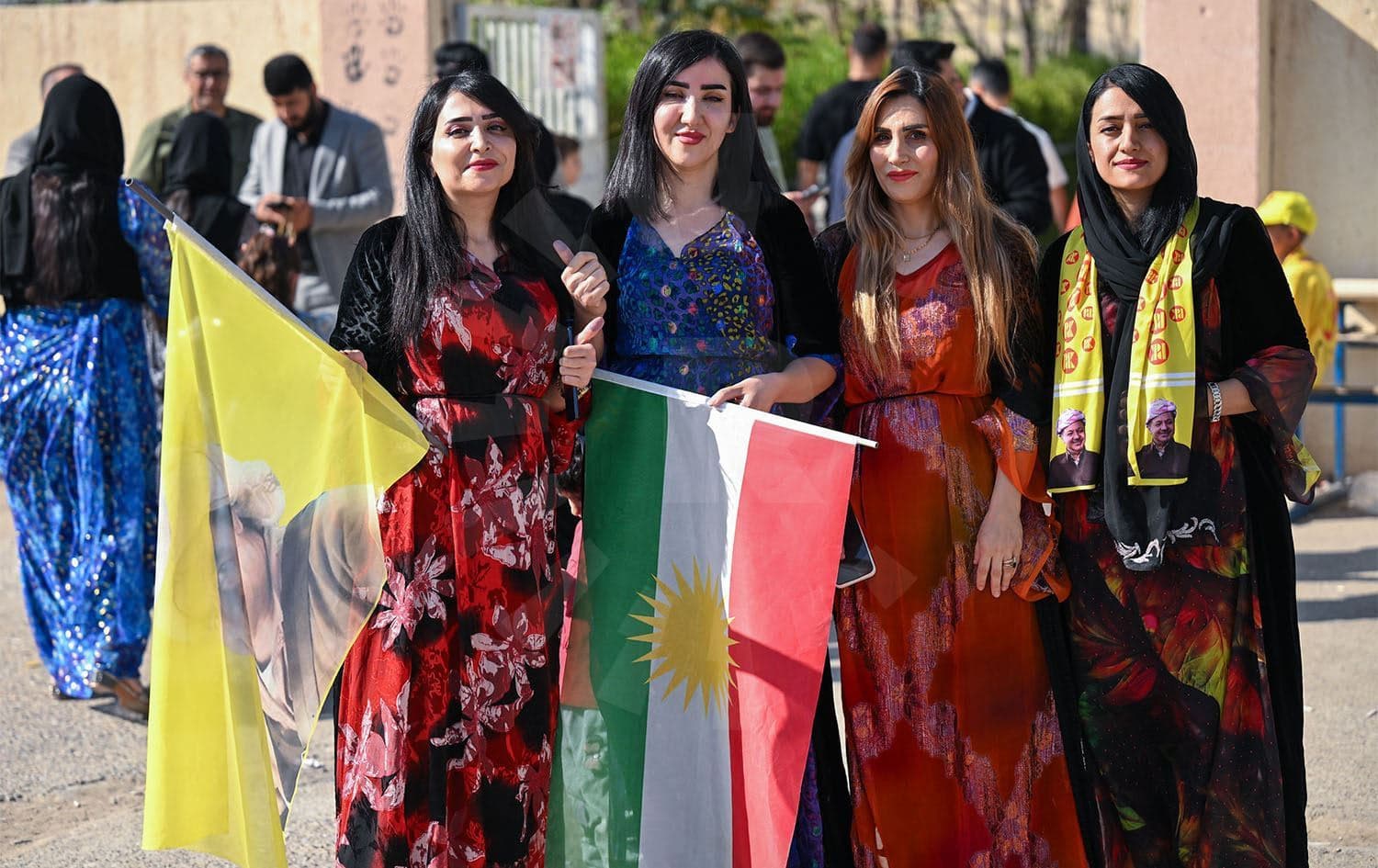

ERBIL, Kurdistan Region - The Kurdistan Region’s northern Duhok recorded the highest rate of women’s participation in Iraq’s parliamentary elections, while the southeastern Maysan ranked lowest, according to final figures released by the Independent High Electoral Commission (IHEC) on Monday.
Women made up 47.3 percent of all voters in Duhok province, with 295,692 female ballots cast in the November 11 vote. Maysan saw the lowest rate, with women accounting for 38.7 percent of voters, or 99,607 ballots.
In Duhok, the Kurdistan Democratic Party (KDP), led by President Masoud Barzani, dominated with nine seats, and the Kurdistan Islamic Union (KIU), led by Salahaddin Bahaaddin, took two. The Christian minority quota seat went to Sami Oshana.
In Maysan province, the Prime Minister Mohammed Shia’ al-Sudani’s Reconstruction and Development Coalition (RDC) led with three seats, followed by Hadi al-Ameri’s Badr Organization, former premier Nouri al-Maliki’s State of Law coalition, and Qais al-Khazali’s Sadiqoon Movement - which is affiliated with Asa’ib Ahl al-Haq. The Alliance of National State Forces (ANSF), led jointly by Ammar al-Hakim and former premier Haider al-Abadi, took the remaining seat.
Across Iraq, 54.3 percent of eligible biometric card holders turned out, totaling 12,003,143 participants in both general and special voting.
Speaking at the Middle East Peace and Security (MEPS) Forum in Duhok, President Masoud Barzani described the period following Iraq’s 2025 legislative elections as a “sensitive time” and reaffirmed his call for full adherence to the Iraqi Constitution of 2005, including the establishment of an upper house for the Iraqi legislature and the implementation of provisions that address territorial disputes between Erbil and Baghdad.

Hastyar Qadir contributed to this article.