

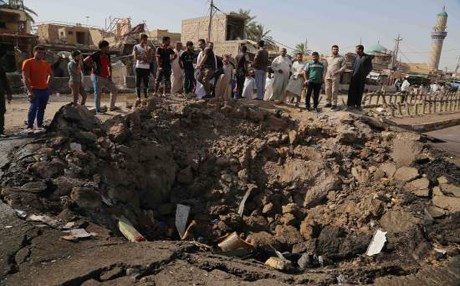
ERBIL, Kurdistan Region — A new report examined the strategy behind the devastating Islamic State attack on Khan Bani Saad town in Diyala province on July 17 that killed more than 115 adults and children who were celebrating the end of Ramadan.
According to the Washington-based Institute for the Study of War (ISW), the mass deployment of Diyala’s security forces to other fronts in Anbar and Salahadin provinces
caused a security gap in the area that possibly allowed the bombing to be carried out.
The attack on Khan Bani Saad was an ISIS bid to distract the security forces from those fronts where the terror group is on the firm defensive.
The ISW report said the lack of Iraqi forces enabled ISIS to expand its footholds in Diyala and left a swath of territory near Baghdad unprotected.
The report added that the group’s more strategic positions are west of Baghdad but the recent attack allowed it to divert attention and resources toward Diyala, east of Baghdad.
"ISIS will likely continue to orchestrate attacks throughout widespread regions of Iraq in order to further stretch the footprint of the ISF [Iraqi Security Forces], open exploitable opportunities for future expansion, and alleviate recent pressure on ISIS in Fallujah and Baiji,” the report said.

Comments
Rudaw moderates all comments submitted on our website. We welcome comments which are relevant to the article and encourage further discussion about the issues that matter to you. We also welcome constructive criticism about Rudaw.
To be approved for publication, however, your comments must meet our community guidelines.
We will not tolerate the following: profanity, threats, personal attacks, vulgarity, abuse (such as sexism, racism, homophobia or xenophobia), or commercial or personal promotion.
Comments that do not meet our guidelines will be rejected. Comments are not edited – they are either approved or rejected.
Post a comment