


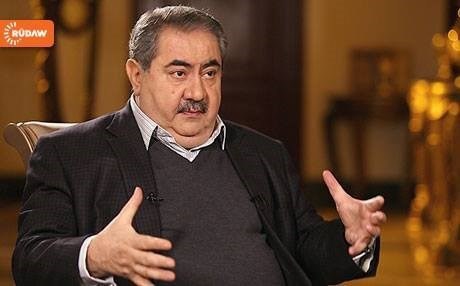
ERBIL, Kurdistan Region—Iraq, suffering under a massive budget deficit, weak oil prices, war with the Islamic State, and regular protests from a disgruntled population, sacked veteran Kurdish politician and Finance Minister Hoshyar Zebari on Wednesday, raising concerns about Iraq’s financial future.
Zebari lost a no-confidence vote in a secret ballot in the Iraqi parliament on Wednesday after weeks of backroom negotiations to reach a deal to keep him in his ministerial post. He was accused of mismanagement of the country’s finances – an allegation he denied.
Zebari served as Iraq’s foreign minister for more than a decade and was finance minister for two financially fraught years, steering the country’s finances during a worldwide drop in oil revenues that hit Iraq’s income hard, a costly war with the Islamic State (ISIS), and a resulting humanitarian disaster.
In May, he negotiated a $5.4 billion loan from the International Monetary Fund (IMF) in a deal that is expected to see Iraq receive $18 billion in financial aid over three years.
“Today’s move will undermine the ongoing efforts by Iraq to convince the IMF and other lenders it has a stable economic and political atmosphere,” Sarhan Ahmed, a member of the parliament’s finance committee, told Reuters.
Prime Minister Haider al-Abadi tried to postpone the vote, which had already been delayed twice when insufficient numbers of MPs showed up to parliament. Abadi claimed Zebari’s role in negotiating billion dollar loans was too critical to risk losing him now.
Abadi, in New York on Wednesday, met with World Bank President Jim Yong Kim, seeking financial support to bridge the 2017 fiscal deficit.
Zebari’s ouster also raises fears the tenuous relationship between Erbil and Baghdad, only recently looking like it was getting back on track, may be strained once again.
The Kurdistan Democratic Party (KDP) bloc in the Iraqi parliament announced in a press conference on Wednesday, “We will appeal to the federal court over the decision to sack Zebari,” saying that they believe the vote was politically motivated.
Zebari is a member of the KDP.
Parliament speaker, Salim al-Jabouri, hailed Wednesday’s vote for its professionalism, saying that MPs were not influenced by foreign embassies or partisan agreements.
Out of the 249 MPs who voted in the 328-seat parliament on Wednesday, 158 voted against Zebari, 77 were in his favor, and 14 abstained.
There are now three key ministerial posts open: finance, defence, and interior. Former Defence Minister Khaled al-Obeidi also lost a no-confidence vote last month, and former Interior Minister Mohammed Salem al-Ghabban resigned in July after a massive bombing in Baghdad. There are no obvious replacements ready to fill any of the three important positions.
Zebari lost a no-confidence vote in a secret ballot in the Iraqi parliament on Wednesday after weeks of backroom negotiations to reach a deal to keep him in his ministerial post. He was accused of mismanagement of the country’s finances – an allegation he denied.
Zebari served as Iraq’s foreign minister for more than a decade and was finance minister for two financially fraught years, steering the country’s finances during a worldwide drop in oil revenues that hit Iraq’s income hard, a costly war with the Islamic State (ISIS), and a resulting humanitarian disaster.
In May, he negotiated a $5.4 billion loan from the International Monetary Fund (IMF) in a deal that is expected to see Iraq receive $18 billion in financial aid over three years.
Some in Baghdad are now worried Iraq’s relationship with the IMF will be affected by Zebari’s removal.
“Today’s move will undermine the ongoing efforts by Iraq to convince the IMF and other lenders it has a stable economic and political atmosphere,” Sarhan Ahmed, a member of the parliament’s finance committee, told Reuters.
Prime Minister Haider al-Abadi tried to postpone the vote, which had already been delayed twice when insufficient numbers of MPs showed up to parliament. Abadi claimed Zebari’s role in negotiating billion dollar loans was too critical to risk losing him now.
Abadi, in New York on Wednesday, met with World Bank President Jim Yong Kim, seeking financial support to bridge the 2017 fiscal deficit.
Zebari’s ouster also raises fears the tenuous relationship between Erbil and Baghdad, only recently looking like it was getting back on track, may be strained once again.
The Kurdistan Democratic Party (KDP) bloc in the Iraqi parliament announced in a press conference on Wednesday, “We will appeal to the federal court over the decision to sack Zebari,” saying that they believe the vote was politically motivated.
Zebari is a member of the KDP.
Parliament speaker, Salim al-Jabouri, hailed Wednesday’s vote for its professionalism, saying that MPs were not influenced by foreign embassies or partisan agreements.
Out of the 249 MPs who voted in the 328-seat parliament on Wednesday, 158 voted against Zebari, 77 were in his favor, and 14 abstained.
Comments
Rudaw moderates all comments submitted on our website. We welcome comments which are relevant to the article and encourage further discussion about the issues that matter to you. We also welcome constructive criticism about Rudaw.
To be approved for publication, however, your comments must meet our community guidelines.
We will not tolerate the following: profanity, threats, personal attacks, vulgarity, abuse (such as sexism, racism, homophobia or xenophobia), or commercial or personal promotion.
Comments that do not meet our guidelines will be rejected. Comments are not edited – they are either approved or rejected.
Post a comment