


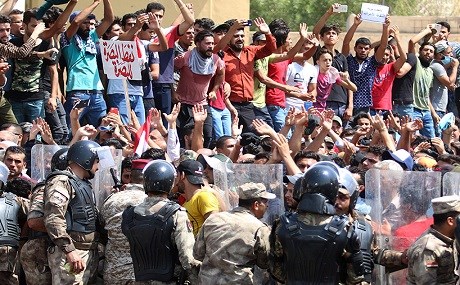
ERBIL, Kurdistan Region – Security forces have used “excessive and unnecessary lethal force” against protesters in Iraq’s southern city of Basra, according to a new Human Rights Watch (HRW) report released Tuesday.
Security forces have used tear gas, water cannons, and live fire to break up protests that have raged across southern Iraq for over two and a half weeks.
Suffering under high unemployment and lack of water and electricity, angry protesters say they have had enough of government corruption and politicians’ failure to serve the people.
HRW examined witness statements from eight such protests in the oil-rich southern province of Basra between July 8 and 17.
Witnesses told HRW the Iraqi Interior Ministry’s anti-riot police, federal police, Special Weapons and Tactics (SWAT) forces, the Strike Force Brigade (Liwa al-Quwa al-Thariba), oil facility police, and members of the Badr Organization fired on protesters at six of the eight protests.
At least three demonstrators were killed in these incidents and 47 wounded, including two children who were shot and one who was beaten with rifle butts.
In six of these protests, security forces allegedly fired live ammunition, wounding at least seven protesters. They also threw rocks and beat at least 47 people, including 29 during or after arrest.
Witnesses also saw protesters throwing stones and petrol bombs at security forces, and even cases of gunfire aimed at police lines.
“The Iraqi authorities need to credibly and impartially investigate the apparent excessive use of lethal force in Basra, even where protests turned violent,” said Sarah Leah Whitson, Middle East director at Human Rights Watch. “So long as the government fails to address protester grievances, the danger of further bloody protests remains real.”
The report stressed that Iraqi security forces engaged in law enforcement duties must strictly abide by the United Nations Basic Principles on the Use of Force and Firearms by Law Enforcement Officials.
“The Basic Principles state that law enforcement officials should apply nonviolent means before resorting to the use of force. Whenever the use of force is unavoidable, they must use restraint and act in proportion to the seriousness of the offense,” HRW said.
“Law enforcement officials may use firearms only to prevent the imminent threat of death or serious injury; the intentional lethal use of firearms can only be used to disperse violent protests when strictly unavoidable to protect life.”
The report called for a thorough investigation into the allegations of abuse and for justice for victims.
“National and Basra provincial authorities should credibly, impartially and transparently investigate the use of force by the security forces in the Basra Governorate,” HRW said.
“Security force members, including commanders, responsible for the unlawful use of excessive or lethal force should be disciplined or prosecuted as appropriate. Victims of unlawful use of force by the security forces should receive prompt and adequate compensation,” the report added.
Fadel al-Gharrawi, a member of Iraq’s human rights commission, said on Monday that 14 people had been killed in protests across Iraq in the last two weeks.
Up to 275 protesters and 470 security personnel have been injured and more than 800 people have been arrested – although “the majority were later released,” Gharrawi added, AFP reports.
HRW also criticized the Iraqi government decision to shut down internet services and block social media platforms, thereby controlling information and undermining accurate reporting.
“Blocking internet access to people in southern Iraq not only denies them their right to exchange information, but can put people in danger,” Whitson said. “The authorities should urgently lift all internet restrictions except where specific security concerns require such a response.”
Iraqi Prime Minister Haider al-Abadi has formed a crisis team to respond to protesters’ demands, pledging to finish infrastructure projects and boost job training.
Security forces have used tear gas, water cannons, and live fire to break up protests that have raged across southern Iraq for over two and a half weeks.
Suffering under high unemployment and lack of water and electricity, angry protesters say they have had enough of government corruption and politicians’ failure to serve the people.
HRW examined witness statements from eight such protests in the oil-rich southern province of Basra between July 8 and 17.
Witnesses told HRW the Iraqi Interior Ministry’s anti-riot police, federal police, Special Weapons and Tactics (SWAT) forces, the Strike Force Brigade (Liwa al-Quwa al-Thariba), oil facility police, and members of the Badr Organization fired on protesters at six of the eight protests.
At least three demonstrators were killed in these incidents and 47 wounded, including two children who were shot and one who was beaten with rifle butts.
In six of these protests, security forces allegedly fired live ammunition, wounding at least seven protesters. They also threw rocks and beat at least 47 people, including 29 during or after arrest.
Witnesses also saw protesters throwing stones and petrol bombs at security forces, and even cases of gunfire aimed at police lines.
“The Iraqi authorities need to credibly and impartially investigate the apparent excessive use of lethal force in Basra, even where protests turned violent,” said Sarah Leah Whitson, Middle East director at Human Rights Watch. “So long as the government fails to address protester grievances, the danger of further bloody protests remains real.”
The report stressed that Iraqi security forces engaged in law enforcement duties must strictly abide by the United Nations Basic Principles on the Use of Force and Firearms by Law Enforcement Officials.
“The Basic Principles state that law enforcement officials should apply nonviolent means before resorting to the use of force. Whenever the use of force is unavoidable, they must use restraint and act in proportion to the seriousness of the offense,” HRW said.
“Law enforcement officials may use firearms only to prevent the imminent threat of death or serious injury; the intentional lethal use of firearms can only be used to disperse violent protests when strictly unavoidable to protect life.”
The report called for a thorough investigation into the allegations of abuse and for justice for victims.
“National and Basra provincial authorities should credibly, impartially and transparently investigate the use of force by the security forces in the Basra Governorate,” HRW said.
“Security force members, including commanders, responsible for the unlawful use of excessive or lethal force should be disciplined or prosecuted as appropriate. Victims of unlawful use of force by the security forces should receive prompt and adequate compensation,” the report added.
Fadel al-Gharrawi, a member of Iraq’s human rights commission, said on Monday that 14 people had been killed in protests across Iraq in the last two weeks.
Up to 275 protesters and 470 security personnel have been injured and more than 800 people have been arrested – although “the majority were later released,” Gharrawi added, AFP reports.
HRW also criticized the Iraqi government decision to shut down internet services and block social media platforms, thereby controlling information and undermining accurate reporting.
“Blocking internet access to people in southern Iraq not only denies them their right to exchange information, but can put people in danger,” Whitson said. “The authorities should urgently lift all internet restrictions except where specific security concerns require such a response.”
Iraqi Prime Minister Haider al-Abadi has formed a crisis team to respond to protesters’ demands, pledging to finish infrastructure projects and boost job training.
Comments
Rudaw moderates all comments submitted on our website. We welcome comments which are relevant to the article and encourage further discussion about the issues that matter to you. We also welcome constructive criticism about Rudaw.
To be approved for publication, however, your comments must meet our community guidelines.
We will not tolerate the following: profanity, threats, personal attacks, vulgarity, abuse (such as sexism, racism, homophobia or xenophobia), or commercial or personal promotion.
Comments that do not meet our guidelines will be rejected. Comments are not edited – they are either approved or rejected.
Post a comment