


Iraq

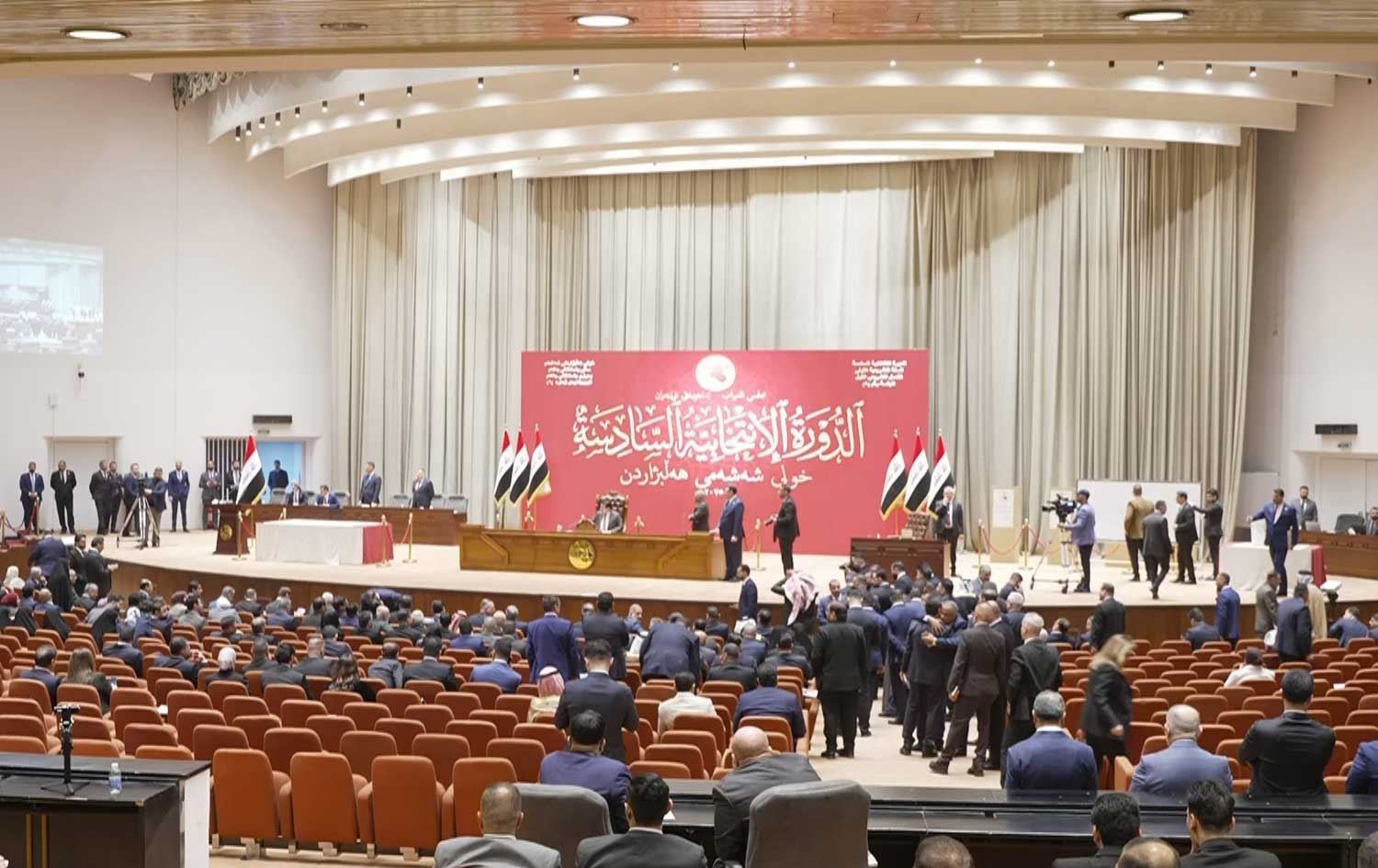
The first session of Iraq’s sixth legislative term held on December 29, 2025. Photo: screengrab/Rudaw
ERBIL, Kurdistan Region - Haibat al-Halbousi, a member of the Sunni Taqaddum Party, was elected speaker of Iraq’s parliament on Monday during the first session of the legislature’s sixth term, after Sunni parties entered the session without consensus on a single candidate.
Parliament convened amid political disputes over the speakership, with multiple candidates competing for the post. Halbousi ran against Salim Matar al-Issawi of the Sovereignty Alliance and Shiite lawmaker Amer Abdul-Jabbar, ultimately securing the required support.
Halbousi won 208 seats, Issawi 66, and Abdul-Jabbar nine.
Born in Anbar in 1980, the new speaker of the Iraqi parliament holds a master's degree in political science
The session was chaired by Amer al-Fayez, the oldest member of parliament and head of the Shiite Tasmim Alliance, in line with parliament’s bylaws.
Following a late-night meeting on Sunday, most Sunni blocs agreed to nominate Halbousi as their candidate, while the Azm Alliance put forward its leader, Muthanna al-Samarrai, setting the stage for a contested vote. During the session, however, Samarrai withdrew from the race and endorsed Halbousi.
Lawmakers were sworn in in both Kurdish and Arabic languages during the session.
Under Iraq’s informal power-sharing arrangement established after 2003, the post of parliament speaker is reserved for Sunni Arabs, while the premiership goes to Shiites and the presidency to Kurds. Despite this arrangement, Sunni forces have remained divided.
Attention has now shifted to the deputy speaker positions. Shiite blocs have nominated Adnan Faihan al-Dulaimani for first deputy speaker, alongside incumbent Muhsin al-Mandalawi. The Kurdistan Democratic Party (KDP) has officially nominated Shakhawan Abdullah, the current second deputy speaker, to retain his post.
Patriotic Union of Kurdistan (PUK) leader Bafel Talabani congratulated Halbousi on his election, expressing hope that he would “work as one team” to strengthen relations between Iraq’s branches of government and address outstanding issues between Baghdad and the Kurdistan Region “under the roof of the constitution and partnership.”


Comments
Rudaw moderates all comments submitted on our website. We welcome comments which are relevant to the article and encourage further discussion about the issues that matter to you. We also welcome constructive criticism about Rudaw.
To be approved for publication, however, your comments must meet our community guidelines.
We will not tolerate the following: profanity, threats, personal attacks, vulgarity, abuse (such as sexism, racism, homophobia or xenophobia), or commercial or personal promotion.
Comments that do not meet our guidelines will be rejected. Comments are not edited – they are either approved or rejected.
Post a comment