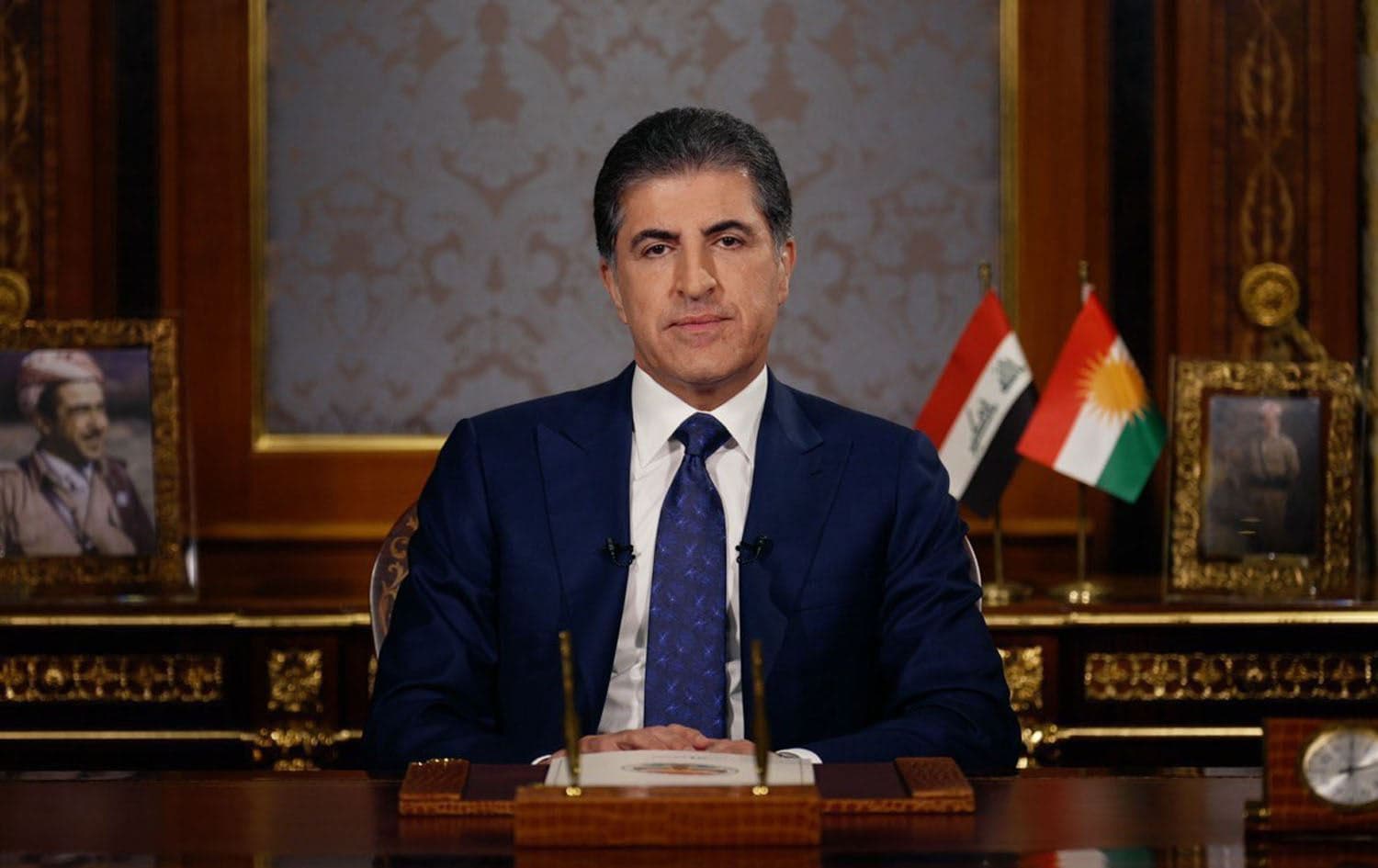
ERBIL, Kurdistan Region - President of the Kurdistan Region, Nechirvan Barzani, on Friday welcomed a ceasefire and integration agreement between the Syrian transitional government and the Kurdish-led Syrian Democratic Forces (SDF), following weeks of deadly clashes between the two sides.
“We welcome and support the agreement between the Syrian government and the Syrian Democratic Forces (SDF) to halt fighting, integrate administrative and military units, guarantee the civil and educational rights of the Kurdish people, and facilitate the return of displaced persons to their areas,” a statement from President Barzani, issued by the Kurdistan Region Presidency, read.
President Barzani hailed the deal as “an important and necessary step toward peacefully resolving conflict and ending violence.”
“We have always emphasized that dialogue, understanding, and political resolution are the only paths to a lasting solution in the interest of all parties,” he added.
He further stated: “This agreement lays a strong foundation for stability, social peace, and peaceful coexistence among all communities. We hope it will serve as a framework for rebuilding a unified Syria, safeguarding the rights of the Kurdish people and all other groups in the future constitution, and achieving security and stability for Syria and the region as a whole.”
The agreement, shared by the SDF and Syrian state television, stipulates that security forces affiliated with the Ministry of Interior will be allowed to enter the northeastern cities of Hasaka and Qamishli, while three army brigades will be formed from SDF forces.
According to the statement, both sides also agreed to form “a military division comprising three brigades from the SDF, in addition to the formation of a brigade from the Kobane forces within a division affiliated with the Aleppo Governorate.”
“The agreement also includes the integration of the institutions of the Autonomous Administration into the institutions of the Syrian state,” it added.
For his part, U.S. Envoy to Syria Tom Barrack described the agreement as a “historic milestone.”
“The deal represents a profound and historic step in Syria’s journey toward national reconciliation, unity, and enduring stability. This carefully negotiated initiative, building on previous frameworks and recent efforts to de-escalate tensions, reflects a shared commitment to inclusion, mutual respect, and the collective dignity of all Syrian communities,” he wrote on X.
The agreement follows weeks of intense fighting between the SDF and Damascus-affiliated factions, triggered by a large-scale offensive aimed at capturing territory held by the Kurdish-led SDF in northern and northeastern Syria.
The SDF serves as the de facto military force in Rojava and remains a key partner of the U.S.-led Global Coalition to Defeat ISIS.
The offensive led to the gradual withdrawal of SDF forces from areas under their control, including parts of Aleppo, Deir ez-Zor, Raqqa, and the predominantly Kurdish province of Hasaka in eastern Rojava.
Most of the territories seized by Damascus and its allied forces had previously been liberated by Kurdish-led fighters from ISIS following the group’s declaration of its so-called caliphate in Syria and Iraq in 2014.
According to United Nations estimates, the fighting has displaced around 100,000 people, most of them Kurds.
The Damascus-SDF agreement “guarantees the return of displaced persons to their homes,” the statement added.