


ERBIL, Kurdistan Region - A Kurdish woman trapped in Damascus tells horrifying stories of deprivation and starvation in the Syrian capital and its vicinities, where she says people have resorted to eating tree leaves to stay alive.
Nasrin, 44, told Rudaw by telephone that the price of a kilo of sugar has risen to $120, and rice is equally expensive.
Reaching the bazaar means negotiating a myriad of security checkpoints, with soldiers and gun-wielding Hezbollah Shiite militiamen deployed everywhere.
Nasrin, who is from the Kurdistan region's city of Sulaimani and who feels trapped like a prisoner in war-torn Syria’s capital, confirms what activists have reported: that in areas besieged by the Syrian government people are dying of starvation every day. Those who survive live in extreme conditions, without outside help so far.
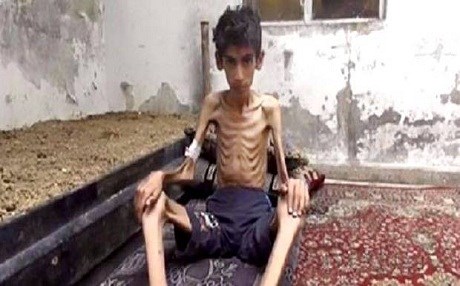
Harrowing pictures of people near death from starvation circulate on the Internet, showing living conditions in areas around Damascus that are besieged by Syrian government forces and its allied militias, for allegedly hiding opposition forces fighting the regime in a war now in its fifth year.
Nasrin has been trapped in Damascus since the outbreak of the Syrian revolution in 2011.
She arrived there to register with the UN, explaining she had chosen Damascus to do that because it had been both close and safe at the time.
“In order to register myself at the UN, I chose Syria to travel through, because seven years ago the country was stable. Since then, I stayed in Damascus and recently moved to the Geraman neighborhood," which is controlled by the Syrian government.
She said that, unlike her old neighborhood of al-Qadisa, where the family had lived in miserable conditions, her new district is "partially stable," because sometimes the Syrian opposition forces launch "random bombardments" against civilians.
"(Syria) does not import food from other countries, and the majority of the factories are still working in Syria," she said. “The starvation of civilians occurs only in areas controlled by opposition forces... That is why I left these embattled areas last August."
Asked if others from the Kurdistan region were living in Damascus, Nasrin says: "There are people from Kurdistan. Some migrated to Lebanon and some others to Germany. We, as Kurds, have all registered our names with the UN," which she explained they visit regularly.
She explained that she fled her old district “because the anti-government militants were there and the neighborhood has been besieged for 6-7 months. Leaving and entering has been totally prohibited, and people are unable to receive anything from outside."
Nasrin said that "places controlled by the government are more stable and better and the price of commodities is cheaper."
She said that, by surrounding and blockading areas, the government was trying to force out militants operating from there.
Nasrin had hoped for greater comfort for her children in their new district, but this neighborhood has also been targeted by conflicting forces with mortars and missiles.
She says it is rare to pass a night without hearing the thud of mortar shells going off or landing.
She recalled once hearing the deafening sound of a missile, only to find out later it had hit a building close to their home, killing a prominent Hezbollah leader named Samir Qantari.
According to civic activists, in the district of Mazaid in Damascus, a record number of 40 people have so far died from starvation and the lives of some 45,000 people are critically at stake.
Previously, Syrian organizations reported that 200 people had died of starvation in the Yarmouk area, including a vast number of elderly people and children.
The most dangerous places inside Damascus include Ghouta, Mukhaim, Yarmouk, Qadisa and Hamojwer. The Syrian government has tightly surrounded areas in the capital’s outskirts. Winter cold, with fuel, food and everything else in critically short supply, has worsened living conditions.
Activists claim that people have not tasted staples like rice, bread or milk for so long they have forgotten how they taste and loved ones die from starvation before their eyes.
Hunger has become so acute that people have turned to eating cats and dogs, while others were forced to sell possessions and property in return for food.
On Christmas day, Syrian President Bashar al-Assad paid a visit to the neighborhood where Nasrin currently lives, to take part in ceremonies at a neighborhood church.
Residents later told Nasrin that Assad had promised the people Syria’s situation would improve by spring, and that they should not allow their sons or daughters to abandon the country until then.
"According to what I heard, Assad told the people at the Christmas party that ‘Inshallah (God willing) the situation will be stable,' and called on the youth to stop migrating from Syria,” Nasrin said, adding that he had vowed there would be “reconciliation to normalize the situation."
Nasrin, 44, told Rudaw by telephone that the price of a kilo of sugar has risen to $120, and rice is equally expensive.
Reaching the bazaar means negotiating a myriad of security checkpoints, with soldiers and gun-wielding Hezbollah Shiite militiamen deployed everywhere.
Nasrin, who is from the Kurdistan region's city of Sulaimani and who feels trapped like a prisoner in war-torn Syria’s capital, confirms what activists have reported: that in areas besieged by the Syrian government people are dying of starvation every day. Those who survive live in extreme conditions, without outside help so far.
Harrowing pictures of people near death from starvation circulate on the Internet, showing living conditions in areas around Damascus that are besieged by Syrian government forces and its allied militias, for allegedly hiding opposition forces fighting the regime in a war now in its fifth year.
Nasrin has been trapped in Damascus since the outbreak of the Syrian revolution in 2011.
She arrived there to register with the UN, explaining she had chosen Damascus to do that because it had been both close and safe at the time.
“In order to register myself at the UN, I chose Syria to travel through, because seven years ago the country was stable. Since then, I stayed in Damascus and recently moved to the Geraman neighborhood," which is controlled by the Syrian government.
She said that, unlike her old neighborhood of al-Qadisa, where the family had lived in miserable conditions, her new district is "partially stable," because sometimes the Syrian opposition forces launch "random bombardments" against civilians.
"(Syria) does not import food from other countries, and the majority of the factories are still working in Syria," she said. “The starvation of civilians occurs only in areas controlled by opposition forces... That is why I left these embattled areas last August."
Asked if others from the Kurdistan region were living in Damascus, Nasrin says: "There are people from Kurdistan. Some migrated to Lebanon and some others to Germany. We, as Kurds, have all registered our names with the UN," which she explained they visit regularly.
She explained that she fled her old district “because the anti-government militants were there and the neighborhood has been besieged for 6-7 months. Leaving and entering has been totally prohibited, and people are unable to receive anything from outside."
Nasrin said that "places controlled by the government are more stable and better and the price of commodities is cheaper."
She said that, by surrounding and blockading areas, the government was trying to force out militants operating from there.
Nasrin had hoped for greater comfort for her children in their new district, but this neighborhood has also been targeted by conflicting forces with mortars and missiles.
She says it is rare to pass a night without hearing the thud of mortar shells going off or landing.
She recalled once hearing the deafening sound of a missile, only to find out later it had hit a building close to their home, killing a prominent Hezbollah leader named Samir Qantari.
According to civic activists, in the district of Mazaid in Damascus, a record number of 40 people have so far died from starvation and the lives of some 45,000 people are critically at stake.
Previously, Syrian organizations reported that 200 people had died of starvation in the Yarmouk area, including a vast number of elderly people and children.
The most dangerous places inside Damascus include Ghouta, Mukhaim, Yarmouk, Qadisa and Hamojwer. The Syrian government has tightly surrounded areas in the capital’s outskirts. Winter cold, with fuel, food and everything else in critically short supply, has worsened living conditions.
Activists claim that people have not tasted staples like rice, bread or milk for so long they have forgotten how they taste and loved ones die from starvation before their eyes.
Hunger has become so acute that people have turned to eating cats and dogs, while others were forced to sell possessions and property in return for food.
On Christmas day, Syrian President Bashar al-Assad paid a visit to the neighborhood where Nasrin currently lives, to take part in ceremonies at a neighborhood church.
Residents later told Nasrin that Assad had promised the people Syria’s situation would improve by spring, and that they should not allow their sons or daughters to abandon the country until then.
"According to what I heard, Assad told the people at the Christmas party that ‘Inshallah (God willing) the situation will be stable,' and called on the youth to stop migrating from Syria,” Nasrin said, adding that he had vowed there would be “reconciliation to normalize the situation."
Comments
Rudaw moderates all comments submitted on our website. We welcome comments which are relevant to the article and encourage further discussion about the issues that matter to you. We also welcome constructive criticism about Rudaw.
To be approved for publication, however, your comments must meet our community guidelines.
We will not tolerate the following: profanity, threats, personal attacks, vulgarity, abuse (such as sexism, racism, homophobia or xenophobia), or commercial or personal promotion.
Comments that do not meet our guidelines will be rejected. Comments are not edited – they are either approved or rejected.
Post a comment