


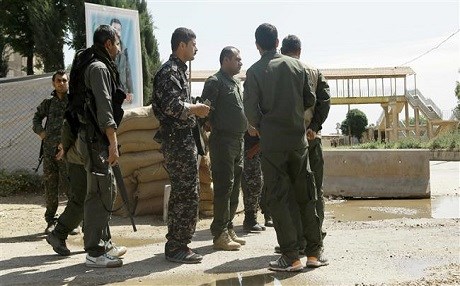
ERBIL, Kurdistan Region—The Syrian army has defended its attacks on the Kurdish city of Hasakah northeast of the country as a response to provocative actions of the Kurdish security forces (Asayish) such as oil theft, abductions and causing chaos.
“The armed wing of the Kurdistan Workers Party [PKK] has recently increased its provocative acts in the city of Hasakah such as attacks on state institutions, stealing oil and cotton and delaying exams as well as abduction of peaceful citizens and spreading an atmosphere of chaos and instability,” said a statement by the general command of the Syrian army.
The statement comes after two days of air strikes against the Kurdish-held city of Hasakah by Syrian warplanes that have so far killed 14 people and wounded many others.
The military statement goes on to say that the PKK had put Hasakah under siege and shelled the city center and army bases with artillery and tanks “that led to bloodshed and the death of military personnel and civilians,”
The Asayish services of the Kurdish areas of Syria are part of the Democratic Union Party (PYD) which is believed to have strong ties with the PKK.
“Despite all the efforts to restore order to the city Asyish did not respond and continued their crimes in order to take control of Hasakah city,” reads the Syrian army statement.
“This situation called for a proper response from the Syrian Arab army to target the source of fire and gathering of elements responsible for these criminal acts,” it adds.
The statement clears the army of any responsibility for the tension, saying that their action is only a response to the Asayish.
The army “in the meantime is steadfast in responding to such aggressions from anyone and will do its best to preserve the integrity of the Syrian land and safety of its citizens.”
“The armed wing of the Kurdistan Workers Party [PKK] has recently increased its provocative acts in the city of Hasakah such as attacks on state institutions, stealing oil and cotton and delaying exams as well as abduction of peaceful citizens and spreading an atmosphere of chaos and instability,” said a statement by the general command of the Syrian army.
The statement comes after two days of air strikes against the Kurdish-held city of Hasakah by Syrian warplanes that have so far killed 14 people and wounded many others.
The military statement goes on to say that the PKK had put Hasakah under siege and shelled the city center and army bases with artillery and tanks “that led to bloodshed and the death of military personnel and civilians,”
The Asayish services of the Kurdish areas of Syria are part of the Democratic Union Party (PYD) which is believed to have strong ties with the PKK.
“Despite all the efforts to restore order to the city Asyish did not respond and continued their crimes in order to take control of Hasakah city,” reads the Syrian army statement.
“This situation called for a proper response from the Syrian Arab army to target the source of fire and gathering of elements responsible for these criminal acts,” it adds.
The statement clears the army of any responsibility for the tension, saying that their action is only a response to the Asayish.
The army “in the meantime is steadfast in responding to such aggressions from anyone and will do its best to preserve the integrity of the Syrian land and safety of its citizens.”
Comments
Rudaw moderates all comments submitted on our website. We welcome comments which are relevant to the article and encourage further discussion about the issues that matter to you. We also welcome constructive criticism about Rudaw.
To be approved for publication, however, your comments must meet our community guidelines.
We will not tolerate the following: profanity, threats, personal attacks, vulgarity, abuse (such as sexism, racism, homophobia or xenophobia), or commercial or personal promotion.
Comments that do not meet our guidelines will be rejected. Comments are not edited – they are either approved or rejected.
Post a comment