


Syria

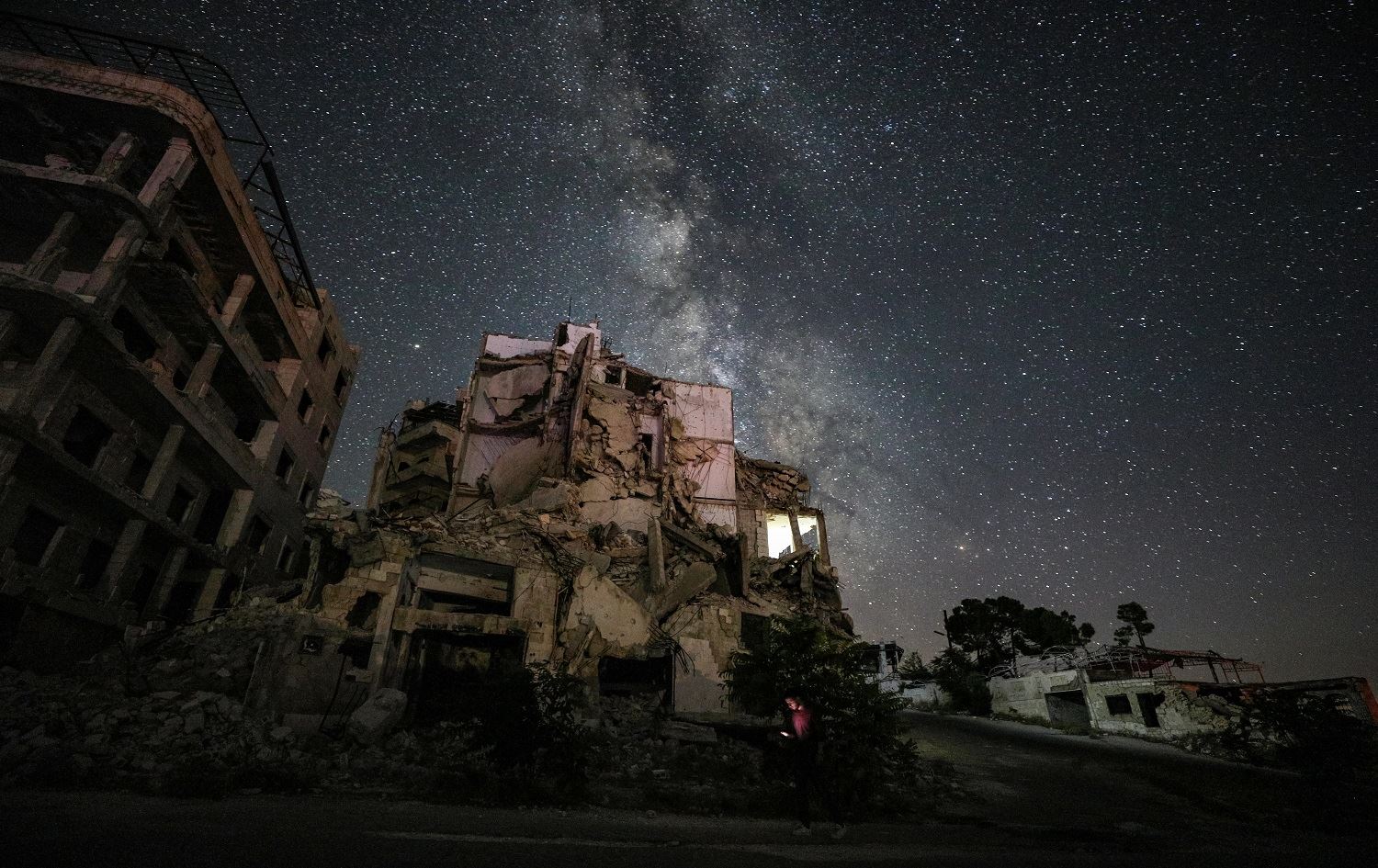
A man walks past destroyed buildings in the town of Ariha as the Milky Way galaxy is seen in the night sky above. Photo: Omar Haj Kadour/AFP
ARIHA, Syria — Years of violence in Syria's last major opposition bastion has created a landscape of ruin, eerily lit in the early hours of Saturday by the Milky Way in the night sky.
Over the bombed-out town of Ariha in Idlib province, the stars looked like specks of dust shining over the town's pulverised buildings.
Long-exposure pictures taken by an AFP photographer on an unusually clear night with no moon show the stark contrast between the grim devastation on the ground and the Milky Way.
A Russian-backed government offensive between December and March ravaged Ariha and other parts of northwest Syria, displacing nearly a million people.
A truce reached on March 6 had largely reduced the fighting but Russia resumed air strikes this month for the first time in an alarming uptick.
Some 780,000 of the nearly 1 million displaced are estimated to remain in displacement, according to the United Nations.
Perched on a mountainous region in Idlib, Ariha is held by the Hayat Tahrir al-Sham alliance (HTS), led by Syria's former Al-Qaeda affiliate, and its rebel allies.
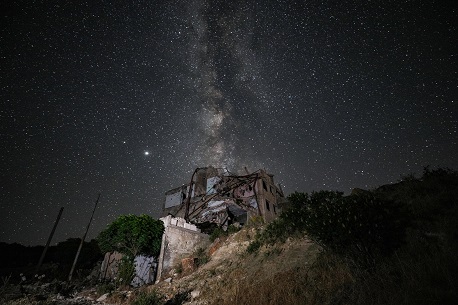
It was home to almost 70,000 people before the regime's latest offensive but it is now nearly deserted.
Its streets are dotted with the skeletons of buildings damaged by previous rounds of bombardment.
Barely any lights emanate from the ground, except the dim glow of mobile phones carried by passersby.
Nearly half of Idlib's population of three million has been displaced from other parts of Syria that have come under regime control.
The war in Syria has killed more than 380,000 people and displaced nearly half of the country's pre-war population since it started in 2011.
With the help of his Russian and Iran allies, President Bashar al-Assad has clawed back more than 70 per cent of the country.


Comments
Rudaw moderates all comments submitted on our website. We welcome comments which are relevant to the article and encourage further discussion about the issues that matter to you. We also welcome constructive criticism about Rudaw.
To be approved for publication, however, your comments must meet our community guidelines.
We will not tolerate the following: profanity, threats, personal attacks, vulgarity, abuse (such as sexism, racism, homophobia or xenophobia), or commercial or personal promotion.
Comments that do not meet our guidelines will be rejected. Comments are not edited – they are either approved or rejected.
Post a comment