


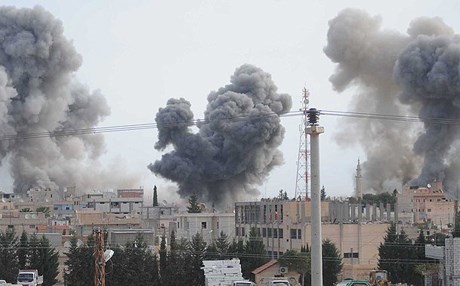
ERBIL, Kurdistan Region—The security forces of Syrian Kurdistan (Rojava) known as Asayish have vowed to catch those responsible for a double bombing in the city of Qamishlo Wednesday night that killed 16 people and injured at least 45 others.
“We will do our best to find the criminal networks that aim to destroy the security and safety of our region and our people shall live a new year in peace and stability,” the Asayish wing of the Peoples Protection Units (YPG) said in a statement on Thursday.
Two bomb blasts targeted civilian crowds at Qamishlo’s Miami café and Gabriel restaurant in a spirit of New Year festivities.
“We reiterate our commitment to security, coexistence, democracy and freedom in areas under our control,” said the Asayish, sending condolences to the victims’ families.
“Our security forces have despite the financial, technological and political circumstances done our best to provide security and safety for the people of this region and for that reason the offices of the Asayish in Rojava have been targeted by Daesh (ISIS),” read the statement.
The Asayish also published a detailed report of all car bomb attacks and roadside bombs against civilians and YPG forces in 2015 across Rojava.
The statement adds that ISIS militants have stepped up their attacks against civilians due to their retreat in the battlefield in recent months.
“As the YPG and Syrian Democratic Forces (SDF) continued freeing areas northern Syria throughout 2015 the Daesh terrorist organization kept up its terrorist attacks against defenseless civilians and innocent people,” read the Asayish statement. “And that is proof of their defeat and failures in the battlefield and loss of vast areas they used to control near Jazira and Kobani.”
The YPG and its security wing Asayish have been in control of most of Rojava since the withdrawal of Syrian government forces from the area in 2012.
“We knew from the very beginning that with its inhuman acts in our areas Daesh (ISIS) works for foreign interests and political agenda and is supported by states that claim democracy and brotherhood of nations in the Middle East.”
“We will do our best to find the criminal networks that aim to destroy the security and safety of our region and our people shall live a new year in peace and stability,” the Asayish wing of the Peoples Protection Units (YPG) said in a statement on Thursday.
Two bomb blasts targeted civilian crowds at Qamishlo’s Miami café and Gabriel restaurant in a spirit of New Year festivities.
“We reiterate our commitment to security, coexistence, democracy and freedom in areas under our control,” said the Asayish, sending condolences to the victims’ families.
“Our security forces have despite the financial, technological and political circumstances done our best to provide security and safety for the people of this region and for that reason the offices of the Asayish in Rojava have been targeted by Daesh (ISIS),” read the statement.
The Asayish also published a detailed report of all car bomb attacks and roadside bombs against civilians and YPG forces in 2015 across Rojava.
The statement adds that ISIS militants have stepped up their attacks against civilians due to their retreat in the battlefield in recent months.
“As the YPG and Syrian Democratic Forces (SDF) continued freeing areas northern Syria throughout 2015 the Daesh terrorist organization kept up its terrorist attacks against defenseless civilians and innocent people,” read the Asayish statement. “And that is proof of their defeat and failures in the battlefield and loss of vast areas they used to control near Jazira and Kobani.”
The YPG and its security wing Asayish have been in control of most of Rojava since the withdrawal of Syrian government forces from the area in 2012.
“We knew from the very beginning that with its inhuman acts in our areas Daesh (ISIS) works for foreign interests and political agenda and is supported by states that claim democracy and brotherhood of nations in the Middle East.”
Comments
Rudaw moderates all comments submitted on our website. We welcome comments which are relevant to the article and encourage further discussion about the issues that matter to you. We also welcome constructive criticism about Rudaw.
To be approved for publication, however, your comments must meet our community guidelines.
We will not tolerate the following: profanity, threats, personal attacks, vulgarity, abuse (such as sexism, racism, homophobia or xenophobia), or commercial or personal promotion.
Comments that do not meet our guidelines will be rejected. Comments are not edited – they are either approved or rejected.
Post a comment