


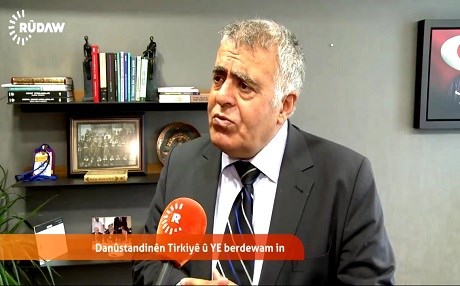
ISTANBUL, Turkey— A Kurdish member of the Turkish parliament warns of “mass migration” of Alevi Kurds to the European Union if the travel restrictions are removed in accordance to a proposed deal between Turkey and the EU.
Lawmaker Müslüm Doğan, an Alevi Kurd from the pro-Kurdish People’s Democratic Party (HDP) told Rudaw the “pervasive discrimination practices” against the Alevis in Turkey has alienated their vulnerable community.
“If the [EU visa] restrictions are lifted, the Alevis Kurds won’t live in Turkey anymore,” said Doğan who also briefly served as the minister of development in 2015.
“The Turkish system is religious and racist which has made life difficult for Kurds and the Alevis in the country,” he said and warned of “rise of fanaticism” in Turkey against minority groups.
Less than two percent, around 800,000 people, of Turkey’s population are Alevi Muslims of which several thousands are Kurds, especially in the Kurdish city of Dersim. The Alevi is a sub-religion within the larger Shiite interpretation of Islam.
Earlier this year European leaders welcomed Ankara’s offer to take back migrants who entered Europe from Turkey in return for more economic aid, faster EU membership talks and quicker visa-free travel for Turkish citizens.
It is however unclear how the deal will be implemented without European Union’s promised aid which is currently in deadlock over Turkey’s refusal to change its anti-terrorism laws, as preconditioned by the EU to grant the $20 billion so called Migration Aid.
Many also fear that with the sporadic clashes still ongoing in Turkey’s Kurdistan where large numbers of population have already been dislocated, many Kurds will choose to leave the country towards EU altogether if travel limits are lifted.
“Entire neighborhoods have been destroyed in Kurdish cities with their national rights severely violated,” Doğan said.
“All of that really needs to be studied and addressed.”
Comments
Rudaw moderates all comments submitted on our website. We welcome comments which are relevant to the article and encourage further discussion about the issues that matter to you. We also welcome constructive criticism about Rudaw.
To be approved for publication, however, your comments must meet our community guidelines.
We will not tolerate the following: profanity, threats, personal attacks, vulgarity, abuse (such as sexism, racism, homophobia or xenophobia), or commercial or personal promotion.
Comments that do not meet our guidelines will be rejected. Comments are not edited – they are either approved or rejected.
Post a comment