


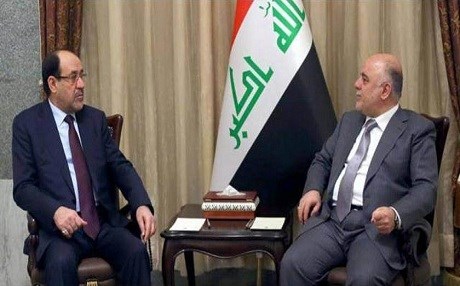
The most significant consequence of forming the new Iraqi government by Adil Abdul-Mahdi after the election in May is Dawa Party losing its grip on the premiership after 13 years, perhaps the biggest blow to "the party of power."
It is agreed that Dawa Party’s troubles started when two of its leading figures formed their own (separate and independent) political lists to participate in the election and failed to re-unite after the election. The personal differences began when Nouri Al-Maliki, secretary general of the party and Haidar Al-Abadi, head of politburo and the then incumbent PM, split the party vertically — most of the leadership went with Abadi, while the Shura Council went with Maliki.
Once Ameri and Sadr agreed to designate Abdul-Mahdi as PM, the Dawa Party as a whole could do little to change this decision. They became a sitting duck, watching their political opponents calling all the shots. It is ironic that if they had re-united after the election, the Dawa Party would have used their 63 seats and attracted others to form the largest bloc. However, the disagreement between Maliki and Abadi over the PM post remained the biggest stumbling block.
The split between the two was fueled and inflamed further when US-backed a second term for Abadi at the time Iran was not so keen and fully backed Maliki inside Binaa.
The Dawa Party leaders admitted their grave position in the form of a statement issued on October 18 when he urged for preparations to hold a party conference, calling upon those who left the party to reconcile and re-join. This was seen as a clear admittance that they are in deep trouble.
Dawa needs to get its act together and redefine its course. It is one of the oldest parties in Iraq, has deep roots in Iraqi politics, and perhaps it needs to inject new blood into the leadership. It needs to go through a radical reform and total re-organisation; otherwise, the party will face even tougher challenges in 2022.
Farhad Alaaldin is an advisor to the Iraqi president.
The views expressed in this article are those of the author and do not necessarily reflect the position of Rudaw.
It is agreed that Dawa Party’s troubles started when two of its leading figures formed their own (separate and independent) political lists to participate in the election and failed to re-unite after the election. The personal differences began when Nouri Al-Maliki, secretary general of the party and Haidar Al-Abadi, head of politburo and the then incumbent PM, split the party vertically — most of the leadership went with Abadi, while the Shura Council went with Maliki.
Maliki went ahead with his State of Law Coalition and secured 25 seats in the elections, while Abadi formed a new list, al-Nasr, and secured 38 seats. The party elders asked for unity and mediated between the two, but all efforts failed. State of Law went on to join al-Binaa list headed by Hadi al-Ameri, while al-Nasr joined al-Eslah led by Muqtada al-Sadr, both became minority in much bigger blocs and lost their influence in negotiations.
Once Ameri and Sadr agreed to designate Abdul-Mahdi as PM, the Dawa Party as a whole could do little to change this decision. They became a sitting duck, watching their political opponents calling all the shots. It is ironic that if they had re-united after the election, the Dawa Party would have used their 63 seats and attracted others to form the largest bloc. However, the disagreement between Maliki and Abadi over the PM post remained the biggest stumbling block.
The split between the two was fueled and inflamed further when US-backed a second term for Abadi at the time Iran was not so keen and fully backed Maliki inside Binaa.
The Dawa Party leaders admitted their grave position in the form of a statement issued on October 18 when he urged for preparations to hold a party conference, calling upon those who left the party to reconcile and re-join. This was seen as a clear admittance that they are in deep trouble.
Dawa needs to get its act together and redefine its course. It is one of the oldest parties in Iraq, has deep roots in Iraqi politics, and perhaps it needs to inject new blood into the leadership. It needs to go through a radical reform and total re-organisation; otherwise, the party will face even tougher challenges in 2022.
Farhad Alaaldin is an advisor to the Iraqi president.
The views expressed in this article are those of the author and do not necessarily reflect the position of Rudaw.
Comments
Rudaw moderates all comments submitted on our website. We welcome comments which are relevant to the article and encourage further discussion about the issues that matter to you. We also welcome constructive criticism about Rudaw.
To be approved for publication, however, your comments must meet our community guidelines.
We will not tolerate the following: profanity, threats, personal attacks, vulgarity, abuse (such as sexism, racism, homophobia or xenophobia), or commercial or personal promotion.
Comments that do not meet our guidelines will be rejected. Comments are not edited – they are either approved or rejected.
Post a comment