


The International Mother Tongue Day, designated by the United Nations and celebrated last month, provides a grand exposure for the recognition, protection, and spread of lesser-used and threatened languages to reassert themselves in their struggle for language rights.
We Kurds hail and celebrate this legacy as one of our own. The day, celebrated on February 17 and recognized by the United Nations Educational, Scientific and Cultural Organization (UNESCO), provides us with initiatives and projects to both promote the Kurdish language and dialects and continue to challenge language ideologies and institutional attitudes about the Kurdish language in Iran, Syria, Turkey and Iraq.
The day promotes linguistic diversity locally and globally.
In Iraq, except for the recognition of Kurdish, the language does not enjoy legal status to be allowed in education, public institutions, business, publications and media.
In Turkey, because of repressive assimilationist policies, many Kurds have suffered language loss. The so-called democratization process has proven to be elusive, cosmetic, inconsequential and peripheral. It is not surprising that despite all the misleading rhetoric on language reform in Turkey, Kurdish has not been given its denied status, and the demand for the basic right to education in the mother tongue is still controversial and rejected.
In Iran, draconian restrictions are being used against using the language in official institutional and educational settings. Government directives issued periodically reinforce a repressive policy that has turned schoolyards into a battlefield where administrative personnel and teachers have been requisitioned to watch over and eavesdrop on Kurdish students to ensure that no one speaks “the local dialect.”
Similarly, Kurdish ethnic and linguistic identity in Syria has been denied and brutally repressed. To this day, Kurds are treated as outsiders and foreigners. These entrenched state language ideologies, in short, have made “a stateless nation subjected to harsh measures of linguicide and ethnocide.” (Hassanpour, 1998).
These exclusionary and discriminatory practices have detrimental social and educational implications for Kurdish children who find it more difficult to thrive endemically. A very small minority of Kurdish students is admitted to institutes of higher learning to earn a degree, in contrast with native speakers of the dominant languages, namely Farsi, Turkish, and Arabic.
Since its inception, the Kurdish movement has defined itself, in part, in terms of the struggle for language and cultural rights. Kurdish human rights and political activists have fought for the right to use the Kurdish language in official settings. The Kurdish political struggle continues to challenge the linguistic hegemony of the homogenizing states in order to create a democratic climate for the recognition of linguistic diversity and democracy. But the realization of official status still faces long and difficult challenges. The International Mother Tongue Day offers us the opportunity to re-stress and campaign to earn our language rights in the face of not only states but the dominant nations’ prejudice and negative attitudes.
Kurds for the first time in history have the advantage to have declared their own national and official language or dialects. Currently, both Sorani and Kurmanji are being used to meet general and governmental needs. The dilemma persists on a particular code, to select, codify and elaborate – or unify -- the two major dialects. Fortunately, thus far a monolithic choice has not been made, although Sorani has somewhat unofficially become the official language.
A positive development is that the recognition of Kurdish in South Kurdistan (northern Iraq) is gradually changing views and attitudes as the newly-formed political entity has energized the debate about the Kurdish multilingual realities within and across its geographical borders.
Speakers of different varieties vie for representation and balanced participation in the media, government and institutions. They rightfully feel entitled to pursue equal access to programs and language resources. Watching the Kurdish media one can see a cultural revival through partial representation of this linguistic diversity. These broadcasting practices, however, are still too far away from genuine celebration, recognition and institutionalization of linguistic pluralism beyond the familiar slogans and the myth of the superiority of Sorani as a unifying literate language of a uniform political unity.
The Kurdish autonomous region still faces serious challenges to create and promote their declared balance between the use of Kurmanji and Sorani, the major dialects of Kurdish in the area. A significant way to address this need is how and the extent to which each language variety is used in the media, institutions, and education as official language varieties.
While airtime on radio and television, and online channels is not equally divided between Sorani and Kurmanji, Kurmanji is increasingly receiving more time and coverage as a distinct Kurdish language variety. This process can gradually change the social values and norms associated with each language variety as mutual intelligibility among the speakers of these two dialects increases.
The simultaneous use of these language varieties in the media and institutions is increasing mutual intelligibility among broadcasters, their guests and different speech communities. I have seen programs in which participants switch easily from one dialect to another. These sociolinguistic exchanges and interactions can socialize each speech community into the dialect of the other. This productive process will facilitate the introduction of bi-standardization of the two varieties.
Kurdish linguistic heterogeneity requires a democratic approach to expand the domains and functions of language use. The media’s use of the two primary language varieties is indeed contributing to creating the conditions for linguistic parity and diversity. The bi-standardization option provides the possibility for the recognition of two official language varieties, each associated with informal and institutional domains of communication and education as they would expand their audiences beyond “one Kurdistan, one language” to “one Kurdistan, two official language varieties.” The current approach can also accommodate the bi-standardization of the two widely used scripts.
This year’s theme of the International Mother Tongue Day is “Mother tongue instruction and inclusive education.” In honoring this day we will continue our struggle to ensure the right to education for our children and later as adults at all levels. The fulfillment of this right is central for the attainment of fundamental human rights such as the right to free use of the language, education and dissemination of information in and through the native language. We urge the United Nations and European Union to create and foster new possibilities for the preservation, protection and promotion of the Kurdish language and heritage both in the mainland and among Kurdish diasporic communities in Europe and North America.
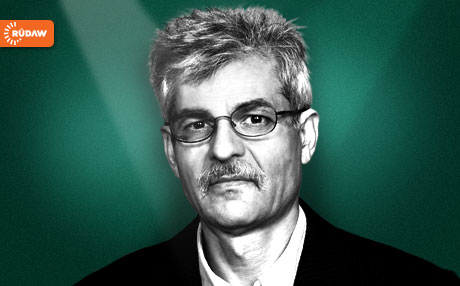
Amir Sharifi is president of the Kurdish American Education Society-Los Angeles
Comments
Rudaw moderates all comments submitted on our website. We welcome comments which are relevant to the article and encourage further discussion about the issues that matter to you. We also welcome constructive criticism about Rudaw.
To be approved for publication, however, your comments must meet our community guidelines.
We will not tolerate the following: profanity, threats, personal attacks, vulgarity, abuse (such as sexism, racism, homophobia or xenophobia), or commercial or personal promotion.
Comments that do not meet our guidelines will be rejected. Comments are not edited – they are either approved or rejected.
Post a comment