


Turkey's short-sighted foreign policy towards Syria -- based on the Kurdish issue alone -- was so irrational that it became one of the key factors in turning that country into a battleground for various jihadist organizations, which gave birth to the Islamic State (ISIS).
As a secular progressive community, the Kurds of Syria were the most natural allies of the opposition to the Syrian regime. They were the most powerful, with experience in armed conflict and a strong sense of cohesion and discipline. But with Turkey taking ownership of the forces fighting the Syrian regime and imposing its political agenda on those forces, it managed to alienate the Kurds.
Turkey ensured that the Free Syrian Army (FSA) would take the same stance toward the Kurdish question as the oppressive Syrian regime had done for decades.
Avoiding the Syrian revolution, however, the Kurds seized the chance to strengthen their military power and capabilities -- much to the dismay of Turkey -- and formed an autonomous region in Rojava (Western Kurdistan). Rojava was, over the past three years, the most stable and secure part of Syria.
But the events of the past two days showed that Turkey still prefers the violent and unpredictable ISIS to a peaceful Kurdish region next door. Kobane has been under brutal ISIS attack from all directions, and Turkey has blocked the only route for other Kurds going to help their brethren in the besieged town.
Turkey’s dubious stance towards ISIS and its hostile policy towards the Kurds has also created a predicament for the international community that wants to fight the Islamic State.
Regardless of Turkey’s policies, the West appears to prefer the Kurdish Peshmerga in the Kurdistan Region and the Peoples Protection Units (YPG) to all other armed groups who claim to be against ISIS.
The Kurds on both sides of the border have proven their abilities and commitment. The Peshmerga and YPG have been effectively fighting ISIS for weeks. The Kurdistan Region and Rojava have saved many Christians, Yezidis and other minority groups from ISIS atrocities.
Turkey’s plans for the Rojava Kurds have become known to the public. Turkey aims to send ground forces and to set up a secure zone along its border in Syrian territory. Kurdish leaders fear this is a move against their autonomy.
Turkey's goals differ greatly from those of the global coalition. The top US general recently noted his desire to utilize the Peshmerga and Rojava defense units as “boots on the ground.” But it remains to be seen whether the Turkish lobby will allow this to happen.
The main contributing factor to this predicament is that Turkey, the EU and the US have listed the Kurdistan Workers’ Party (PKK) as a terrorist organization.
The armed conflict between the PKK and Turkey is a struggle for self-determination between two armed forces, and humanitarian international law obliges the EU and other powers not to interfere in this conflict or list the PKK as a terrorist organization. The law of armed conflict stipulates that "acts of war are not chargeable as either criminal acts or terrorist acts."
In recent days, the Turkish president has claimed there is no difference between ISIS and the PKK. At a time when the Turkish state is engaged in a peace process with the PKK, this statement betrays its true intentions. Turkey and some Western powers have a lot of soul searching to do on the Kurdish issue.
As the International Court of Justice made clear in its ruling on Nicaragua, international humanitarian law forbids interference of third parties in the conflict, because such interference amounts to interference with the internal affairs of a state. The principle follows from the concept of sovereignty, a key foundation of public international law.
The government of Turkey made clear, when the Rojava autonomous region was formed, that it would not permit any "fait accompli." So, to leave the task of protecting Rojava to Turkey amounts to allowing foxes free reign of the hen house. Ultimately, Rojava Kurds are being punished for not joining the Syrian anti-regime uprising. The world coalition now cannot effectively help Syrian Kurds, because Turkey stands in the way.
It must be remembered it was Turkey that played the key role in creating the present situation in the first place, by opening its door to ISIS and giving them free passage to Syria.
Further, the PKK’s listing as a terrorist organization in today’s circumstances -- albeit in a legally flawed manner and as a politically motivated act -- is blocking Syrian Kurds and leaving them to their own devices in this war. This is also unjust.
However, the West can and ought to bypass Ankara and deal directly with the Syrian Kurds, either through Baghdad or Erbil, because Rojava is the only effective window into Syria. Without them, the US and the EU will have a hard time taking the war to ISIS where the militants are strongest.
Excluding the Syrian Kurds from the anti-ISIS coalition may have serious consequences. Fragmented Syrian opposition groups, which also include several known and unknown jihadist groups among them, cannot achieve what is required without help from Syrian Kurds.
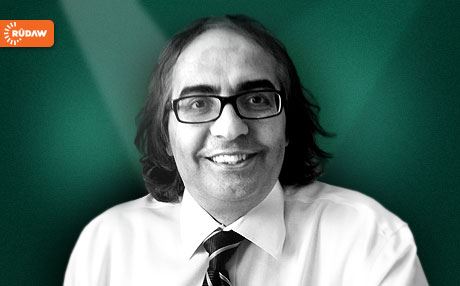
The author is a Kurdish human rights lawyer based in Toronto, Canada.
Comments
Rudaw moderates all comments submitted on our website. We welcome comments which are relevant to the article and encourage further discussion about the issues that matter to you. We also welcome constructive criticism about Rudaw.
To be approved for publication, however, your comments must meet our community guidelines.
We will not tolerate the following: profanity, threats, personal attacks, vulgarity, abuse (such as sexism, racism, homophobia or xenophobia), or commercial or personal promotion.
Comments that do not meet our guidelines will be rejected. Comments are not edited – they are either approved or rejected.
Post a comment