He sits in the front row alongside senior Iranian officials at high-profile events in Tehran, while in Washington his views on Middle Eastern affairs carry much weight. In the United Arab Emirates, he is personally received by President Sheikh Mohammed bin Zayed Al Nahyan when he visits, and over the years, has built close ties with Turkey’s President Recep Tayyip Erdogan.
Kurdistan Region President Nechirvan Barzani is respected by allies and adversaries alike. When news broke of a drone attack targeting his residence in the northern city of Duhok near the Turkish border on March 28, many world leaders expressed relief that he was not present at the time of the incident. Iran, the United States, the United Nations Secretary-General, and Gulf states all condemned the attack.
Leaders of Tehran-aligned Iraqi armed groups - who have claimed responsibility for hundreds of drone and missile attacks on the Kurdistan Region, US bases, and Gulf countries in past years - were quick to deny involvement. Instead, they suggested rogue elements may have carried out the assault, which came during the six-week conflict between Iran and its ‘Axis of Resistance’ allies on one side, and the United States and Israel on the other.
With Iraq and the Kurdistan Region increasingly caught in the crossfire, the 59-year-old President Barzani appears to be lending a helping hand to Baghdad’s incoming prime minister as he tries to navigate these delicate times and works to form a new cabinet. Since 2003, Iraqi leaders have had to carefully try to balance US and Iranian influence in the country.
However, given the recent outbreak of military confrontations between Tehran and Washington in the region, President Barzani’s ability to assist Baghdad and the newly appointed Prime Minister-Designate Ali al-Zaidi may hinge on their efforts to bring outlaw Iraqi armed groups under state control. This is especially the case after these groups launched hundreds of missile and drone attacks at US diplomatic and military interests in Iraq, Kurdistan, and the wider region, including the UAE.
Of note, the Kurdish leader visited Abu Dhabi on April 29, where he met with President Al Nahyan and discussed the regional escalation, its implications and the need to prioritize peace and security, according to a statement from the Kurdistan Region Presidency.
As President Barzani held a series of meetings with Iraqi leaders in Baghdad earlier this week, Washington sent another signal to Zaidi to curb these groups, announcing on Tuesday a $10 million reward for information on Akram al-Kaabi, leader of the Harakat Hezbollah al-Nujaba armed group, a key member of the Iran-aligned Axis, accused of launching numerous attacks on American forces.
A day later, Kaabi said in a post on X that the weapons of Iraqi armed groups are a “red line” for the Axis.
Despite such warnings, Washington appears increasingly determined to pressure Iraqi leaders to take decisive action against these armed groups and sever their ties to state institutions and the economy.
Trusted interlocutor
During his visit to Baghdad, President Barzani met with Zaidi and a host of senior officials and politicians, with discussions spanning unresolved disputes between Erbil and Baghdad, government formation, and broader regional developments.
More importantly, the visit highlighted Iraq’s precarious position in the region at this delicate point in time. President Barzani and Zaidi have maintained a longstanding relationship marked by mutual respect. Washington continues to push for strong Kurdish participation in Baghdad’s political process, viewing the Kurdistan Region as a key pillar of stability in Iraq.
Iraq’s ruling Shiite Coordination Framework appears to have taken note of Washington’s message. President Donald Trump has signaled strong backing for Prime Minister-designate Zaidi, after his administration seemingly blocked veteran Shiite politician and former premier Nouri al-Maliki (2006 - 2014) from securing a third term. Maliki, one of Iran’s longstanding allies in Iraq, maintains close ties with the Tehran-aligned armed groups.
“With our help, he [Zaidi] won, and we want him to do very well. I told him that the United States is with him all the way. It was a great victory - the new leader of Iraq is someone we support very strongly,” Trump told Rudaw about Zaidi’s appointment in early May.
Another key item on President Barzani’s agenda during his Baghdad visit was addressing the proliferation of arms in the hands of Tehran-aligned groups.
“We discussed disarming these factions, as it has become a problem for Iraq and for us,” Nuri Osman, an advisor to President Barzani who accompanied him on the trip, told Rudaw on Tuesday. “It is a major problem - how can they attack the Kurdistan Region, which is part of Iraq?”
Osman added that officials in Baghdad agreed with the Kurdish position, describing these groups as a “serious threat facing Iraq.”
Notably, Iran has offered only limited comment on Zaidi’s designation to form the next cabinet, as it remains largely focused on mounting pressures at home.
While Tehran and Washington agreed on April 8 to an Islamabad-brokered ceasefire to create space for talks, both sides have since engaged in tit-for-tat maritime restrictions. Iran has tightened its grip on shipping in the Strait of Hormuz, while the US has imposed a naval blockade on Iranian ports - a move that has sharply curtailed Tehran’s oil exports, significantly reduced state revenues, and further strained the broader economy.
“In my phone call with the Prime Minister of Iraq [Zaidi], I emphasized the necessity of advising American officials to withdraw the military threat from our region,” Iranian President Masoud Pezeshkian wrote on X following a delayed call with the Iraqi prime minister-designate on Tuesday. “The followers of the Shiite school [of thought] cannot be forced into submission, even through the language of force.”
High stakes
President Barzani met with political figures representing all components of Iraqi society, including Shiite and Sunni Arab leaders, as well as representatives of religious minorities in the Iraqi legislature during his two-day visit to Baghdad. The effort reflected the Kurdish President’s push to accelerate the government formation process at a sensitive moment for the wider region.
Commenting on his meeting with the Kurdish president, prominent Sunni Arab politician Mohammed al-Halbousi - head of the Taqaddum party in the Iraqi legislature and former speaker of parliament (2018 - 2023) - told Rudaw, “We held a meeting yesterday with Kurdistan Region President, brother Nechirvan Barzani, following prior coordination between the concerned parties.”
“We can say that this meeting represents a step that serves Iraq’s interests beyond partisan considerations,” Halbousi added.
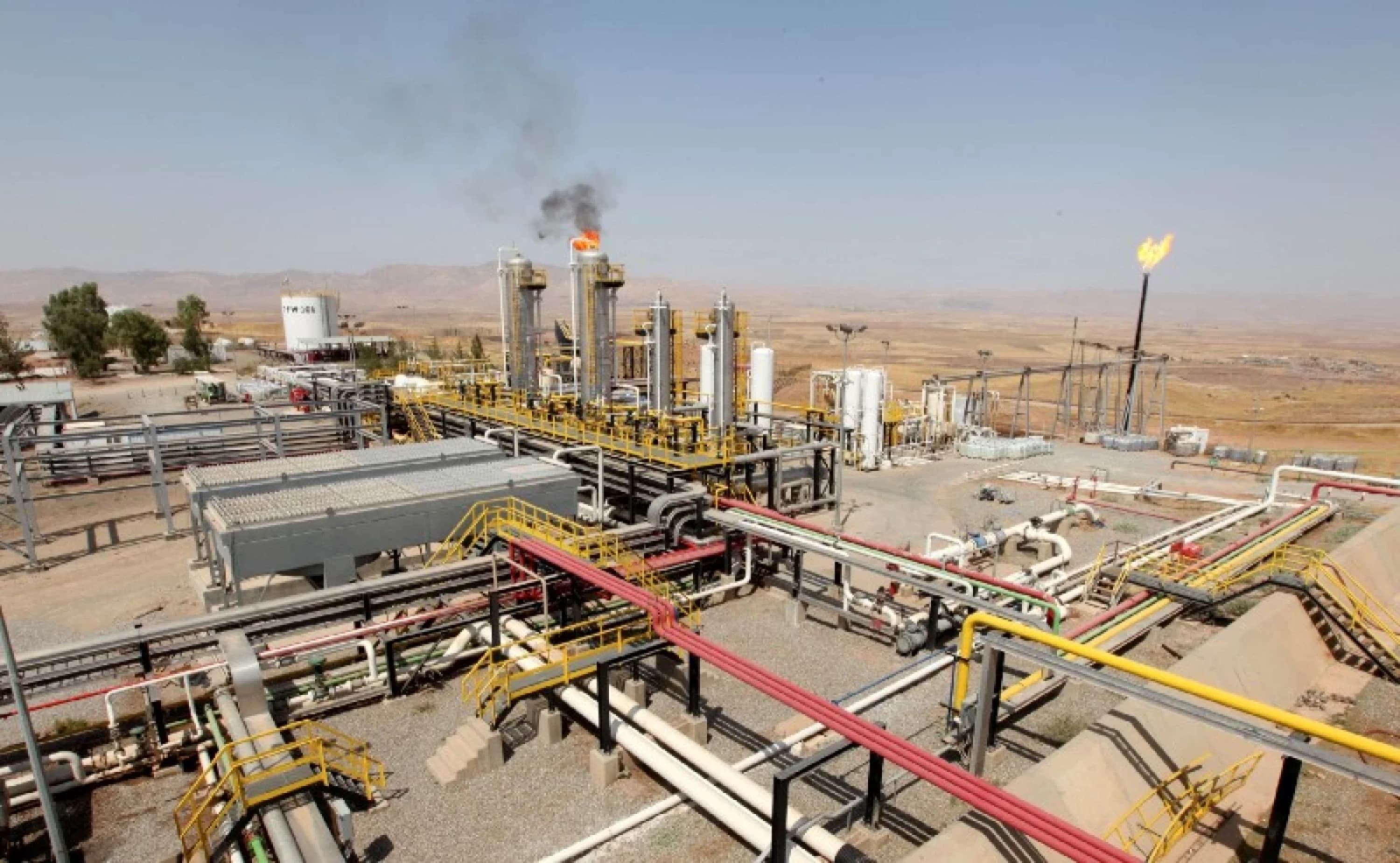
Indeed, Iraq’s national interest now needs to be prioritized more than ever, as the country faces mounting challenges, including the Iran war following 47 years of tensions between Tehran and Washington, and the disruption of shipping in the Strait of Hormuz. With over 93 percent of its oil exports passing through the strategic waterway, Iraq’s oil revenues have come under severe pressure, while Baghdad has also been forced to reduce production levels by around 80 percent.
On Tuesday, Iraq was forced to offer steep discounts of up to $33.40 per barrel on Basrah Medium crude for May deliveries, reflecting sustained pressure on export routes and pricing. At the same time, Iran-aligned armed groups have expanded the conflict into Iraqi cities and oil infrastructure, while political power centers in Baghdad remain increasingly divided as regional tensions continue to strain the domestic landscape.
Iraq urgently needs economic, security, and political stability at this juncture. The country’s oil exports fell to 310,000 barrels per day in April - around one-twelfth of pre-war levels, according to Iraq Oil Report.
The economic strain stemming from reduced oil exports and disruptions in the Strait of Hormuz was another central topic in President Barzani’s meetings with Iraqi leaders, with emphasis on the need for coordinated action to address these challenges.
“We discussed with our partners the formation of the new Iraqi government and reaffirmed to the Prime Minister-Designate [Zaidi] our full support for joint efforts to move Iraq and its people into a new phase of stability, development and progress,” the Kurdistan Region President wrote in a Tuesday post on X, after concluding his trip.
President Barzani has repeatedly positioned himself as a seasoned politician and unifying figure between Erbil, Baghdad, and the wider region. At the end of his visit to the Iraqi capital, he stressed that Iraq’s challenges should be addressed through mutual respect and cooperation, while also lending support to Zaidi in weathering the ongoing regional storm.
The ball is now in Baghdad’s court.
Fazel Hawramy is the Editor-in-Chief of Rudaw English.
The views expressed in this article are those of the author and do not necessarily reflect the position of Rudaw.