


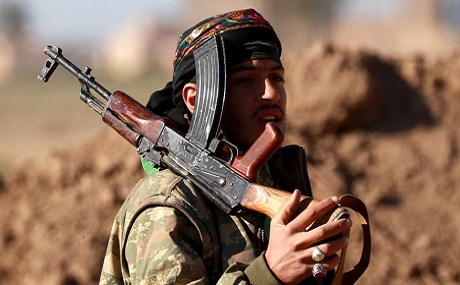
Rather than despair over the fickle nature of American political and military support, the Kurds of the Middle East should try to look on the bright side: their regional foes probably inspire far too much fear and loathing in Washington to outwit the Kurds in the foreseeable future.
Without Turkey, Iran, Syria, and Russia’s hasty endorsement of President Donald Trump’s shock military withdrawal announcement on December 19, critics of the move would have had to strive harder to prove it amounted to a brazen betrayal of a battle-tested ally and a blow to the West’s security interests and, therefore, deserved to be shelved indefinitely.
It would be churlish to deny Recep Tayyip Erdogan credit for having the presence of mind to win Trump over to his side in the course of one phone call, which had reportedly been arranged for Trump to get his Turkish counterpart to back off and stop threatening to attack the Western-backed Syrian Democratic Forces (SDF) in northeastern Syria.
But if Erdogan’s soothing words seemed to settle the dispute over continued US support for the Kurds of Syria in the fight against ISIS, his overenthusiastic backing for Trump’s unilateral withdrawal decision has contributed to its reopening.
At the same time, Turkey’s hyper-patriotic cabinet ministers got one up on their boss by sending gratuitously cruel messages to the Kurdish fighters who form the bulk of the SDF bravely battling ISIS in northeastern Syria.
Hulusi Akar, the Turkish defence minister, cemented his place in the book of follies by saying Kurdish militants east of the Euphrates in Syria “will be buried in their ditches when the time comes”. The rhetoric might have been ramped up for effect, but it served to expose Turkey’s true intentions dressed up as a mission to take over the international coalition’s fight to defeat ISIS.
Mevlut Cavusoglu, Turkey’s foreign minister, unwittingly did his bit to galvanize American support for the SDF by saying Turkish forces were determined to cross the Euphrates River into Kurdish-held territory in Syria as soon as possible, and urging France to remove its forces from northeastern Syria now that an American withdrawal was a done deal. What was perhaps intended to score political points at home now looks in hindsight like a classic case of jumping the gun.
Turkey's triumphalism proved to be infectious. The Syrian government scored an own-goal by allowing its army to claim it had entered the SDF-controlled part of Manbij for the first time in six years and raised a flag there. An unintended consequence of the televised statement by a spokesman that the troops were in the northern Syrian city to “crush terrorism and defeat all invaders and occupiers” was to set alarm bells ringing in Washington – if not inside the White House.
Although Syrian government officials were careful to avoid the hyperbole of their Turkish counterparts that would have generated more international opprobrium, its military's reaction clearly smacked of premature schadenfreude. Whatever the mood now in Damascus, until the Kurdish-led Syrian Democratic Council (SDC) formally announces it has reached an agreement with Bashar al-Assad’s government, forecasts of an easy victory for Syrian forces over their rivals could very well remain just that.
The satisfaction expressed by Assad’s allies in Tehran with Trump’s planned military pullout was a dead giveaway that they too were counting on a rapid reversal of fortune. “From the start, the entry and presence of American forces in the region has been a mistake, illogical and a source of tension, and a main cause of instability,” an Iranian foreign ministry spokesman was quoted as saying by state media. The reaction was not surprising given there’s little love lost between Iran and Kurds in general and its own Kurdish population in particular.
By some accounts, Iran’s “deep state” stood to gain the most from Trump’s move, which would have helped it gain full control over a strategic arc of the Levant. A flipside of the withdrawal would have been the likely unraveling of Trump’s policy of exerting “maximum pressure” on Iran, after his administration had withdrawn from the 2015 multilateral nuclear deal and reinstated economic sanctions. But with Iran hawks such as John Bolton, the national security adviser, and Mike Pompeo, the secretary of state, appearing to have put the Syria withdrawal plan into a deep freeze, the depth of Tehran’s disappointment can scarcely be overestimated.
Unlike the others, Russian President Vladimir Putin probably had a sense that Trump’s pullout plan sounded too good to be true. Reacting with guarded optimism, he said “if the decision to withdraw was made, then it is a correct one”, adding that “as for defeating ISIS, I do generally agree with the President of the United States”. Sergei Lavrov, the Russian foreign minister, also voiced skepticism about the announced withdrawal, lamenting “the Americans don’t always do what they promise, far from it”.
Even so, Russia could not resist the urge to announce a three-way summit with Turkey and Iran on the Syrian conflict, while a Kremlin spokesman wasted no time welcoming the reported entry of Syrian forces into Manbij, saying: “Of course, this will help in stabilizing the situation. The enlargement of the zone under the control of government forces ... is without doubt a positive trend.” In retrospect, even the Russians had got ahead of themselves in lauding Trump’s impulsive diplomacy without realizing the pitfalls.
As long as the Turks are busy defending themselves against accusations of harboring plans for “slaughtering Kurds”, they are unlikely to make much headway in shaping Western public opinion in their favor. And with so few leading lights of the US foreign policy establishment willing to cut even a NATO ally some slack, the chances of a breakthrough are practically non-existent for the likes of Iran, Russia, and Syria.
Arnab Neil Sengupta is an independent journalist and commentator on the Middle East.
The views expressed in this article are those of the author and do not necessarily reflect the position of Rudaw.
Without Turkey, Iran, Syria, and Russia’s hasty endorsement of President Donald Trump’s shock military withdrawal announcement on December 19, critics of the move would have had to strive harder to prove it amounted to a brazen betrayal of a battle-tested ally and a blow to the West’s security interests and, therefore, deserved to be shelved indefinitely.
It would be churlish to deny Recep Tayyip Erdogan credit for having the presence of mind to win Trump over to his side in the course of one phone call, which had reportedly been arranged for Trump to get his Turkish counterpart to back off and stop threatening to attack the Western-backed Syrian Democratic Forces (SDF) in northeastern Syria.
But if Erdogan’s soothing words seemed to settle the dispute over continued US support for the Kurds of Syria in the fight against ISIS, his overenthusiastic backing for Trump’s unilateral withdrawal decision has contributed to its reopening.
At the same time, Turkey’s hyper-patriotic cabinet ministers got one up on their boss by sending gratuitously cruel messages to the Kurdish fighters who form the bulk of the SDF bravely battling ISIS in northeastern Syria.
Hulusi Akar, the Turkish defence minister, cemented his place in the book of follies by saying Kurdish militants east of the Euphrates in Syria “will be buried in their ditches when the time comes”. The rhetoric might have been ramped up for effect, but it served to expose Turkey’s true intentions dressed up as a mission to take over the international coalition’s fight to defeat ISIS.
Mevlut Cavusoglu, Turkey’s foreign minister, unwittingly did his bit to galvanize American support for the SDF by saying Turkish forces were determined to cross the Euphrates River into Kurdish-held territory in Syria as soon as possible, and urging France to remove its forces from northeastern Syria now that an American withdrawal was a done deal. What was perhaps intended to score political points at home now looks in hindsight like a classic case of jumping the gun.
Turkey's triumphalism proved to be infectious. The Syrian government scored an own-goal by allowing its army to claim it had entered the SDF-controlled part of Manbij for the first time in six years and raised a flag there. An unintended consequence of the televised statement by a spokesman that the troops were in the northern Syrian city to “crush terrorism and defeat all invaders and occupiers” was to set alarm bells ringing in Washington – if not inside the White House.
Although Syrian government officials were careful to avoid the hyperbole of their Turkish counterparts that would have generated more international opprobrium, its military's reaction clearly smacked of premature schadenfreude. Whatever the mood now in Damascus, until the Kurdish-led Syrian Democratic Council (SDC) formally announces it has reached an agreement with Bashar al-Assad’s government, forecasts of an easy victory for Syrian forces over their rivals could very well remain just that.
The satisfaction expressed by Assad’s allies in Tehran with Trump’s planned military pullout was a dead giveaway that they too were counting on a rapid reversal of fortune. “From the start, the entry and presence of American forces in the region has been a mistake, illogical and a source of tension, and a main cause of instability,” an Iranian foreign ministry spokesman was quoted as saying by state media. The reaction was not surprising given there’s little love lost between Iran and Kurds in general and its own Kurdish population in particular.
By some accounts, Iran’s “deep state” stood to gain the most from Trump’s move, which would have helped it gain full control over a strategic arc of the Levant. A flipside of the withdrawal would have been the likely unraveling of Trump’s policy of exerting “maximum pressure” on Iran, after his administration had withdrawn from the 2015 multilateral nuclear deal and reinstated economic sanctions. But with Iran hawks such as John Bolton, the national security adviser, and Mike Pompeo, the secretary of state, appearing to have put the Syria withdrawal plan into a deep freeze, the depth of Tehran’s disappointment can scarcely be overestimated.
Unlike the others, Russian President Vladimir Putin probably had a sense that Trump’s pullout plan sounded too good to be true. Reacting with guarded optimism, he said “if the decision to withdraw was made, then it is a correct one”, adding that “as for defeating ISIS, I do generally agree with the President of the United States”. Sergei Lavrov, the Russian foreign minister, also voiced skepticism about the announced withdrawal, lamenting “the Americans don’t always do what they promise, far from it”.
Even so, Russia could not resist the urge to announce a three-way summit with Turkey and Iran on the Syrian conflict, while a Kremlin spokesman wasted no time welcoming the reported entry of Syrian forces into Manbij, saying: “Of course, this will help in stabilizing the situation. The enlargement of the zone under the control of government forces ... is without doubt a positive trend.” In retrospect, even the Russians had got ahead of themselves in lauding Trump’s impulsive diplomacy without realizing the pitfalls.
As long as the Turks are busy defending themselves against accusations of harboring plans for “slaughtering Kurds”, they are unlikely to make much headway in shaping Western public opinion in their favor. And with so few leading lights of the US foreign policy establishment willing to cut even a NATO ally some slack, the chances of a breakthrough are practically non-existent for the likes of Iran, Russia, and Syria.
By contrast, despite the perils of Trump's erratic leadership and the loss of two staunch allies in Washington – Pentagon chief Jim Mattis and the US envoy to the global coalition fighting ISIS, Brett McGurk – Syria’s Kurds and their Arab allies continue to have the unalloyed respect, gratitude, and admiration of members on both sides of the aisle. The Kurds like to say they have no friends but the mountains. But with enemies like theirs, who needs more friends?
Arnab Neil Sengupta is an independent journalist and commentator on the Middle East.
The views expressed in this article are those of the author and do not necessarily reflect the position of Rudaw.
Comments
Rudaw moderates all comments submitted on our website. We welcome comments which are relevant to the article and encourage further discussion about the issues that matter to you. We also welcome constructive criticism about Rudaw.
To be approved for publication, however, your comments must meet our community guidelines.
We will not tolerate the following: profanity, threats, personal attacks, vulgarity, abuse (such as sexism, racism, homophobia or xenophobia), or commercial or personal promotion.
Comments that do not meet our guidelines will be rejected. Comments are not edited – they are either approved or rejected.
Post a comment