



Error occured during this request! Please try again later.
Everyone is looking for the dead Russian in the British election campaign. I refer to 'the late surge' that the two main parties, each last week on exactly 33.3% in the combined polls, are hoping for as the election limbers into people's thinking and then maybe the vote on 7 May. The polls consistently indicate a hung parliament but the margins are small and much could change in the coming month.
The election campaign has so far been largely predictable, cautious and for some lacking in passion, or disciplined, according to others. The Conservatives emphasise that the constantly repeated mantra of their 'long term economic plan' is working but needs more time, although the Prime Minister surprised everyone by saying that he only intended to do one more term as Prime Minister, voters willing. Labour is making the most of its support for the National Health Service but its leader Ed Miliband has shown a public persona that is not as awkward as it is often caricatured. This is why the Conservatives were tactically right to refuse head-to-head television debates between Cameron and Miliband alone which could have reduced their advantage of incumbency and increased his prime ministerialness.
The main debate between all the main party leaders (except Northern Ireland) which allowed the female leaders of the Greens, to a lesser extent, and those of the Welsh and Scottish nationalists, to a greater degree, to shine for the first time with a national audience. It is now increasingly accepted that the SNP will do very well in Scotland but time will tell.
There has been very little foreign policy content in the campaign apart from Europe, which is mainly seen as a domestic issue because of the influx of people from former Soviet bloc countries. The two main parties are most sharply divided over Europe with the PM promising an in-out referendum in two years time and the Labour Leader refusing to hold a referendum.
Given the distance that Miliband has sought to put between himself and Tony Blair, it was surprising and dominated the headlines when he gave '100% support' to Miliband in a major speech by the former Prime Minister on European policy. Blair warned that that leaving Europe would do significant economic damage and a referendum would be a huge distraction that would take precedence over all other issues. He backed Miliband's refusal to promise a referendum and both were bashed for ignoring the right of the people to consent to membership: an issue that motivates a significant portion of voters.
Blair's speech also touched on foreign policy issues. He argued that staying in Europe helps Britain maintain its position as one of the world’s leading nations during what he called the current geo-political revolution. He cited the challenges of 'Islamist extremism whose threat is real, present and clear' and a resurgent Russian nationalism which 'will both test Europe and demand it stick together,' adding that people do not appreciate the degree of threat felt by countries such as Estonia and Poland.
Blair's concern that leaving Europe would show that an adventurous country had become a timid one and would mean that a country with global ambitions had opted to be a parochial bystander subtly highlighted the almost complete absence of foreign policy perspectives in the election campaign.
The near-invisibility of foreign policy themes such as the interim deal with Iran, the fight against Daish, the position of Kurdistan and the defence capabilities of the UK does not prepare voters for what could be deeply uncomfortable decisions. There is much talk about the ground war and the air war, shorthand for the work of activists in meeting voters and the propaganda war in the papers and on television, but little about war in Syria, Iraq or Ukraine. No wonder that the respected Economist newspaper comments that when foreigners look at the election debate 'they see a gap where Britain should be on the international-relations radar.' We may get a better idea of foreign policy thinking when the parties release their manifestoes next week.
That these issues have not been much debated does not mean that they will go away. That the outside world has not intruded into the campaign does not mean that external events have lost their ability to decisively change the plans of whichever party or collection of parties wins the British election.
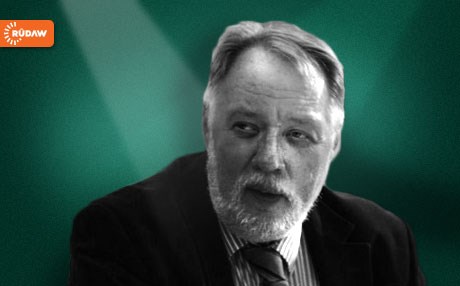
* Gary Kent was the director of All Party Parliamentary Group (APPG in the last British parliament. He writes this column for Rudaw in a personal capacity.
The views expressed in this article are those of the author and do not necessarily reflect the position of Rudaw.
Comments
Rudaw moderates all comments submitted on our website. We welcome comments which are relevant to the article and encourage further discussion about the issues that matter to you. We also welcome constructive criticism about Rudaw.
To be approved for publication, however, your comments must meet our community guidelines.
We will not tolerate the following: profanity, threats, personal attacks, vulgarity, abuse (such as sexism, racism, homophobia or xenophobia), or commercial or personal promotion.
Comments that do not meet our guidelines will be rejected. Comments are not edited – they are either approved or rejected.
Post a comment