


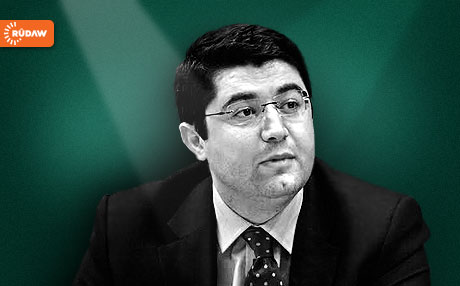
By Loghman H. Ahmedi
The recent six-month nuclear deal between the Islamic Republic of Iran and the P5+1 countries has brought about an unwarranted optimism in some quarters of the Western world that the deal will bring about a resolution to the threat that Iran poses to regional and global stability and security.
The nuclear deal in itself has numerous flaws. For example, it does not stipulate that Iran must suspend all uranium enrichment. In the absence of such a mechanism, Iran is left with the opportunity to further develop its nuclear program whenever it chooses. Another problem with the deal is that parts of the economic sanctions on Iran will be lifted, which removes pressure on the theocratic regime and gives it leeway to continue its hegemonic policies in the region.
Iran is the main economic benefactor of Hezbollah in Lebanon and it is also the main supporter of the regime in Syria. Neither Hezbollah nor the regime in Syria would survive without the support of Iran. As a result, there is a probability that portions of the sudden influx of money into the regime’s coffers will go to its proxies in the region.
Since the theocratic regime took over power in 1979, Iran has pursued a dual-track strategy of creating instability and conflict by supporting different fundamentalist and terrorist elements in the region to increase its influence, as well as to divert attention from this reality by engaging in insincere and deceitful attempts at engagement with the Western powers.
 Many countries in the region perceive Iran, even without nuclear weapons, as the biggest threat to regional security and stability.
Whenever the regime feels pressure from the international community, it attempts to reduce the pressure with protracted negotiations, while at the same time stepping up its destabilizing activities in the region.
Many countries in the region perceive Iran, even without nuclear weapons, as the biggest threat to regional security and stability. Several countries in the region, especially the Gulf states, have great concerns regarding Iran’s continued attempts to interfere in the internal affairs of these and other countries in the region.
The recent nuclear deal has not reduced this concern among regional countries; quite the opposite. It has led to a growing fear that Iran will be able to do as it wishes without a response from Western powers. This is due to the misjudged calculation that a response could risk a breakdown in the ongoing nuclear negotiations.
Iran has used the same dual-track strategy on the domestic level in its persecution and violent crackdown on dissidents. During the different periods when Iran has negotiated with the West, in particular with Europe, the persecution against dissidents, especially Kurdish opposition parties, has increased drastically.
After the Iran-Iraq war ended and Ayatollah Khomeni died, Akbar Hashemi Rafsanjani became president in 1989. Through a combined new tone and diplomatic overture, Iran managed to convince Europe to build a new relationship with Iran, which eventually culminated in the European Union’s “critical dialogue” with the Islamic Republic in 1992.
From 1989 to 1997, the Iranian regime assassinated several hundred Kurdish politicians and activists outside Iran, including the two Kurdish leaders, Dr. Abdulrahman Ghassmlou in Vienna in 1989 and Dr. Sadegh Sharafkandi in Berlin three years later.
While trade and diplomatic relations between the EU and Iran intensified, the clerical regime continued to assassinate hundreds of Kurdish activists outside Iran and executed and imprisoned thousands of dissidents inside Iran. During this period, the EU and the international community chose to look the other way while Iran brutally cracked down on any form of dissent.
The critical dialogue came to an end when a German court, despite pressure from the German government, issued a verdict in 1997 in the case of Dr. Sharafkandi’s assassination. The verdict made clear that the top leadership of the Islamic Republic of Iran, including the Supreme Leader Ayatollah Khamenei and Rafsanjani, had ordered the murder. EU member states withdrew their ambassadors from Iran for a couple of months in protest.
But in the same year, 1997, Mohammad Khatami became president in Iran and he was dubbed a “reformist” with a new tone and a new approach to diplomacy. This led the EU to launch a new “comprehensive dialogue.” The EU’s relationship with Iran intensified on all levels, especially in trade and investment.
Domestically, Iran continued its persecution of dissidents, again especially targeting Kurdish opposition political parties. During this period, the Islamic Republic’s intelligence agency and the Revolutionary Guard established what they called “Grophaie Fehshar,” or pressure groups, which were, among other things, tasked with carrying out extrajudicial killings. Once again, the EU and the international community chose to turn a blind eye on this form of terrorism. Not even when the student movement rose up in 1999 did the EU take any action.
While trade and diplomatic relations between the EU and Iran intensified, the clerical regime continued to assassinate hundreds of Kurdish activists outside Iran and executed and imprisoned thousands of dissidents inside Iran.
However, in 2002 an Iranian opposition group revealed that Iran had secretly and in violation of the Nuclear Proliferation Treaty (NPT) – which Iran has signed – been working on a nuclear program. From 2002 until now, Iran’s nuclear program has been the main focus of Western powers. Since 2002, Iran has continued to pursue its nuclear ambitions, and only halted its program for a short period in 2003 when the regime believed that the threat of military intervention by the United States was imminent.
Between 2005 and 2013 when Mahmoud Ahmedinejad was president, Western powers attempted to reach a nuclear deal with Iran by offering numerous incentives. However, they were all rejected by Iran until the economic sanctions imposed by the United States and the EU began to have a crippling impact on the regime.
It is also worth noting that Iran even during Ahmedinejad’s presidency used negotiations, or the prospect of negotiations, several times to shift focus from its persecution of Kurdish activists and other dissidents and its continued efforts to destabilize the Middle East, without any real reaction from the international community. Moreover, during this period Iran did everything in its power to support and create terrorist proxies in Iraq and Afghanistan and, in effect, managed to become a key actor in the domestic politics of both countries.
In August of this year, Hassan Rouhani became president, and he, like Rafsanjani and Khatami, uses a new tone and diplomatic overtures. This led to the recent six-month nuclear deal. But while the United States and the EU have been busy with reaching a nuclear deal with the Islamic Republic, the number of executions in Iran has never been as high as right now. Again, Kurds seem to be one of the main targets.
Iran also continues to interfere in the internal affairs of many countries in the region and has managed to position itself as a decision-maker in both Iraq and Afghanistan. It plays a key role in the conflict in Syria. Numerous credible reports indicate that Iran has significant troops on the ground in that country.
There is, therefore, great scepticism regarding the implications the recent nuclear deal could have on the Islamic Republic’s ability to continue to persecute dissidents and interfere in the internal affairs of regional countries.
There is a high risk that the nuclear deal, if it allows Iran to do as it wishes, could strengthen the regime and prolong its existence.
The author is the Head of Foreign Relations of the Democratic Party of Iranian Kurdistan
Comments
Rudaw moderates all comments submitted on our website. We welcome comments which are relevant to the article and encourage further discussion about the issues that matter to you. We also welcome constructive criticism about Rudaw.
To be approved for publication, however, your comments must meet our community guidelines.
We will not tolerate the following: profanity, threats, personal attacks, vulgarity, abuse (such as sexism, racism, homophobia or xenophobia), or commercial or personal promotion.
Comments that do not meet our guidelines will be rejected. Comments are not edited – they are either approved or rejected.
Post a comment