



Error occured during this request! Please try again later.
In a televised interview he gave in 1997, the late Edward Said stated his belief that “the prevailing mood in the Arab world is secular.” He thought that the Islamist movements of the Middle East were in decline, and that secular politics would eclipse them. Almost twenty years later, it seems that Professor Said could not have been more spectacularly wrong. Al Qaeda, the Taliban, the Islamic State, Boko Haram, Jabhat al-Nusra, al-Shabab and a slew of less extreme Islamists from the Justice and Development Party in Turkey to the Muslim Brotherhood seem to shape the region’s politics more than ever. In his Columbia University office, in the gilded corridors of power and nice hotel rooms in which he circulated, and in the PLO politburo circles in which he discussed politics, Professor Said appeared oblivious to what was really happening in the region.
In the past, an equally secular alternative to the Arab nationalist regimes of the region existed in the form of Communism – and the Communist Party (or various permutations of it) was the often the largest opposition movement in countries from Mashreq (eastern Arab world) to the Maghreb (North Africa), as well as in Iran and Turkey. In the 1960s, as a result, women in Cairo and Tehran often went about their business in miniskirts, while billboards with racy photos adorned city streets and bars and clubs freely served alcohol to an eager clientele. Younger readers who have trouble believing this need only google terms such as “Cairo 1960s” or even “Kabul 1970s” and look at the images that come up. This alternative seemed to collapse, however, under the twin anvils of severe repression and the fall of the Soviet Union.
The most intuitive and popular narrative explaining the rise of religious politics – and a stridently conservative religious nationalism in particular – therefore focuses on the failures of the secular nationalist states and the lack of other alternatives. People were denied democracy and freedom in the name of security and economic development, but received precious little of either. They therefore turned to the hope and ideology of dissent that Islamist political actors offered. The more extreme their situation, such as in Iraq and Syria, the more extreme the groups they turned to. Never having had a chance at trying out their own secular nationalism, the Kurds largely (although not completely) avoided this turn to Islamism and religious nationalism, sticking instead to secular nationalism or, in the case of the Kurdistan Workers’ Party, a form of modern anarchism.
This explanation sidesteps a perplexing issue, unfortunately: Religious conservative nationalist politics seems to be on the rise across the world. Hindu nationalists win elections in India, evangelical Christians try to recast American history and politics in the United States, religious settlers in Israel set fire to churches and mosques, Japanese Shintos and Buddhists take a more active political role as such, and European Christian conservatives try to push their political systems towards more xenophobic stances in general. Surely the nation-state has not failed in all these countries? Although one might point to things such as stagnating incomes since the 1970s for the ninety-nine per cent in America, public services and life in general are surely not such failures there. If the state in European countries such as the Netherlands and Switzerland, both of which have experienced a significant rise in Right-wing religiously conservative parties, has failed, then I am not sure what success or failure means.
Perhaps people – no matter who they are or where they live – simply need a political system and society that imparts meaning to their lives. Groups under threat and repression, such as the Kurds, find such meaning fairly easily in the fight to preserve their identity, achieve their rights and secure their basic needs. The Arabs, Turks, Iranians, Jews and many others found meaning when their national existence was threatened by colonialism or hostile neighbors, just as the French found meaning in their struggle against the Germans or Indians, whether Muslim or Hindu, united against the British.
Once such pressing problems are dealt with, however, finding meaning becomes a little more complicated. While a capitalist world economy can be very good at creating wealth and development, ethics of individualism and material greed hardly fulfills people’s yearning for meaning. Under conditions of globalization and cultural penetration, many cultures – Muslim ones in particular but others as well – come to feel under threat from the dominant secular capitalist Western “McWorld.” We then witness the remarkable phenomena of even successful Muslim professionals in the West, for example -- people with every comfort and advantage -- volunteering to fight for the Islamic State in the scarred desert wastelands of eastern Syria and Western Iraq. Others who never did well in the current world order likewise turn to other alternatives even more readily.
If this is part of the problem the world faces today, a panacea solution to help people find meaning in their lives appears unlikely. If some newly zealous British jihadist fighting for the Islamic State in Syria finds meaning in slaughtering kufar and taking Yezidi slaves, or if some European Christian fascist finds meaning in terrorizing new immigrants, the world faces some depressing times ahead.
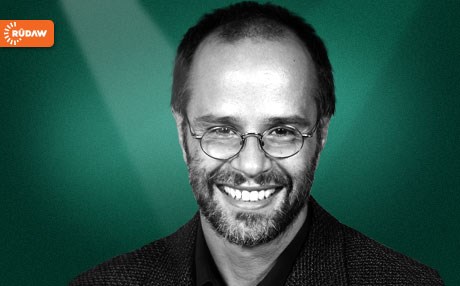
David Romano has been a Rudaw columnist since 2010. He is the Thomas G. Strong Professor of Middle East Politics at Missouri State University and author of The Kurdish Nationalist Movement (2006, Cambridge University Press) and co-editor (with Mehmet Gurses) of Conflict, Democratization and the Kurds in the Middle East (2014, Palgrave Macmillan).
The views expressed in this article are those of the author and do not necessarily reflect the position of Rudaw.
Comments
Rudaw moderates all comments submitted on our website. We welcome comments which are relevant to the article and encourage further discussion about the issues that matter to you. We also welcome constructive criticism about Rudaw.
To be approved for publication, however, your comments must meet our community guidelines.
We will not tolerate the following: profanity, threats, personal attacks, vulgarity, abuse (such as sexism, racism, homophobia or xenophobia), or commercial or personal promotion.
Comments that do not meet our guidelines will be rejected. Comments are not edited – they are either approved or rejected.
Post a comment