


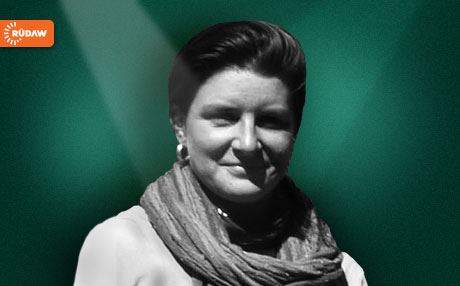
By Cyrille Cartier
When I left Sulaimani in Iraqi Kurdistan in June I could not imagine that my next trip would be to a Kurdistan rid of Iraq. It was four days before the fall of Mosul, the event that triggered a domino effect for the rest of the country.
A friend's old online post had a new ring “Iraq is like a piece of furniture, you never know when it's going to fall apart.” The “when” is now. On June 10 Mosul was taken by the Islamic State of Iraq and al-Sham (ISIS), aiming to control a wide expanse of territory from southern Syria to the majority Sunni Arab provinces of Iraq. Within less than two days, Kurdish Peshmerga forces took control of Kirkuk and other disputed territories—until then a major thorn in relations between the Kurdish regional government and Iraqi central authorities.
The main players, the elites of the majority populations, defined in part as ethnic Kurd or Arab, or religious Shiite or Sunni, are sending their armies to defend or claim territories. Between them, stuck between a rock and a hard place, are minority communities left to fend for themselves, or seek the protection of another. Faili Kurds in Baghdad and other territories, and Turkomen in Tal Afar are creating their own militias. Assyrian Christians in enclaves of disputed territories also have their militias.
Mosul, the third most populated city in Iraq, used to be a cradle of Iraq's diverse populations, home to Yezidis, Kurds, Turkoman, Assyrians, Arabs, Armenians, Mandeans and others. Some of them adhered to various Muslim or Christian denominations, some had other religious beliefs but they all considered themselves Maslawis – citizens of Mosul. Since 2003 generations of Maslawis are fleeing. The neighbouring Kurdish region provided shelter for some. Turkey, Lebanon, Europe and beyond were destination for others.
In 2003 Christians in Mosul numbered about 35,000. But by the first half of this year, it was about 10,000. Now, after this last wave of violence, a handful might be around for the next census.
But numbers are numbers and each destiny is a universe.
 In 2003 Christians in Mosul numbered about 35,000. But by the first half of this year, it was about 10,000. Now, after this last wave of violence, a handful might be around for the next census.
When I spoke to a friend from Hamdaniya, or Qaraqosh, a mere 30 km from Mosul about a week after it fell, he said the predominantly Christian town was safe, protected by Christian militias and Kurdish Peshmargas. But they had no electricity, Internet, fuel and other services and everyone, he added, is afraid. The children were asking: “When are the Da’ash (ISIS) coming to kill us?” All people tried to do is think of ways to immigrate elsewhere “just to live.” Then, on June 25, they had no choice: the shelling began and many families fled in fear further north to Kurdish held areas.
What of Namir's family in Mosul, I wonder.
Namir, a good friend and photojournalist was killed by American forces in 2006 in Baghdad. It was only with Wikileaks' video of the helicopter shooting that his family confirmed their suspicions—he was assassinated. They were still in Mosul, still grieving just a few days before the fresh wave of violence. Now, emails and phone calls revealed they found refuge in the Kurdish area. And then I went through the list of my friends and the catalogue of my worries grows as violence unravels.
In the south, another friend, a lawyer from Najaf, informs me she is getting ready to move to Lebanon though all of her male family members have joined the call to war from the Grand Ayatollah Ali Sistani—a call that many say is yet another nail in the coffin of a multidimensional Iraq as it pits the Shiites against the Sunnis.
Rumors feed into the fury. If extreme and repeated enough on the physical and virtual streets—usually involving the virtue of women—rumors fuel killing machines that dehumanize the “other.” A man from Baghdad tells me about the loudening drum of war and how he's heard of rapes of young girls in Mosul. But a former student of mine from Mosul, and several others I talked to, say that all is quiet and safe—safer even then when the Iraqi army was there—but again, without services. Pictures on the ground are as disjointed as they are in mainstream media.
Propaganda, conspiracy theories, myths abound, creating uncertainty, fear and mistrust. As one journalist friend put it, not without a hint of sarcasm, “Kurds are becoming more nationalistic, Sunnis are more Sunnis, Shiites are more Shiites, that's also a way of protection and survival. Long live Charles Darwin.”
The categorization and labeling of people by a common denominator, ridding them of their individuality, and allocating them to collective identities, “Balkanizing” them, is an inevitable trend in this atmosphere.
Realpolitik talk dominates the airwaves. “The enemy of my enemy is my friend.” Experts of all creeds, former diplomats, analysts or army veterans impose their “expertise” to analyze, predict and decide on the destinies of my friends on the ground. They recommend the American administration ally with Iran or send troops and kill for peace. The “us” against “them” language finds a comfortable front seat in the grotesque drama unveiling itself rapidly.
Propaganda, conspiracy theories, myths abound, creating uncertainty, fear and mistrust.
“Ancient sectarian differences,” as US President Barack Obama called it echoing words of his predecessor, are viewed as the main reason for the fragmentation, the natural outcome of centuries of hatred that would come to the fore sooner or later. If the face would be different it would sound like the explanation for Yugoslavia’s disintegration 20 years earlier.
In April this year, Louis Raphaël I Sako, the archbishop of Iraq's Catholic Christian community, the Chaldeans, spoke to other religious leaders at a conference in Lyon saying: “At present, there is increasingly talk of a plan to create a new Middle East. For us, it is a source of concern and fear—1,400 years of Islam have not been able to take us away from our lands and our churches; now Western policy has dispersed us to the four corners of the earth.”
The sectarian reasoning behind Iraq’s falling apart doesn't take into account the pluralistic aspect of many Iraqi households, neighborhoods and cities, but also ignores the political realities and decision-making especially since 2003 that contributed to the deepening divide. After the dissolution of the “old” Iraqi army came the “new” one dominated by Shiites. Exxon Mobile and other U.S. companies made oil deals with Kurds disregarding Baghdad government’s disapproval further dividing the players. Meanwhile many of the Sunni-dominated areas of Iraq felt mistreated and left behind by Nouri al-Maliki's government—a ripe mixture of circumstances that facilitated ISIS maneuvers.
Old colonial borders are being replaced by borders reflecting new interests, justified by “ancient sectarian hatred” and legalized by new precedents like the recognition of Kosovo.
Meanwhile the sectarianism that became part of media and political discourse throughout the years, since 2003, inevitably trickled down to society.
A former student told me how she complained when she was asked to share a room with a woman in full abbaya for a week-long training course. But when they got to know each other—both were of Sunni Muslim denomination but of different ethnicities—the veil fell and the two became close friends. After the training she even went to visit her friend’s family in the part of Iraq once dubbed “triangle of death.”
At the university where I was teaching in Sulaimani this past semester, I challenged my students with a question: What is identity? The usual words came out. Kurd, Arab among the top choices. Muslim. A minority said atheist. But what of the other differences? Your life journeys? Do you have more in common with your Kurdish grandmother or your Arab classmate? And slowly we peeled the layers exposing these labels not as the innate part of their being but as part of their dynamic and complex identity.
What is identity? The usual words came out. Kurd, Arab among the top choices. Muslim. A minority said atheist.
By the end of semester, despite their initial frustrations with “complexity” and the relativity of all parts, they admitted that they started to examine the “solid truths” they had been fed. This exploration and questioning does not lend itself to easy political manipulation. It becomes dangerous, therefore, to leaders seeking to unite the “us” under the banner of nationalism whether to reclaim territory, revise history, win an election, recruit soldiers, or any other action in nation-building that pits itself against an “other.”
But what is a workshop, or a semester of complexity worth after just a few days of the simplicity of death and propaganda? What lasting residue can I hope for?
The inevitable is before us. Kurdistan is on the verge of becoming a nation state—a desire that many say is a natural right to mend the wrong done when the colonial powers carved up the Kurds along the Sykes-Picot agreement. Hopeful analysts say ISIS will transform from a military extremist might to one that is more political and willing to negotiate as a part of their theocratic state building—indeed the Kurdistan region’s prime minister, Nechirvan Barzani, recommended the Sunnis do the same as the Kurds in establishing an autonomous state. The Shiites have already carved out their territory with many of Baghdad’s neighborhoods cleaned of diversity through violence or fear.
And then I think of the future of my friends, of children of mixed marriages, of the minorities and their ancient wisdoms, tales and histories, of the thousands of foreign workers, most from East Asia who came in search of opportunity throughout Iraq. The prospects are depressing.
Another friend, a Kurd who lives in Norway, speaks of his “globalized” frustrations. For the first few days he felt schizophrenic, half of him in Norway and half preoccupied with events in his country of origin. Now he feels angry. His Norwegian colleague voiced dismay at his government’s pledge of 10 million U.S. dollars in humanitarian aid for ‘those crazy Iraqis who do nothing but kill each other.’ My friend, considered an Iraqi by his colleague, mustered calm and explained how since the start of the latest carnage in Iraq, the price for one barrel of crude oil went up 10 U.S. dollars giving an extra profit of 20 million U.S. dollars a day to Norway, the seventh largest oil producer in the world.
In this region of question marks, for my friends and students, a new mental map will be drawn as the geopolitical one takes shape.
When I go back there, I will arrive possibly in a new, independent country of Kurdistan. This country will for sure be tested as the new mini-Iraq as it has—for now at least—welcomed the hundreds of thousands seeking refuge. But what happens when the dust settles? What happens when people accuse the “other” of crimes or of taking away the resources already stretched thin as they vie for housing, jobs and other needs? Will political leadership be transparent about oil revenue and its uses? Or keep the status quo? Will they create and enforce laws to protect all workers equally? Or will they bolster support for local businesses cutting costs by finding the cheapest labor for the sake of strengthening the economy, pitting the Kurdish worker against the Arab, Bengali or Syrian one? Will national security become the priority at the expense of protection of rights including freedom of speech? Or will leadership show an ability to govern, drawing on the wealth of ideas and experiences of all the people? And speaking of the people, how will they heal from the scars of war?
In this region of question marks, for my friends and students, a new mental map will be drawn as the geopolitical one takes shape. Eventually new passports will suffice to cross physical boundaries, but crossing borders of the mind, to reach understanding and solidarity, will be a far more difficult quest.
Cyrille Cartier worked in Iraq as a freelance journalist 2005-2006. She has trained journalists in Iraq and taught at the American University of Iraq-Sulaimani.
Comments
Rudaw moderates all comments submitted on our website. We welcome comments which are relevant to the article and encourage further discussion about the issues that matter to you. We also welcome constructive criticism about Rudaw.
To be approved for publication, however, your comments must meet our community guidelines.
We will not tolerate the following: profanity, threats, personal attacks, vulgarity, abuse (such as sexism, racism, homophobia or xenophobia), or commercial or personal promotion.
Comments that do not meet our guidelines will be rejected. Comments are not edited – they are either approved or rejected.
Post a comment