



Error occured during this request! Please try again later.
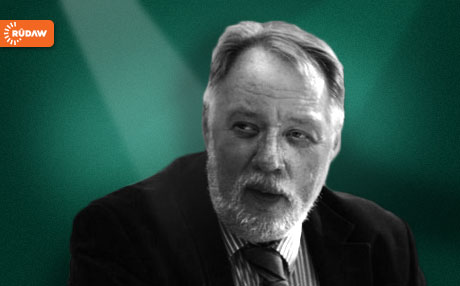
Tony Benn, the veteran British left-wing titan who has just died at the ripe old age of 88, famously urged people to focus on policies rather than personalities. In the spirit of respect but not reverence, let me outline deep problems with his political judgements, which were honestly and honourably held but which had and continue to have a harmful effect.
Benn was a hero of mine as a teenager in the 1970s. I was later on friendly if fleeting terms with him over three decades and briefly appear in one of his many popular political diaries. My differences had begun when Benn led a challenge to the Labour leadership after the loss of power to Mrs Thatcher in 1979. I shared his anger that Labour leaders had ignored party members and acted as the midwife to Mrs Thatcher's neoliberal policies.
But I parted company with the supposed solution which was to compel Labour leaders to advocate left-wing policies for which they had no heart. Or face being sacked as MPs.
The underlying assumption was that Labour lost elections because it wasn't sufficiently left wing and that bolder advocacy of socialist policies would win votes. Benn even argued that Labour's catastrophic defeat in 1983, thanks to a manifesto often described as "the longest suicide note in history," saw millions voting for the most radical socialist programme ever. The manifesto may have been just that but it was a wild and self-deceiving extrapolation to believe that it had trumped tribal loyalty and anti-Tory feeling. Most votes for Labour were despite the manifesto.
Yet the theory of assuming that bold leadership could overcome the deep conservatism of British society remained at the core of the Bennite movement. Its defeat was assisted when Benn insisted on contending the party leadership despite warnings that this suicidal challenge would be crushed and undermine left-wing politics.
Northern Ireland, once a flashpoint in British politics, became a major priority for me in the late 1980s. I had once shared the dominant left-wing view that the partition of Ireland was the main cause of conflict and terrorism. After engaging with parts of the Irish left, which took a very different view, I became an active critic of those who argued for Irish unity at the expense of rather than with the consent of the Protestant majority in Northern Ireland and, for a smaller number of activists, support for the IRA.
Benn was a prominent supporter of the Troops Out Movement, which believed that withdrawing British troops would best settle the conflict. I thought it would hasten a bloodbath and encourage terrorism.
Over a friendly drink in the Commons, I sought his support for campaigns against the barbaric paramilitary practice of kneecapping (a bullet in each knee and probable permanent disability), which sought to entrench the IRA and its loyalist counterparts' control of local communities. However, Benn responded that "the army" had to discipline informers.
The "army" in question was the so-called Irish Republican Army – an illegal, illegitimate and immoral force. Actually, informers were usually tortured and executed.
We also differed on Iraq, where Benn's persistent opposition to the invasion of 2003 won him high praise. It's a pity that Benn failed to follow his own advice about a man like Saddam Hussein.
Benn famously said that "If one meets a powerful person - Rupert Murdoch, perhaps, or Joe Stalin or Hitler - one can ask five questions: what power do you have; where did you get it; in whose interests do you exercise it; to whom are you accountable; and, how can we get rid of you? Anyone who cannot answer the last of those questions does not live in a democratic system."
Yet, in a crawling interview with Saddam just before Iraq war, he failed his own test. Instead, one soft-soap question was "I wonder whether you could say something yourself directly through this interview to the peace movement of the world that might help to advance the cause they have in mind?"
The interview aimed to avert war, it is fair to say, but gave a brutal dictator a platform and avoided awkward issues such as the treatment of the Kurds, Halabja, and Iraq's defiance of UN resolutions. It certainly avoided the questions he would have asked Hitler and Stalin - Saddam's own role models, as it happens.
Benn may have got it badly wrong on these issues, in my opinion, but will rightly be mourned by many - left and right - who saw him as a decent and committed politician. Many people were and remain inspired by his oratory. But Tony Benn's record deserves to be assessed warts and all by those who admired his personality but want to question the wisdom and relevance of the policies he advocated.
* Gary Kent is the administrator of All Party Parliamentary Group (APPG). He writes this column for Rudaw in a personal capacity.
Comments
Rudaw moderates all comments submitted on our website. We welcome comments which are relevant to the article and encourage further discussion about the issues that matter to you. We also welcome constructive criticism about Rudaw.
To be approved for publication, however, your comments must meet our community guidelines.
We will not tolerate the following: profanity, threats, personal attacks, vulgarity, abuse (such as sexism, racism, homophobia or xenophobia), or commercial or personal promotion.
Comments that do not meet our guidelines will be rejected. Comments are not edited – they are either approved or rejected.
Post a comment