



Error occured during this request! Please try again later.
It seems that Turkish president Erdogan’s bodyguards really enjoy their trips abroad these days, in a Fight Club sort of way. When Mr. Erdogan gave a talk at the Brookings Institute in Washington D.C. in March 2016, his bodyguards attacked protestors, called a well-respected Turkish-origin journalist for the Economist a “PKK whore,” and even assaulted an employee of the very same Brookings Institute that was hosting their boss. On a trip to Brussels in October 2015, the president’s bodyguards physically skirmished a bit with Belgian police as they argued over jurisdictional duties.
Mr. Erdogan’s most recent May 16th visit to Washington D.C. was no different. Protestors gathered in front of the Turkish ambassador’s residence, and video footage shows Mr. Erdogan’s bodyguards pushing past American police officers to attack demonstrators on the other side of the street. The bodyguard bullies, in their suits and ties, are seen kicking and punching men and women (including protestors lying on the ground) as the American police officers try to stop them, yelling at them, chasing them and pushing them back across the street.
If Mr. Erdogan’s “security forces” behave with this kind of impunity in Washington D.C., one hardly needs to go to Turkey to imagine what the situation for the opposition there is like. None of the presidential bodyguards were detained or arrested during their latest boxing trip abroad, while several protestors were detained and two were arrested (presumably for attacking the fists of the bodyguards with their faces). It seems diplomatic immunity has its perks, including attacking peaceful demonstrators in America. In a more just America, the police would have arrested the bullies in suits and ties, sent them to detention and let the politicians and lawyers argue about diplomatic immunity to get them released.
But we live in a world of and for nation-states, after all. This means that state officials, including the security goons of a country that just lost most semblances of democracy, do what they can and the weak suffer what they must.
Completely silent about Turkey’s ongoing rash of human rights abuses and its most recent authoritarian lurches, U.S. president Trump congratulated Mr. Erdogan for his rigged-referendum win in April, and welcomed him to Washington on March 16. Mr. Trump hailed Mr. Erdogan as a stalwart ally in the fight against terrorism (“like ISIS and the PKK”, according to both Trump and Erdogan), and said he was discussing ways to “reinvigorate our trade and commercial ties” with Turkey. Mr. Trump also welcomed Turkey’s most recent orders of more military equipment from America, and said “I look forward to working with President Erdogan on achieving peace in the Middle East, on confronting the shared threats and achieving a future of dignity and safety for all of our people.”
In other words, it does not really matter how many peaceful demonstrators Mr. Erdogan’s goons attack (even in America), how many Kurdish cities his government levels to the ground, how many journalists and opposition politicians his prosecutors imprison, how many poorly-aimed air strikes his air force carries out, or how many Jihadists his security services arm. You can get away with all that when you’re a powerful state with friends and business interests, and anyone who opposes you is a terrorist.
Given all this, perhaps more people should understand why the majority of Kurds want their own state. Without a nation-state, people of “other” nations or identities, like the Kurds, remain at the mercy of those who do wield state power with impunity. While having one’s own state does not solve every problem (just ask Egyptians or opposition Turks about that), at least it helps protect perpetual outsiders of certain states – such as the mostly Armenian and Kurdish demonstrators in Washington on May 16 – from the worst abuses of others. After some 2,000 years of living as outsiders at the mercy of other’s bodyguards, this was the conclusion that Zionist Jews came to. It is the same reason Palestinians want their own state.
Only in places where the state has sufficiently democratized for the benefit of almost everyone, irrespective of race, ethnicity, religion or class, do such impulses for protection subside and reduce the secessionist or revolutionary drive. Quebec thus still remains a part of Canada, Scotland a part of the United Kingdom, the Basque country a part of Spain, and so forth.
As every week’s events seem to make clear, however, this hardly seems the dynamic in most of the Middle East.
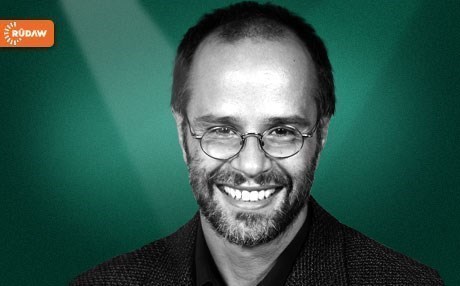
David Romano has been a Rudaw columnist since 2010. He holds the Thomas G. Strong Professor of Middle East Politics at Missouri State University and is the author of numerous publications on the Kurds and the Middle East.
The views expressed in this article are those of the author and do not necessarily reflect the position of Rudaw.
Comments
Rudaw moderates all comments submitted on our website. We welcome comments which are relevant to the article and encourage further discussion about the issues that matter to you. We also welcome constructive criticism about Rudaw.
To be approved for publication, however, your comments must meet our community guidelines.
We will not tolerate the following: profanity, threats, personal attacks, vulgarity, abuse (such as sexism, racism, homophobia or xenophobia), or commercial or personal promotion.
Comments that do not meet our guidelines will be rejected. Comments are not edited – they are either approved or rejected.
Post a comment