


The secret 1916 Sykes-Picot Agreement struck between the British and French governments with Russia’s approval, carved up the Middle East following the defeat of the Ottoman Empire during World War I.
A century later, it is time for the Kurds to redraw the map regardless of which of the great powers wants to honor it. It can be America, France or Britain if they want the opportunity to redeem their sins.
Despite the 2003 US-led liberation of Iraq and after a decade of the US military’s investment and training of the Iraqi military, the army’s defeat in Mosul is reminiscent of the swift fall of the ousted Baath regime.
Kurdish Peshmarga forces marched toward the largely Kurdish areas outside of the Kurdistan Region’s three provinces to fill the security vacuum. This move that marks a milestone — that Kurds were able to regain their motherland and begin the implementation of Article 140 of the Iraqi constitution, which many Arab MPs consider irrelevant.
The article was created to determine the fate of disputed areas, most notably Kirkuk. This was to be decided in three steps: normalization, which involved repatriating Arabs whom Saddam Hussein’s regime had moved into Kirkuk to “Arabize” the province and allowing Kurds and others who were kicked out of Kirkuk to return. The second step was a population census to determine the ethnic make-up of the province, and then a referendum on whether Kirkuk should be incorporated into the Kurdistan Region or be governed by Baghdad.
The recent upheaval in Iraq allowed the Kurds to achieve in the course of two weeks what they could not accomplish in 10 years vis-à-vis the political process in Iraq. And there appears to be international support for an independent Kurdish state, at least among US analysts and columnists.
In a recent op-ed in the Los Angeles Times, Timothy Waters, a professor of law and associate director of the Center for Constitutional Democracy at Indiana University’s Maurer School of Law, wrote:
“’This moment requires statesmanship.’ That was Secretary of State John F. Kerry — a man not known for irony — in a meeting in late June with Massoud Barzani, president of Iraq's autonomous Kurdish region. Appealing to Barzani's nonexistent Iraqi patriotism, Kerry asked for the Kurdistan leadership's help in fighting Islamic militants overrunning northern Iraq, and pleaded for Kurds to help form a new government in Baghdad rather than seek independence.
But what Kerry seems to have meant is, "This moment requires provincialism," because that is what the United States is asking the Kurds to remain: a province of Iraq. The Kurds aren't likely to listen — Barzani announced a referendum on independence — and the question now is: How should the U.S. respond? Washington has long insisted on Iraq's unity — "worship[ing] at the altar of a unified yet unnatural Iraqi state," as foreign policy analyst Leslie Gelb has written. But recognizing Kurdish independence would advance American interests and better reflect American values.
The Kurds have powerful moral claims to statehood, claims denied after World War I, when a Kurdish state first proposed under Woodrow Wilson's principle of self-determination was instead divided among Turkey, Syria and Iraq. Iraqi Kurds' decades of suffering under Baghdad — including Saddam Hussein's genocidal gassing campaign — give them grounds for exit now.
New York Times columnist Thomas Friedman wrote in mid-June:
The Sunni jihadists, Baathists and tribal militiamen who have led the takeover of Mosul from the Iraqi government are not supporters of a democratic, pluralistic Iraq, the only Iraq we have any interest in abetting. And Iraq’s Shiite prime minister, Nuri Kamal al-Maliki, has proved himself not to be a friend of a democratic, pluralistic Iraq either …
“Maliki had a choice — to rule in a sectarian way or in an inclusive way — and he chose sectarianism. We owe him nothing.”
In Bloomberg View, Jeffrey Goldberg, who writes about the Middle East, US foreign policy and national affairs, pointed out that corruption is rife in Kurdistan, but that the region “is Switzerland compared to the rest of Iraq, and the rest of the neighborhood.” He argued:
“The Kurdish people, members of the largest stateless nation in the world, have dreamed of independence for 100 years. President Barack Obama could be the man who delivers them to freedom …
“This is a very critical time for Iraq, and the government formation challenge is the central challenge that we face,” and that Kerry has emphasized Iraq’s leaders must “produce the broad-based, inclusive government that all the Iraqis I have talked to are demanding …
“Kerry might be talking to the wrong Iraqis. The Kurdish Iraqis I talk to see this moment as a turning point in the history of their people, when the lie that is Iraq -- a country cobbled together by the British and French 100 years ago in way that institutionalized discrimination against the non-Arab Kurds by the majority Arab population -- is finally being exposed … For two decades, the Kurds have shown themselves to be the most mature and responsible entity in Iraqi politics, which is one reason American officials are panicked by the thought of their permanent departure. A Kurdish exit will promote instability, the thinking goes. But what the region has now isn’t stability. What's there, among other things, is an institutionalized injustice, an injustice at times exacerbated by US policy.”
Goldberg concludes: “It is way past time for the international community to listen to the Kurds and help them reach their legitimate national aspirations.”
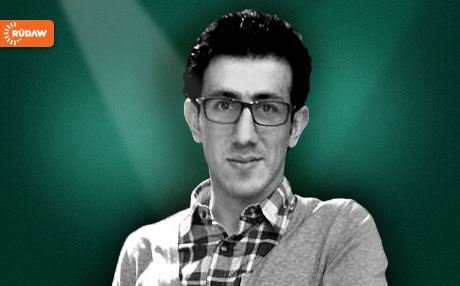
Shivan Fazil is web content and social media manager at the Kurdistan Regional Government’s Department of Media and Information. He wrote this article in a personal capacity. Twitter: @ShivanFazil
Comments
Rudaw moderates all comments submitted on our website. We welcome comments which are relevant to the article and encourage further discussion about the issues that matter to you. We also welcome constructive criticism about Rudaw.
To be approved for publication, however, your comments must meet our community guidelines.
We will not tolerate the following: profanity, threats, personal attacks, vulgarity, abuse (such as sexism, racism, homophobia or xenophobia), or commercial or personal promotion.
Comments that do not meet our guidelines will be rejected. Comments are not edited – they are either approved or rejected.
Post a comment