



Error occured during this request! Please try again later.
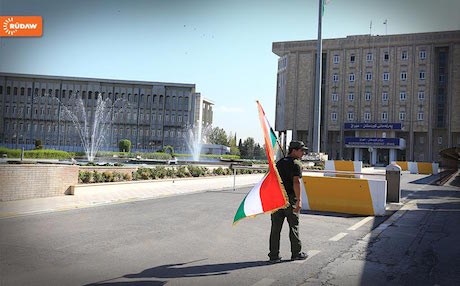
Last week's tragic violence in relatively small parts of Kurdistan deeply worried friendly countries which value Kurdistan as a vital ally against Daesh fascism. Kurds I met there last week are obviously worried about foreign destabilisation and their own prospects but are determined to make Kurdistan work. Calm has returned and will hopefully last.
The former opposition party, Gorran has been expelled from government back into opposition - a vital and often neglected role in rare democracies in the Middle East - although their ministers played a positive role according to a rather regretful statement from Prime Minister Nechirvan Barzani, but Gorran should now be clear that it disowns violence, for which there is no justification.
But the dysfunctional economy needs renewed pathways to reform, which are on the cards. And the warm words of friends must become firm action to fund reforms just as countries were assisted in overcoming their communist legacy when the Kurdistan Region won its freedom in 1991.
The backdrop is Kurdistan's economic crisis. Civil servants have been unpaid for months and not for the first time, which is exhausting their ability to borrow from friends and family to ride the storm. Economic activity is low and businesses are sinking or drowning while thousands of public investment projects wither on the vine. My Iraqi Airways flights to and from Erbil were almost empty, there were fewer people dining out in Erbil, and the roads seemed emptier.
Things are tough but most Kurds oppose violence - peaceful demos and strikes are entirely different - and some told me that violence disrespected the unpaid Peshmerga fighting Daesh and whose sacrifices have been enormous. Most people know that any redivided Kurdistan would only benefit those who want to subordinate Kurds and prevent them rebuilding prosperity and advancing democracy, which remains their goal.
Kurdistan's longstanding problems have been massively exacerbated by external factors that would challenge the most robust countries: completely axed and then only partial federal budget payments in 2014 and 2015 respectively, increased defence costs through saving and protecting Kirkuk from Daesh and protecting the strategic Mosul dam whose waters could flood Baghdad but not Kurdistan, looking after nearly two million refugees and internally displaced people (the UK equivalent of over 20 million people), costly PKK attacks on the oil pipeline to Turkey which cost half a billion dollars, and massive reductions in world oil prices. Each is catastrophic but combine to make a perfect storm.
Moreover, a shrinking middle class could curb dynamism. Good management and productivity were bolstered by skilled Kurds returning from abroad but some are leaving, while others insist they will stay. Some young people are losing hope and while Kurdistan is secular and religiously moderate the danger of extremist radicalisation cannot be ignored. These can be countered politically and through increasing prosperity.
The large energy sector provides a necessary but not sufficient base for that and a major increase in independent exports to a million barrels per days is on its way once technical issues are resolved but the sector is not a magic money tree. Some look at big revenue figures and cynically wonder where it all goes. There is no secret and there should be greater media awareness in Kurdistan of the great success story that is the oil and gas sector, to which massive credit is due to the Natural Resources Minister, Dr Ashti Hawrami.
Export revenues must first repay huge debts or future investors will look elsewhere in the future. And the revenues cannot alone sustain the current state salary bill - about 70% of income - in the near absence of taxes and utility charges, let alone infrastructure investment to boost jobs and growth. Reliance on one income stream risks exposure to outside events but boosting food self-sufficiency, minerals, industry, and tourism, in the longer term, are essential. There has been progress on food production and recent tariffs on food imports will incentivise that sector.
An exclusive focus on revenues misses the need to examine expenditure and eliminate waste -look at the burning lights in empty buildings and water used as if it were not precious. A formal proposal to reduce recurrent state spending, supported by Gorran ministers, was derailed last week but moderate austerity and reform can close the income/spending deficit. Reform is always painful and shaking out state workers without alternative jobs in the private sector would increase disaffection. But cutting ghost workers and double jobbers is a credible first step.
APPG reports have regularly outlined in the last decade how a massive public sector and a minute private sector suffocate society. A superior education system, a stronger work ethic, and a diversified economy with proper banking and other services are essential especially if oil prices remain low or fall further.
But this is not news to Kurdish leaders. A landmark report from the Ministry of Planning - 'Kurdistan Region of Iraq 2020: A Vision for the Future' - outlined a comprehensive reform package in detail in September 2013. It covers all sectors and tackling corruption, increasing transparency and reforming the state sector. The plan was overtaken by the rise of Daesh. It is at http://www.iraq-jccme.jp/pdf/archives/krg_2020_english.pdf
Reform costs money and there is precious little around thanks to the huge emergencies facing the KRG. British politicians often cite the impact of refugees on Turkey, Lebanon and Jordan without even mentioning that a one-third increase in Kurdistan's population is straining the KRG to breaking point. I once pointed this out to a British minister but the exclusion of this Kurdish contribution continues and this matters because it overlooks a vital and costly contribution. Baghdad's disgraceful treatment of the Kurds especially under Maliki and also by Abadi must be exposed more forcefully. The Kurds say they still need heavy weapons and ammo, which is running out.
Kurdistan is also entitled to greater direct assistance. The post-Soviet countries of Europe received huge sums of money after the misery of inefficient and state-heavy communism and were embraced by the European Union. The Kurds lack the resources to make the transition alone and given they are supposed to be our allies we should step up to the plate.
Communication is a vital part of driving any internal reform. As it happens, I was teaching media relations for the UN to civil servants in Erbil last week at the European Technology and Training Centre (ETTC), an NGO which aims to help develop the economy and skills. I emphasised the famous Mark Twain saying: a lie can be halfway round the world before the truth has put its shoes on. The KRG knows it must prevent vacuums being exploited by enemies and extremists before rumours become toxic 'facts' and poison public life. A reliable and professional media remains vital.
The 25th anniversary on 5 March 2016 of the Kurdish uprising could show the world that the Kurds, with the support they need and deserve from the international community, are making Kurdistan fitter for purpose. They will survive but do so better if we help them to help themselves.
* Gary Kent is the director of All Party Parliamentary Group (APPG). He writes this column for Rudaw in a personal capacity. The address for the all-party group is appgkurdistan@gmail.com The views expressed in this article are those of the author and do not necessarily reflect the position of Rudaw.
Comments
Rudaw moderates all comments submitted on our website. We welcome comments which are relevant to the article and encourage further discussion about the issues that matter to you. We also welcome constructive criticism about Rudaw.
To be approved for publication, however, your comments must meet our community guidelines.
We will not tolerate the following: profanity, threats, personal attacks, vulgarity, abuse (such as sexism, racism, homophobia or xenophobia), or commercial or personal promotion.
Comments that do not meet our guidelines will be rejected. Comments are not edited – they are either approved or rejected.
Post a comment