


Error occured during this request! Please try again later.
A few days before the start of the Mosul offensive, Rudaw’s general manager assembled the heads of the network’s different desks to tell us that an opportunity was before us to become, as Rudaw, the leading source of news and recognizable brand of this battle – the same as CNN did during the Gulf War of 1991.
His words were a little overwhelming to some of our colleagues, but no sooner had the first shots of the Mosul offensive been fired then we managed to become, within seconds, the go-to source for news for the entire world.
If CNN took the news of the Gulf War into every household, Rudaw took the Mosul battle to every hand-held device across the globe.
We started the coverage of the offensive at dawn and soon every TV screen in our news and control rooms turned into our own channel, as every channel switched to the same coverage with our own Rudaw logo. Our cameramen and correspondents fed into the Livestream footage of the battle from every front.
We were watching the Livestream from the battlefield inside our studio when an ISIS car-bomb picked a group of Peshmerga soldiers as a target and drove towards them at full speed. A Rudaw crew was with this group of Peshmerga. With racing hearts and trembling hands we were glued to the screen, wondering if we were going to see the death of our own colleagues live on TV.
The car bomb reached them and detonated. The screen was covered in dust and our reporter went silent. Moments later the reporter could be heard again, calling out the name of his cameraman in the dust and smoke. Tears were streaming down the faces of my colleagues around me. The smoke cleared and soon we saw our crew safe and sound. Without a moment’s pause, they restarted their Live coverage.
In this battle we broke traditional coverage of news. Our viewers watched the battle Live on air the same as our cameramen and studio crews behind the scene. Our fans and followers had instant access to the battlefield on Facebook, Twitter and YouTube.
We dispatched into the field 10 fully-equipped crews to cover the war from every angle and every front and this would not have been possible had we not employed the latest technology or features such as Facebook and YouTube’s Livestream.
Technology has not only made the Live coverage of a war possible by sending it onto smartphone screens, but it also gives viewers a chance to engage with what they see and express their feelings through emojis.
Engagement on Rudaw’s Facebook page increased by 202% the first day of the battle and our Livestream was viewed by 462,000 people while it had a 2 million post reach. According to The Guardian, our stream had also been viewed by 800,000 people on Al Jazeera and more than 50,000 on UK’s Channel 4.
Rudaw’s website, which publishes news and information in English, Arabic, Kurdish and Turkish, has been for a time the most visited website in Iraq and the network has the most active social media platforms. The number of our regular visitors doubled on the first day of the battle, and on Facebook alone 6 million people had watched our videos that day.
There was little or no sleep for any of our staff on the first day of the Mosul offensive, but when we saw the worldwide reception of our work and coverage, and our logo on almost every TV screen, it paid off to know we had done our duty of bringing the news to the world.
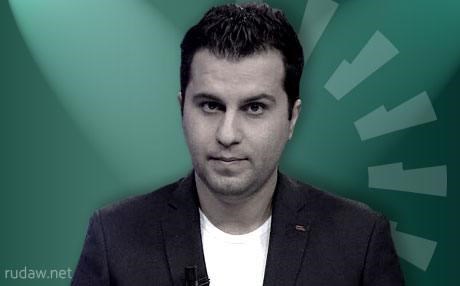
* Hemin Lihony is head of Rudaw’s digital media
His words were a little overwhelming to some of our colleagues, but no sooner had the first shots of the Mosul offensive been fired then we managed to become, within seconds, the go-to source for news for the entire world.
If CNN took the news of the Gulf War into every household, Rudaw took the Mosul battle to every hand-held device across the globe.
We started the coverage of the offensive at dawn and soon every TV screen in our news and control rooms turned into our own channel, as every channel switched to the same coverage with our own Rudaw logo. Our cameramen and correspondents fed into the Livestream footage of the battle from every front.
We were watching the Livestream from the battlefield inside our studio when an ISIS car-bomb picked a group of Peshmerga soldiers as a target and drove towards them at full speed. A Rudaw crew was with this group of Peshmerga. With racing hearts and trembling hands we were glued to the screen, wondering if we were going to see the death of our own colleagues live on TV.
The car bomb reached them and detonated. The screen was covered in dust and our reporter went silent. Moments later the reporter could be heard again, calling out the name of his cameraman in the dust and smoke. Tears were streaming down the faces of my colleagues around me. The smoke cleared and soon we saw our crew safe and sound. Without a moment’s pause, they restarted their Live coverage.
In this battle we broke traditional coverage of news. Our viewers watched the battle Live on air the same as our cameramen and studio crews behind the scene. Our fans and followers had instant access to the battlefield on Facebook, Twitter and YouTube.
We dispatched into the field 10 fully-equipped crews to cover the war from every angle and every front and this would not have been possible had we not employed the latest technology or features such as Facebook and YouTube’s Livestream.
Technology has not only made the Live coverage of a war possible by sending it onto smartphone screens, but it also gives viewers a chance to engage with what they see and express their feelings through emojis.
Engagement on Rudaw’s Facebook page increased by 202% the first day of the battle and our Livestream was viewed by 462,000 people while it had a 2 million post reach. According to The Guardian, our stream had also been viewed by 800,000 people on Al Jazeera and more than 50,000 on UK’s Channel 4.
Rudaw’s website, which publishes news and information in English, Arabic, Kurdish and Turkish, has been for a time the most visited website in Iraq and the network has the most active social media platforms. The number of our regular visitors doubled on the first day of the battle, and on Facebook alone 6 million people had watched our videos that day.
There was little or no sleep for any of our staff on the first day of the Mosul offensive, but when we saw the worldwide reception of our work and coverage, and our logo on almost every TV screen, it paid off to know we had done our duty of bringing the news to the world.
* Hemin Lihony is head of Rudaw’s digital media
Comments
Rudaw moderates all comments submitted on our website. We welcome comments which are relevant to the article and encourage further discussion about the issues that matter to you. We also welcome constructive criticism about Rudaw.
To be approved for publication, however, your comments must meet our community guidelines.
We will not tolerate the following: profanity, threats, personal attacks, vulgarity, abuse (such as sexism, racism, homophobia or xenophobia), or commercial or personal promotion.
Comments that do not meet our guidelines will be rejected. Comments are not edited – they are either approved or rejected.
Post a comment