



Error occured during this request! Please try again later.
The “Islamic State” (ISIS) and the conflict surrounding it have gone on long enough that most of us are familiar with a set of lies everyone tells. Since your humble columnist is not a politician but rather a professor with tenure, he is perhaps able to discuss these lies a bit – the good, the bad, and the ugly.
First the “good” lies. These are the lies good people tell with the best of intentions. The first that comes to mind is probably U.S. President Obama’s mantra that ISIS “has nothing to do with Islam” and “is not Islamic.” Clearly the group has something to do with Islam, and its various names do start with the word “Islamic.” This is true in the same way that the Klu Klux Klan, a Christian terrorist group in the United States, is Christian in its make-up and ideology - just not mainstream Christianity. Similarly, ISIS represents a very radical and very minority interpretation of Islam. Western leaders repeat that the group is not Islamic so that their people do not blame average Muslims or their religion for the terrorism and atrocities that ISIS commits, and so that the conflict is less easily framed as a clash of civilizations. That’s a good lie if I ever heard one, uttered for all the right reasons.
Plenty of other “good lies” surround us. In Rojava, Syrian Kurds insist that the PYD and HPG forces are “not the PKK” and that they are independent. If they said otherwise, of course, the mammoth army to the north would no doubt drop a lot more bombs on them. The United States has been playing along as it supports the PYD, which is not on Washington’s terror lists like the PKK is. U.S. military spokesmen even announced that the 50 tons of military equipment they recently dropped in Syria were for Arab rather than Kurdish forces (and here I thought the Americans were against discrimination based on national origin….).
Upon the liberation of Shingal, Kurdish president Barzani declared that “only the Peshmerga have liberated Shingal,” although just about everyone knows that PKK forces played a big role in the liberation as well. If he had said otherwise, of course, it would have just created more problems with Turkey. For as long as there remains nothing the PKK can do or say, short of unilateral, complete and humiliating surrender to Ankara, to get itself out of the crosshairs of NATO’s second largest army, these seem like “good lies.”
Then we have the “bad lies,” whose motives seem more suspect. First of these would have to be that Turkey has joined the war against ISIS. If that were true, one would have expected at least a few artillery rounds into the long stretch of territory that ISIS controls along the Turkish border – especially after the bombings that killed so many Turkish citizens in Ankara and Suruc. Instead, leaders in Ankara warned the Syrian Kurds not to advance West of the Euphrates River into this ISIS territory, meaning that Ankara is in effect protecting the Islamic State in Syria. Yet everyone continues with the lie that Turkey is a trusted NATO member committed to the alliance and its priorities.
Next we could add the lie that Iraq and Syria are still states. They were never good states, and since some time they ceased being states at all. Yet somehow everyone continues with the fiction that these imaginary colonial creations are the most sacred of entities. Powerful interests fear the instability that would come with border revisions, but forget that the status quo is not exactly stable either. So Kurdish leaders play along with the lie, pretending they do not aspire to Kurdish statehood.
Although the list of good and bad lies could be much longer, we now come to the ugly lie. I do not really know how to define the ugly lie, beyond the feeling that it is cruel and unnecessary. This lie rears its head most clearly in the United States, as politicians and the media wrestle with the notion of taking in a paltry 10,000 Syrian refugees. These refugees are doing what any one of us would do in their place – fleeing the terrible risks and devastation that are Syria’s civil war, trying to find a secure future for themselves and their families. In a globalized world one cannot gain security from turning away asylum seekers. To pretend that these refugees pose a significant security risk – as if terrorists could not enter the United States and Europe via any number of routes (including using their own European passports in the case of the 9/11 terrorists or the terrorists who just attacked Paris) – has to be the ugliest lie. They are simply desperate people looking for a better chance in life – exactly the kind of people that the majority of America’s population can find in its own ancestry.
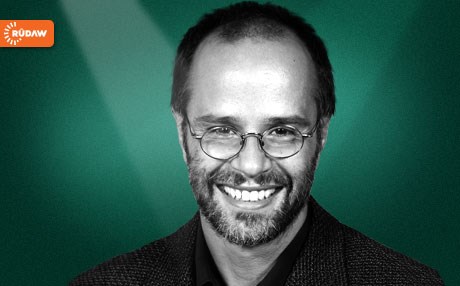
David Romano has been a Rudaw columnist since 2010. He is the Thomas G. Strong Professor of Middle East Politics at Missouri State University and author of The Kurdish Nationalist Movement (2006, Cambridge University Press) and co-editor (with Mehmet Gurses) of Conflict, Democratization and the Kurds in the Middle East (2014, Palgrave Macmillan).
The views expressed in this article are those of the author and do not necessarily reflect the position of Rudaw.
Comments
Rudaw moderates all comments submitted on our website. We welcome comments which are relevant to the article and encourage further discussion about the issues that matter to you. We also welcome constructive criticism about Rudaw.
To be approved for publication, however, your comments must meet our community guidelines.
We will not tolerate the following: profanity, threats, personal attacks, vulgarity, abuse (such as sexism, racism, homophobia or xenophobia), or commercial or personal promotion.
Comments that do not meet our guidelines will be rejected. Comments are not edited – they are either approved or rejected.
Post a comment