


How can we be free without violating freedoms of others? This is an important question which every Kurd should ask themselves. It is an intrinsic question to any cause of statehood as a philosophical concept.
The history of building a state goes parallel to the history in legitimizing the practice of inclusion or exclusion of different social components in the state apparatus. A state shouldn’t comprise framework within which power is monopolized solely by a legal establishment.
Rather, it is a framework within which distinctions are made between citizens and noncitizens, us and others. Some kind of nationalism is inherent in every state. And nationalism dictates the principles of inclusion and marginalization, which differ according to the type of nationalism at play.
Ethnic nationalism marginalizes those outside the ruling ethnicity in some way or form. The Kurds have been the greatest victims of this kind of nationalism since the beginning of the 20th century.
However, civic nationalism strives to broaden the framework of inclusion and narrow that of marginalization. Kurdish politicians and intellectuals pride themselves on the existence of an unparalleled coexistence of different social and religious components in the Kurdistan Region. This, to a large extent, is the case.
It is this coexistence that accounts for some minorities showing support for independence for the Kurdistan Region, though doing so cautiously. But this kind of peaceful coexistence in the region is not only attributable to the kindness of the Kurdish leadership.
The real reason behind this, is that many of these different components are apolitical. And they themselves, in their own ghettos, have marginalized themselves. This kind of self-marginalization or distancing from broader political and greater social life is ascribable to a historical fear of the Kurdish and Muslim majority in the region.
The participation of these different social and religious components in the region’s political process has been conditioned to some prerequisites set by the Kurdish leadership. However, this participation hasn’t yet been fixed within a strategic framework.
The participation of minorities in the political process is different from creating equal opportunities for such participation. The notion of ‘participation’ involves some kind of ‘giving’ from a linguistic perspective.
It appears there is consensus among politicians and intellectuals in the Kurdistan Region to delay the question of equal rights of citizenship for minorities and protecting their distinct identity, until after a state is built.
Deferring this, and other important questions until after a state is built, is a big problem. Doing so implies that current mentality is that of delaying these matters, and hasn’t been able to demarcate between its intellectual parameters and those of its past oppressors. It is also a reference that the Kurdistan state enterprise based on this mentality will lead to the constitution of a state that deepens ethnic and religious nationalism.
Kurdish nationalism could be employed differently in this regard. The history of coexistence in the Kurdistan Region might be used as evidence for a tolerant Kurdish nationalism in the region. However, its history in governance places its nationalism in a difficult position, between being unlimitedly tolerant and completely closed in its definition of citizenship.
In their endeavors to build a state, all Kurdish political parties in the Kurdistan Region are trying to replace the very monster they are fighting against (with something similar), instead of attempting to build something different to what they have been suffering from.
Kurdish nationalism has, since its emergence, been under the influence of the experience and nationalism of the countries which have split the Kurdish territory. The survival of state as an end justifies all kinds of means for Turks, Persians and Arabs. Similarly, the Kurds are doing everything they can to build a state of this character.
The Kurds’ legendary love affair and endeavors for statehood should benefit from Friedrich Nietzsche’s advice that people fighting a monster shouldn’t themselves become monsters in the end.
Thus, the task of the Kurds shouldn’t only be the building of a state. Rather, it should aim at constituting a state that is different from the ones which the Kurds have fought against. The model of state which the Kurds are striving to build shouldn’t be like the monster models which committed genocide against the Kurds. It shouldn’t be a state that perpetrates genocide against its minorities.
Last year, Rand Corporation, an American policy think tank, issued a report on the implications of building a Kurdistan state. One of the important areas which the report touches upon is the question of minorities fearing to live in a Kurdish state, but not having problems living within the framework of a state whose majority is determined by agreement as Kurdish. This subject should be of importance to us.
The majority of population in the Kurdistan Region is Kurds and the majority of these Kurds is Muslim. But being a Kurd and a Muslim shouldn’t be the basis of citizenship, nor should they be used as a means by the majority to monopolize power.
In civil states, citizenship is a legal concept and has no relation to identity. The establishment in these societies creates equal opportunities for political involvement. Therefore, every citizen is entitled to participate in the political process irrespective of identity.
The Iraqi model is of use for the Kurds. They should neither run away from it, nor should they build an exact replica of it. The Kurds should strive to build a state that doesn’t impose identity, language or a particular religion on other components.
The model of a future Kurdish state should be such that incorporates all the components of the region without any ethnic or religious constraints. Hence, it is vital that the minorities of the Kurdistan Region are involved in discussions on the future of the region.
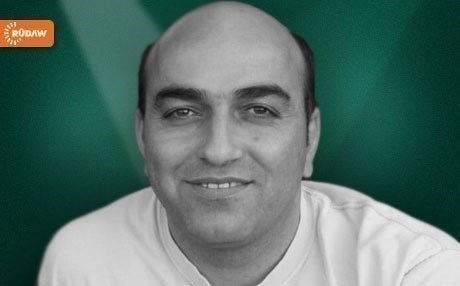
Bakhtyar Karim is an instructor in the University of Salahaddin's philosophy department in Erbil, Kurdistan Region.
The views expressed in this article are those of the author and do not necessarily reflect the position of Rudaw.
Comments
Rudaw moderates all comments submitted on our website. We welcome comments which are relevant to the article and encourage further discussion about the issues that matter to you. We also welcome constructive criticism about Rudaw.
To be approved for publication, however, your comments must meet our community guidelines.
We will not tolerate the following: profanity, threats, personal attacks, vulgarity, abuse (such as sexism, racism, homophobia or xenophobia), or commercial or personal promotion.
Comments that do not meet our guidelines will be rejected. Comments are not edited – they are either approved or rejected.
Post a comment