


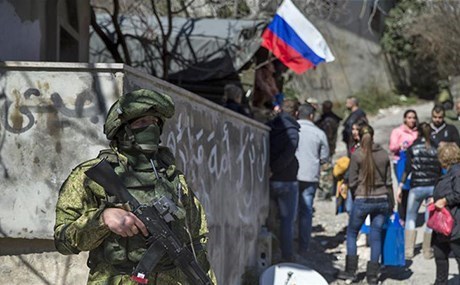
As news broke of a Russian plane being accidentally blown out of the sky by Moscow’s Syrian allies, parallels were quickly drawn with the November 2015 downing of a Russian fighter jet by Turkey. But this time, there was no name-calling (“stab in the back delivered by the accomplices of terrorists”) or deployment of missile systems or retaliatory sanctions: just a brief dust-up before the two sides closed the chapter and moved on.
Even so, after the accidental downing on September 17, when Syrian anti-aircraft batteries mistook the Russian plane for an Israeli target, it is no exaggeration to say the Middle East is just one small act of incompetence or recklessness away from a major conflagration.
The world may have breathed a collective sigh of relief when the loss of 15 servicemen did not touch off a war on the basis of the Russian defense ministry’s claim Israeli fighter jets “deliberately” placed the Il-20 surveillance plane in danger by flying close to it.
However, there is no guarantee that common sense will prevail the next time around.
The words of Mike Pompeo, the US secretary of state, struck a chord with many when he described the “friendly-fire” incident as a reminder of the need to find “permanent, peaceful, and political resolutions to the many overlapping conflicts ... and the danger of tragic miscalculation in Syria’s crowded theater of operations”.
But until even one “political resolution” can be reached, can the world afford to rely on bilateral trust or good personal chemistry to avert a direct military confrontation?
What it all boils down to, more than seven years after the first protests broke out against President Bashar al-Assad’s autocratic rule, is that Syria’s war has its own complex dynamic.
The slippery slope to conflict has defied the tough rhetoric of the West and its regional partners, the funneling of arms to rebels by foreign powers, numerous summits in Geneva and Astana, and countless statements by UN officials condemning ceasefire violations, war crimes, and sieges of civilians.
No war zone sums up the lack of good choices in Syria like the one in the northwestern province of Idlib. Even a minor swing in the balance of power there could result in one or another problematic actor gaining the upper hand.
Although the ongoing power struggle among Al-Qaeda-linked groups, Turkish-backed factions and Syrian government forces does not affect the world at large, the people of Idlib surely deserve respite from constant warfare.
The same can be said for all Syrians, who have watched helplessly as their country was carved up by foreign powers into “de-escalation zones” and “demilitarized buffer zones” but are yet to see even the first glimmerings of a resolution.
In fact, at the root of the brief surge in tensions over last week’s air accident is the presence of third parties and their auxiliaries on Syrian soil.
The fateful day’s “complex battle ... [illustrated] the perils of having so many forces operating in close proximity [spread over Latakia and neighboring Hama]”, the Jerusalem Post newspaper said.
“In addition to Russian navy and air force in the area, there is Syrian air defense operating Russian-made air defense systems, and there are Turkish forces to the north, Iranian militias, and alleged missile production facilities”.
Had Iran been a sensible, rational country with a leadership committed to the welfare of its citizens and to cordial relations with its neighbors, things might have been very different in the Middle East today.
In the real world, however, the grand strategy of the Islamic republic’s “deep state” seems to be directed at escalating hostilities with Israel and perceived pro-Western actors as a way to rehabilitate itself in the eyes of Sunni Arabs after helping to turn the tide of Syria’s sectarian conflict in Assad’s favor.
Among Trump administration officials, the hope perhaps is that the combined blow of new economic sanctions and repeated Israeli attacks on Iranian and Hezbollah bases inside Syria will convince Ayatollah Ali Khamenei’s inner circle of the follies of war.
Whether Iran will bend to mounting pressures or become even more determined to stay the course, only time will tell. But for a direct military confrontation to be avoided over Syrian skies, clearly something has to give – sooner rather than later.
Looking to the future, the world cannot rely indefinitely on the ability of Russia, Turkey, and Iran to reconcile their competing interests in Syria or keep their proxy wars from spinning out of control.
Likewise, the tacit agreements that seem to undergird Israeli efforts to contain Iran’s military supremacy in Syria can, at the most, buy time for finding a lasting solution to the crisis.
In some ways, the September 17 meeting in Sochi between the Turkish and Russian presidents, which froze the Syrian government’s plan to retake Idlib from rebels by force, has given all sides precious breathing room, though only until mid-October.
Instead of watching the developments from the sidelines, the US, together with its European allies and Arab and Kurdish partners, should strive to wrest back its lost influence while acting in the best interests of Syria, keeping in mind its society’s pre-war multiethnic, multireligious and multisectarian makeup.
As for the Russians, they probably have their own reasons for not equipping Syria’s air defense with “friend or foe” identification systems despite supplying the S-200 surface-to-air missile units that brought down the surveillance prop plane in Latakia.
Although a chastened Israel will presumably modify its operational rules, Russia too would be wise to enable its allies to make the distinction between friend and foe, given the outside chance of a passenger jet being shot down next by jittery Syrian anti-aircraft battery operators.
However, it would be imprudent on Russia’s part to transfer more sophisticated anti-aircraft systems to the Syrians since such a move could drag it into an undeclared war between Israel and Iran in which it has only a peripheral interest.
In hindsight, call it what you want – incompetence, nervousness, or recklessness – the Syrian air-defense mistake that brought down the Russian plane handed Putin an excuse to nip in the bud another war in an already “crowded theater of operations”.
As Abu Dhabi’s The National newspaper put it in an unsigned editorial the day after the Sochi meeting and the Russia-Israel flare-up, “the Syrian regime downing an aircraft belonging to its closest ally is, in many ways, the perfect encapsulation of how tangled the Syrian war has become”.
Arnab Neil Sengupta is an independent journalist and commentator on the Middle East.
The views expressed in this article are those of the author and do not necessarily reflect the position of Rudaw.
Even so, after the accidental downing on September 17, when Syrian anti-aircraft batteries mistook the Russian plane for an Israeli target, it is no exaggeration to say the Middle East is just one small act of incompetence or recklessness away from a major conflagration.
The world may have breathed a collective sigh of relief when the loss of 15 servicemen did not touch off a war on the basis of the Russian defense ministry’s claim Israeli fighter jets “deliberately” placed the Il-20 surveillance plane in danger by flying close to it.
However, there is no guarantee that common sense will prevail the next time around.
The words of Mike Pompeo, the US secretary of state, struck a chord with many when he described the “friendly-fire” incident as a reminder of the need to find “permanent, peaceful, and political resolutions to the many overlapping conflicts ... and the danger of tragic miscalculation in Syria’s crowded theater of operations”.
But until even one “political resolution” can be reached, can the world afford to rely on bilateral trust or good personal chemistry to avert a direct military confrontation?
What it all boils down to, more than seven years after the first protests broke out against President Bashar al-Assad’s autocratic rule, is that Syria’s war has its own complex dynamic.
The slippery slope to conflict has defied the tough rhetoric of the West and its regional partners, the funneling of arms to rebels by foreign powers, numerous summits in Geneva and Astana, and countless statements by UN officials condemning ceasefire violations, war crimes, and sieges of civilians.
No war zone sums up the lack of good choices in Syria like the one in the northwestern province of Idlib. Even a minor swing in the balance of power there could result in one or another problematic actor gaining the upper hand.
Although the ongoing power struggle among Al-Qaeda-linked groups, Turkish-backed factions and Syrian government forces does not affect the world at large, the people of Idlib surely deserve respite from constant warfare.
The same can be said for all Syrians, who have watched helplessly as their country was carved up by foreign powers into “de-escalation zones” and “demilitarized buffer zones” but are yet to see even the first glimmerings of a resolution.
In fact, at the root of the brief surge in tensions over last week’s air accident is the presence of third parties and their auxiliaries on Syrian soil.
The fateful day’s “complex battle ... [illustrated] the perils of having so many forces operating in close proximity [spread over Latakia and neighboring Hama]”, the Jerusalem Post newspaper said.
“In addition to Russian navy and air force in the area, there is Syrian air defense operating Russian-made air defense systems, and there are Turkish forces to the north, Iranian militias, and alleged missile production facilities”.
Had Iran been a sensible, rational country with a leadership committed to the welfare of its citizens and to cordial relations with its neighbors, things might have been very different in the Middle East today.
In the real world, however, the grand strategy of the Islamic republic’s “deep state” seems to be directed at escalating hostilities with Israel and perceived pro-Western actors as a way to rehabilitate itself in the eyes of Sunni Arabs after helping to turn the tide of Syria’s sectarian conflict in Assad’s favor.
Among Trump administration officials, the hope perhaps is that the combined blow of new economic sanctions and repeated Israeli attacks on Iranian and Hezbollah bases inside Syria will convince Ayatollah Ali Khamenei’s inner circle of the follies of war.
Whether Iran will bend to mounting pressures or become even more determined to stay the course, only time will tell. But for a direct military confrontation to be avoided over Syrian skies, clearly something has to give – sooner rather than later.
Looking to the future, the world cannot rely indefinitely on the ability of Russia, Turkey, and Iran to reconcile their competing interests in Syria or keep their proxy wars from spinning out of control.
Likewise, the tacit agreements that seem to undergird Israeli efforts to contain Iran’s military supremacy in Syria can, at the most, buy time for finding a lasting solution to the crisis.
In some ways, the September 17 meeting in Sochi between the Turkish and Russian presidents, which froze the Syrian government’s plan to retake Idlib from rebels by force, has given all sides precious breathing room, though only until mid-October.
Instead of watching the developments from the sidelines, the US, together with its European allies and Arab and Kurdish partners, should strive to wrest back its lost influence while acting in the best interests of Syria, keeping in mind its society’s pre-war multiethnic, multireligious and multisectarian makeup.
As for the Russians, they probably have their own reasons for not equipping Syria’s air defense with “friend or foe” identification systems despite supplying the S-200 surface-to-air missile units that brought down the surveillance prop plane in Latakia.
Although a chastened Israel will presumably modify its operational rules, Russia too would be wise to enable its allies to make the distinction between friend and foe, given the outside chance of a passenger jet being shot down next by jittery Syrian anti-aircraft battery operators.
However, it would be imprudent on Russia’s part to transfer more sophisticated anti-aircraft systems to the Syrians since such a move could drag it into an undeclared war between Israel and Iran in which it has only a peripheral interest.
In hindsight, call it what you want – incompetence, nervousness, or recklessness – the Syrian air-defense mistake that brought down the Russian plane handed Putin an excuse to nip in the bud another war in an already “crowded theater of operations”.
As Abu Dhabi’s The National newspaper put it in an unsigned editorial the day after the Sochi meeting and the Russia-Israel flare-up, “the Syrian regime downing an aircraft belonging to its closest ally is, in many ways, the perfect encapsulation of how tangled the Syrian war has become”.
Arnab Neil Sengupta is an independent journalist and commentator on the Middle East.
The views expressed in this article are those of the author and do not necessarily reflect the position of Rudaw.
Comments
Rudaw moderates all comments submitted on our website. We welcome comments which are relevant to the article and encourage further discussion about the issues that matter to you. We also welcome constructive criticism about Rudaw.
To be approved for publication, however, your comments must meet our community guidelines.
We will not tolerate the following: profanity, threats, personal attacks, vulgarity, abuse (such as sexism, racism, homophobia or xenophobia), or commercial or personal promotion.
Comments that do not meet our guidelines will be rejected. Comments are not edited – they are either approved or rejected.
Post a comment