



Error occured during this request! Please try again later.
While campaigning for President in 2008, Barack Obama said “Armenian genocide is not an allegation, a personal opinion, or a point of view, but rather a widely documented fact supported by an overwhelming body of historical evidence. The facts are undeniable. An official policy that calls on diplomats to distort the historical facts is an untenable policy.” Mr. Obama added that “As president I will recognize the Armenian Genocide.”
Now president of the United States for six years, Mr. Obama appears to have completely reneged on his promise. On the week of the hundred-year anniversary of what the Armenians call “Meds Yeghern” (“the Great Calamity”), his administration released a statement referring to the killing of more than one million Armenians in 1915-16 as “massacres.”
The roughly 500,000 Armenians in the United States reacted bitterly. One of the leaders of the American diaspora community, Aram Hamparian, lamented that “The president’s surrender represents a national disgrace...It is a betrayal of the truth, and it is a betrayal of trust.” Congressmen Adam B. Schiff from California (where some 200,000 Armenians reside and vote) asked “How long must the victims and their families wait before our nation has the courage to confront Turkey with the truth about the murderous past of the Ottoman Empire? If not this president, who spoke so eloquently and passionately about recognition in the past, whom? If not after 100 years, when?”
One popular joke asks “How do you know when a politician is lying? His lips move.” Nonetheless, it comes as a bit of a surprise that Mr. Obama chose this course of action even on the one hundred year anniversary of Meds Yeghern. The Armenian and pro-Armenian electorate in America is much, much larger than the pro-Turkish one. The Democratic Party of the United States overwhelmingly supports recognizing the Armenian genocide. A host of other countries including France, Italy, Swizerland and most recently Germany and the European Parliament, recognized it – and maintained relations with Turkey in the process. The Pope used the genocide word again last week. In 1997, the International Association of Genocide Scholars recognized it. And not so long ago Mr. Obama himself promised to do so.
So why the continuing lack of recognition from Washington? There is, of course, the possibility that the President and his gutless advisors and bureaucrats simply prefer to follow the path of least resistance. This would also explain the continuing failure to provide truly significant, direct military aid to the Kurds fighting the Islamic State (ISIS), for instance. Turkey has also spent millions of dollars lobbying leaders in Washington, so perhaps that played a part in the decision.
Apart from these possibilities, another scenario seems likely: According to the Los Angeles Times, “White House officials defended the decision as necessary to preserve the chance of cooperation with Turkey, a NATO ally, on Middle Eastern conflicts.” Of course, current cooperation from Turkey against the ISIS, which is the Americans’ top priority in the region, appears pitiful at best. American planes are still refused permission to use their base at Incirlik to bomb ISIS. Although a modest increase in Turkish efforts to control their border with ISIS appears evident, Ankara still refrains from going after the Jihadis too much – if Turkey was really making things uncomfortable for ISIS, they would have at least traded a few shots against each other.
If Turkish President Erdogan is therefore not exactly in a position to threaten the Americans with ending Turkey’s nonexistent cooperation, then what might he have promised Mr. Obama in return for continuing to tip toe around the genocide word and looking like a liar?
Given recent rumors of a Saudi-Turkish rapprochement and plans to intervene more forcefully in Syria (against Assad mainly, but presumably against ISIS as well), we might do well to pay close attention here. Mr. Erdogan has also started speaking (if not acting) more forcefully against ISIS. On April 22 during a press conference with Iraqi President Fuad Mahsoum, Mr. Erdogan stated “I don’t believe that air strikes are sufficient to defeat Daesh [ISIS] in Syria and Iraq. A ground offensive is needed along with air strikes so that air operations can be successful.”
Something is brewing here, and Turkey’s role appears likely to take center stage.
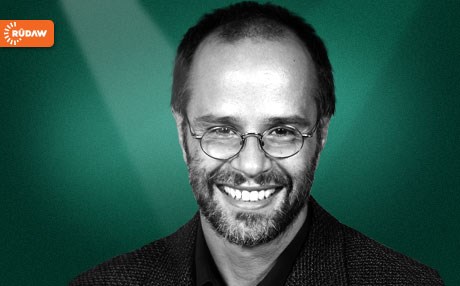
David Romano has been a Rudaw columnist since 2010. He is the Thomas G. Strong Professor of Middle East Politics at Missouri State University and author of The Kurdish Nationalist Movement (2006, Cambridge University Press) and co-editor (with Mehmet Gurses) of Conflict, Democratization and the Kurds in the Middle East (2014, Palgrave Macmillan).
The views expressed in this article are those of the author and do not necessarily reflect the position of Rudaw.
Comments
Rudaw moderates all comments submitted on our website. We welcome comments which are relevant to the article and encourage further discussion about the issues that matter to you. We also welcome constructive criticism about Rudaw.
To be approved for publication, however, your comments must meet our community guidelines.
We will not tolerate the following: profanity, threats, personal attacks, vulgarity, abuse (such as sexism, racism, homophobia or xenophobia), or commercial or personal promotion.
Comments that do not meet our guidelines will be rejected. Comments are not edited – they are either approved or rejected.
Post a comment