



Error occured during this request! Please try again later.
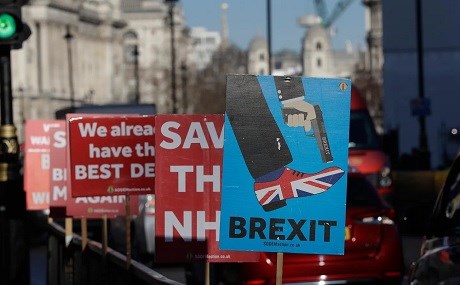
In the fourth nationwide vote in as many years, UK voters again head to the polls, this time to elect representatives to the European Parliament who may only sit there until the (latest) deadline for Brexit expires at the end of October, or sooner.
Participation in such elections is normally low. This time the turnout is likely to be higher, however, as Thursday’s vote is basically a second referendum on Brexit.
The latest YouGov opinion poll indicates that Nigel Farage’s Brexit Party will take a whopping 37 percent of the vote, the pro-Europe Liberal Democrats 19 percent, Labour 13 percent, the Greens 12 percent, and the Conservatives just 7 percent – their lowest ever result.
If these predictions prove correct when the results are announced Sunday, they will be a body blow to the Labour and Conservative duopoly, who will have gone from securing around 90 percent of the vote in the 1950s to just 20 percent today.
However, national and European elections are very different. The first makes a direct impact on UK governance while the second is seen as a free hit. And many people will vote tactically today because they believe first preferences votes count for far more than who gets elected.
Many want to send a signal for either Brexit or Remain. If parties campaigning in either direction top 50 percent, this can be interpreted as a rejection or a demand for another referendum.
Many Conservatives will vote for the Brexit Party and a minority will plump for Remain parties. This includes the former deputy prime minister and Tory grandee Michael Heseltine, who has been suspended from the party for saying he will vote for the pro-Remain Liberal Democrats.
The Lib Dems are gradually overcoming the opprobrium of being a junior partner in coalition with the Conservatives from 2010 to 2015.
Some Labour people will not support their party too as it is not unambiguously for Remain. Some hope that a strong vote will persuade the party leadership to embrace a final or confirmatory referendum. Others, particularly from seats which voted for Brexit, argue the referendum should be implemented.
Those elected would have a bigger platform in their own parties and in the continuing debate about the UK’s relationship with Europe. That is even more important for the smaller Green Party and the new Change UK (CUK) – the Independent Group that consists of those who left Labour and the Conservatives, mainly over Brexit, and which stands at 4 percent in the YouGov poll.
CUK was catapulted into an election that wasn’t supposed to happen and their operation is clearly fragile. Several articulate candidates could win seats. One is the former BBC anchorman Gavin Esler, who used to present the weekly international news programme Dateline. Another is Jacek Rostowski, the British-born former Polish minister of finance and deputy prime minister when EU leader Donald Tusk was Poland’s prime minister.
My working assumption is that the UK will eventually carry out Brexit. But such new politicians can perhaps do much to cultivate a wider understanding of the EU that we will have left and lay the basis for either a renewed relationship between the UK and the EU or even an effort to rejoin the EU, although that may be many years down the line, if ever.
But progress on Brexit will be in the hands of the Conservatives, however badly it does in these elections. The prime minister has announced a new ten-point package, which was endorsed in what was described as a stormy cabinet meeting.
It is causing huge ructions within her party, where an increasing number of its MPs and members want to see the back of her within days, if not sooner. About a score of Tory MPs are ready to run for the post, if only to put their markers down for preferment by a new leader.
So far, the top dog in the contest is former foreign secretary Boris Johnson who appeals to Conservative party members as a firm Brexiteer and maybe the best candidate to defeat Labour leader Jeremy Corbyn.
European elections have rarely mattered in domestic politics – but this one has the potential to transform the shape of British politics. Where it will all end is anyone’s guess.
Participation in such elections is normally low. This time the turnout is likely to be higher, however, as Thursday’s vote is basically a second referendum on Brexit.
The latest YouGov opinion poll indicates that Nigel Farage’s Brexit Party will take a whopping 37 percent of the vote, the pro-Europe Liberal Democrats 19 percent, Labour 13 percent, the Greens 12 percent, and the Conservatives just 7 percent – their lowest ever result.
If these predictions prove correct when the results are announced Sunday, they will be a body blow to the Labour and Conservative duopoly, who will have gone from securing around 90 percent of the vote in the 1950s to just 20 percent today.
However, national and European elections are very different. The first makes a direct impact on UK governance while the second is seen as a free hit. And many people will vote tactically today because they believe first preferences votes count for far more than who gets elected.
Many want to send a signal for either Brexit or Remain. If parties campaigning in either direction top 50 percent, this can be interpreted as a rejection or a demand for another referendum.
Many Conservatives will vote for the Brexit Party and a minority will plump for Remain parties. This includes the former deputy prime minister and Tory grandee Michael Heseltine, who has been suspended from the party for saying he will vote for the pro-Remain Liberal Democrats.
The Lib Dems are gradually overcoming the opprobrium of being a junior partner in coalition with the Conservatives from 2010 to 2015.
Some Labour people will not support their party too as it is not unambiguously for Remain. Some hope that a strong vote will persuade the party leadership to embrace a final or confirmatory referendum. Others, particularly from seats which voted for Brexit, argue the referendum should be implemented.
Those elected would have a bigger platform in their own parties and in the continuing debate about the UK’s relationship with Europe. That is even more important for the smaller Green Party and the new Change UK (CUK) – the Independent Group that consists of those who left Labour and the Conservatives, mainly over Brexit, and which stands at 4 percent in the YouGov poll.
CUK was catapulted into an election that wasn’t supposed to happen and their operation is clearly fragile. Several articulate candidates could win seats. One is the former BBC anchorman Gavin Esler, who used to present the weekly international news programme Dateline. Another is Jacek Rostowski, the British-born former Polish minister of finance and deputy prime minister when EU leader Donald Tusk was Poland’s prime minister.
My working assumption is that the UK will eventually carry out Brexit. But such new politicians can perhaps do much to cultivate a wider understanding of the EU that we will have left and lay the basis for either a renewed relationship between the UK and the EU or even an effort to rejoin the EU, although that may be many years down the line, if ever.
But progress on Brexit will be in the hands of the Conservatives, however badly it does in these elections. The prime minister has announced a new ten-point package, which was endorsed in what was described as a stormy cabinet meeting.
It is causing huge ructions within her party, where an increasing number of its MPs and members want to see the back of her within days, if not sooner. About a score of Tory MPs are ready to run for the post, if only to put their markers down for preferment by a new leader.
So far, the top dog in the contest is former foreign secretary Boris Johnson who appeals to Conservative party members as a firm Brexiteer and maybe the best candidate to defeat Labour leader Jeremy Corbyn.
European elections have rarely mattered in domestic politics – but this one has the potential to transform the shape of British politics. Where it will all end is anyone’s guess.
 |
Gary Kent is the Secretary of the All Party Parliamentary Group (APPG) and a Fellow of Soran University. He writes this column for Rudaw in a personal capacity. The address for the all-party group is appgkurdistan@gmail.com.
|
Comments
Rudaw moderates all comments submitted on our website. We welcome comments which are relevant to the article and encourage further discussion about the issues that matter to you. We also welcome constructive criticism about Rudaw.
To be approved for publication, however, your comments must meet our community guidelines.
We will not tolerate the following: profanity, threats, personal attacks, vulgarity, abuse (such as sexism, racism, homophobia or xenophobia), or commercial or personal promotion.
Comments that do not meet our guidelines will be rejected. Comments are not edited – they are either approved or rejected.
Post a comment