


“You need a letter,” says the Kurdish security guard at the checkpoint on the way to Halabja. Our driver does not blink. “We are guests of the Minister of Culture,” he answers. The guard waves us through.
The six Dutch tourists in the bus breathe a sigh of relief. They enjoy cruising through the Kurdish countryside in spring, but are getting irritated by the reception at the checkpoints. When leaving Sulaimani, I even had to prevent my guests from having to step out of the bus to have their passports checked. Every time we pass a checkpoint in Sulaimani, the guards ask for papers. “Do I look like a terrorist?” I hear someone say in the bus.
I text the minister to let him know he has guests from Holland he was not aware of. Yet, he knows about them, as we met him in the museum in Sulaimani – where we arrived right on time for the opening of a new wing. And although Hero Khan, Iraq’s first lady, was present, all seven of us walked right past guards and military without being checked at all. Uttering a “choni, bashi” – hello, how are you in Kurdish - did the trick.
Even for this group of experienced travelers the security procedures are a bit confusing. Sometimes the guard at a checkpoint just checks his knowledge of Dutch football, sometimes he only asks where we are coming from. But some guards are almost hostile when they demand to see passports.
This behavior is so opposite to how the foreign guests are welcomed everywhere else in Kurdistan. For instance in Halabja, where one of the survivors of the 1988 chemical attack stressed how glad he was to see the foreigners at the monument, and that he hoped they would share their knowledge of what happened with others back home. When he handed out his card which read “survivor of Halabja,” this mightily impressed the visitors from a country that has no memory of chemical attacks other than those in nearby France in World War One.
Impressed they were, too, when invited for lunch at the guesthouse near the grave of the founder of the Kurdistan Democratic Party (KDP), Mustafa Barzani -- even though they found the museum that is being built there to be too pompous. They loved to be offered tea by an old man in a cave at a monastery in Al Qosh, and by so many others. But most of all they were touched by all those Iraqis who desperately wanted to be photographed with them, and then offered their email addresses to be sent the pictures. Some would connect on Facebook within hours after meeting. Where in Holland do people stop strangers in the street to ask where they are from, or just greet them? Foreigners still are special in Iraqi Kurdistan.
They were most impressed in Sulaimani during Newroz, the Kurdish New Year, where at least one million men, women and children moved through the center. The atmosphere was friendly, and no unrest or violence was noted. “Two guys were fooling around when the police told them to quit. And they did!” one of the visitors told me, full of disbelief. In any European city such a gathering would lead to violence and crime. Not in Kurdistan, where the security service Asayish, the Peshmerga troops and police were out in force and social control did the rest.
“Let’s hope it stays like this,” one of the visitors said. “I am afraid what will happen when Kurdish society gets even richer and people become more individualistic, like in Europe.”
What else could we do but agree?
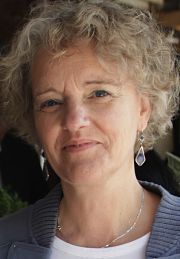
Judit Neurink is a Dutch journalist and author, former director of the Independent Media Centre in Kurdistan, who also organizes tours for foreign tourists through Kurdistan
Comments
Rudaw moderates all comments submitted on our website. We welcome comments which are relevant to the article and encourage further discussion about the issues that matter to you. We also welcome constructive criticism about Rudaw.
To be approved for publication, however, your comments must meet our community guidelines.
We will not tolerate the following: profanity, threats, personal attacks, vulgarity, abuse (such as sexism, racism, homophobia or xenophobia), or commercial or personal promotion.
Comments that do not meet our guidelines will be rejected. Comments are not edited – they are either approved or rejected.
Post a comment