



Error occured during this request! Please try again later.
International issues erupted angrily into the election campaign last week with a keynote speech by Labour Leader Ed Miliband outlining his foreign policy principles but which hit the headlines for damning David Cameron over Libya.
Miliband says, in essence, that Cameron was complacent and that Libya's predictable chaos was avoidable if Britain had helped ensure the world backed the Libyans in practice not just principle. Labour's shadow foreign secretary, Douglas Alexander added that Cameron 'waded in and then walked away.'
Former Foreign Secretary William Hague damned Miliband for ill-judged and opportunist remarks after five years of near silence. Actually, Miliband briefly asked Cameron about post-war planning in Libya in the Commons this year but Libya was not mentioned in Alexander's major foreign policy speech in February. The complex crisis in Libya had in truth barely featured in British politics, a result of a growing public mood of insularity and hellishly difficult developments in Libya.
Given that many refugees fleeing the Libyan chaos are from Syria, observers also highlighted Miliband's veto in 2013 of proposed action to punish Assad's use of chemical weapons, which I examined last week. The veto was part of Miliband's drive to learn lessons from the invasion of Iraq in 2003. His speech defined these as 'Not seeking to solve the world’s problems on our own but working with international, regional and local partners. Any intervention must be carried out with a clearly defined strategy. And this must include a comprehensive transition and post conflict strategy.' A wide alliance, including the Kurds but not the UN Security Council, backed the invasion which was quick and relatively bloodless. There were State Department plans for the day after but they were hubristically dumped by the Pentagon, which blundered badly and exacerbated Sunni revanchism.
Miliband accepts that military interventions can be necessary but the bar seems high. Opposing morally necessary action in Syria in August 2013 was a big mistake and augurs badly, in my view. Much of the debate about intervention revolves around the role of the UN. Ideally, interventions should be endorsed in a multilateral and rules-bound manner with wider support and understanding of the realities on the ground. But does this always mean accepting that Russia and China patrol the moral boundaries of action and abandon people to their fate? Seeking a clearly defined strategy is fine but wars are inevitably dynamic and effectiveness cannot always be measured in short time scales.
Britain lacks the will for sustained interventionism as does the US after Iraq. The UN is usually incapable of it while Russia and Iran have few qualms. Military intervention is usually a last resort and other non-military interventions can make it less necessary and there are limits to what external influence can do to counter deep-seated internal conflicts and tyranny. Western public opinion must be persuaded that some initially small conflicts can explode and expand if western power cannot be mobilised where necessary and as is so often desired by people at the sharp end of terror and tyranny, which in our much smaller world often affects countries whose people might prefer to keep out of the way.
There is, however, far less public appetite for international engagement by the UK in line with its reduced defence capabilities and in what Alexander says is 'a time of growing introversion amongst the global public.' American policy-makers have also noticed the general shift. Xenia Wickett, who runs the American programme at the prestigious international affairs body, Chatham House compares the Anglo-American link to a three-legged stool consisting of security cooperation, Britain’s membership of the European Union, and diplomacy. But she says that 'cuts in the British military mean the first leg is weakening, while Britain’s possible exit from the EU means the second is weakening - and stools do not stand on one leg.'
Whether the day or so of bitter exchanges on Libya and Syria make much difference to the result of the May 7 election is unclear although it remains a very tight race and maybe a fifth of the electorate is undecided or may change their minds in the final days. What is certain in the longer term is that the UK's diplomatic, political, economic and sometimes military clout remains essential to world peace and stability and their judicious use requires a popular and bipartisan base.
Decisions on many foreign policy issues have been put on the long finger in the run up to the election but many may soon have to be faced. One of these is Britain's stance on Kurdistan and Iraq and, in particular, providing many more and much needed heavy weapons to the Kurds. How this is handled depends on the influence that Kurds and their friends can muster.
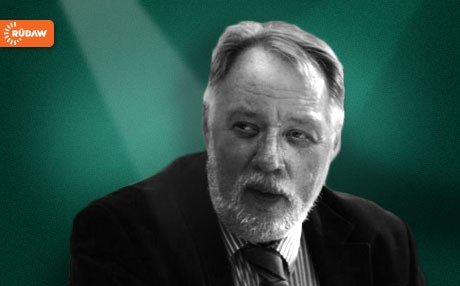
* Gary Kent was the director of All Party Parliamentary Group (APPG in the last British parliament. He writes this column for Rudaw in a personal capacity.
The views expressed in this article are those of the author and do not necessarily reflect the position of Rudaw.
Comments
Rudaw moderates all comments submitted on our website. We welcome comments which are relevant to the article and encourage further discussion about the issues that matter to you. We also welcome constructive criticism about Rudaw.
To be approved for publication, however, your comments must meet our community guidelines.
We will not tolerate the following: profanity, threats, personal attacks, vulgarity, abuse (such as sexism, racism, homophobia or xenophobia), or commercial or personal promotion.
Comments that do not meet our guidelines will be rejected. Comments are not edited – they are either approved or rejected.
Post a comment