


World

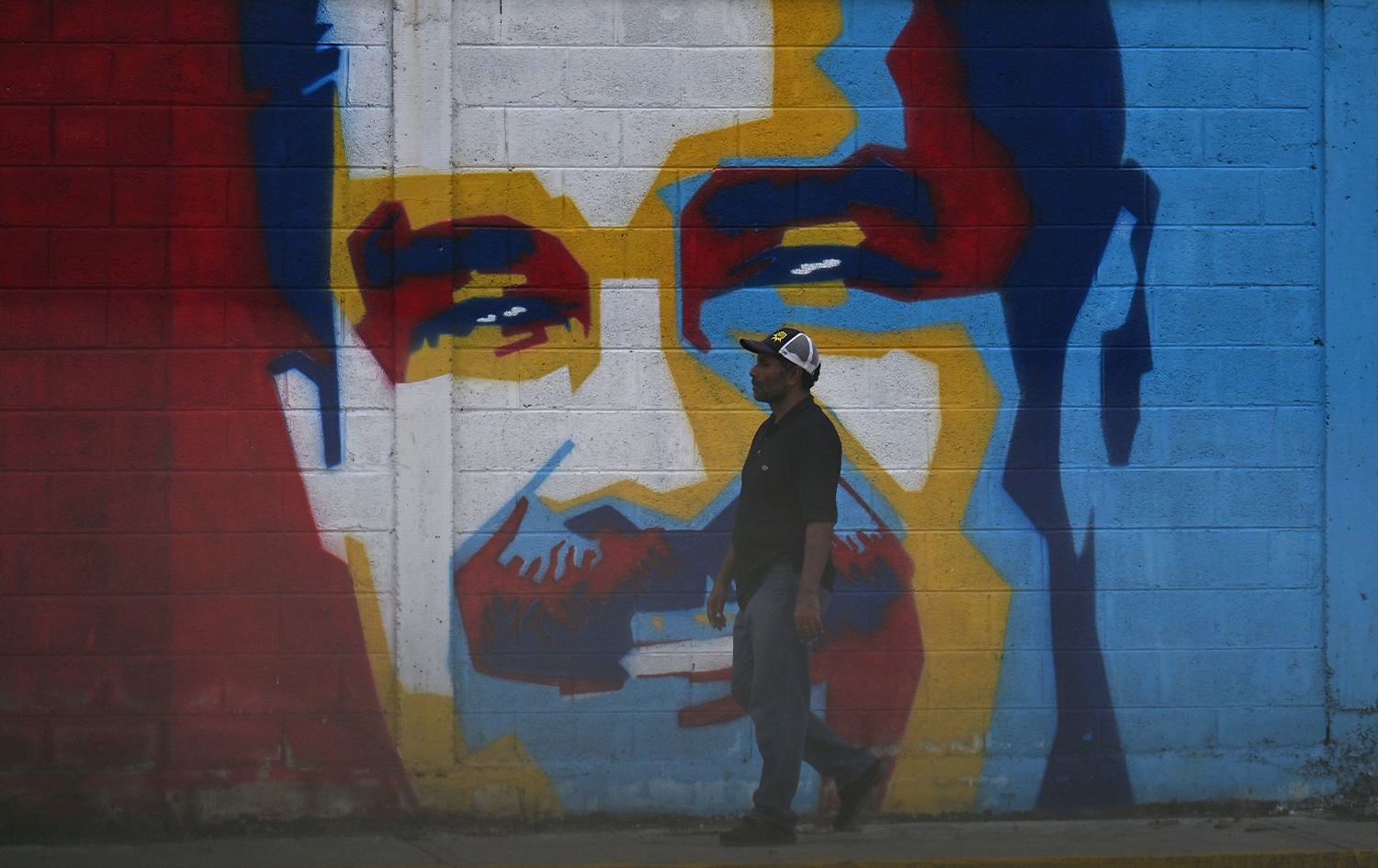
A man walking past a graffiti of Venezuelan President Nicolas Maduro in Caracas on January 3, 2026. Photo: Juan Barreto/AFP
ERBIL, Kurdistan Region - Governments worldwide issued divided reactions on Saturday after the US carried out a military operation in Venezuela that resulted in the capture of President Nicolas Maduro, prompting calls from some Western leaders for an orderly political transition, while others condemned the move as a violation of international law and national sovereignty.
In the early hours of Saturday, US forces launched a major operation using air, land, and sea assets, culminating in the capture of Maduro and his wife in the capital, Caracas. US President Donald Trump announced later that day that Maduro and his wife had been detained following a “large-scale strike,” adding that the United States would “run” the country until a “proper and judicious transition” is achieved.
Trump said the interim administration would be overseen by Secretary of State Marco Rubio, Secretary of War Pete Hegseth, and Chairman of the Joint Chiefs of Staff General Dan Caine for “a period of time” that he did not specify.
German Chancellor Friedrich Merz said in a statement that “the legal classification of the US operation is complex. We are taking time on this. In principle, the principles of international law must apply in dealings between states.” He added that political instability must be avoided and stressed the need “to ensure an orderly transition to a government legitimized by elections.”
Merz also said that “Nicolás Maduro has led his country to ruin. The last election was rigged. We therefore did not recognize the presidency - like many other states in the world.” The statement added that “Maduro played a problematic role in the region, with unholy alliances worldwide and through Venezuela's entanglement in the drug trade.”
China strongly condemned the operation. “China is deeply shocked by and strongly condemns the U.S.’s blatant use of force against a sovereign state and action against its president,” the Chinese foreign ministry told Rudaw in a statement, warning that such actions “seriously violate international law and Venezuela’s sovereignty, and threaten peace and security in Latin America and the Caribbean region.”
“China firmly opposes it. We call on the U.S. to abide by international law and the purposes and principles of the UN Charter, and stop violating other countries’ sovereignty and security,” the statement added.
Russia also denounced the attack as “extremely worrying and reprehensible.” Foreign Minister Sergey Lavrov, in a call with Venezuelan Vice President Delcy Eloina Rodriguez Gomez, “expressed firm solidarity with the people of Venezuela confronting armed aggression,” according to the Russian Foreign Ministry.
Cuban President Miguel Diaz-Canel said in a post on X that Cuba “denounces and urgently demands the reaction of the international community against the criminal attack by the U.S. on #Venezuela.”
Turkey’s foreign ministry said it “attaches importance to the stability of Venezuela and to the peace and well being of the people of Venezuela,” calling on “all parties to exercise restraint in order to prevent the current situation from leading to adverse consequences for regional and international security.”
Iran’s foreign ministry issued a written statement condemning the US attack on Venezuela’s “territorial integrity and sovereignty,” emphasizing that the operation violated the principles of the UN Charter and urging the United Nations to condemn it.
European Union foreign policy chief Kaja Kallas said in a post on X that “The EU is closely monitoring the situation in Venezuela.” She added that “The EU has repeatedly stated that Mr Maduro lacks legitimacy and has defended a peaceful transition. Under all circumstances, the principles of international law and the UN Charter must be respected. We call for restraint.”
European Commission President Ursula von der Leyen echoed those remarks, saying, “We stand by the people of Venezuela and support a peaceful and democratic transition. Any solution must respect international law and the UN Charter.”
The United States has repeatedly accused Maduro of presiding over a “narco-state” and manipulating elections. Maduro, who succeeded Hugo Chavez in 2013, has consistently rejected the accusations, saying Washington’s true objective is to seize control of Venezuela’s vast oil reserves, the largest in the world.
In the early hours of Saturday, US forces launched a major operation using air, land, and sea assets, culminating in the capture of Maduro and his wife in the capital, Caracas. US President Donald Trump announced later that day that Maduro and his wife had been detained following a “large-scale strike,” adding that the United States would “run” the country until a “proper and judicious transition” is achieved.
Trump said the interim administration would be overseen by Secretary of State Marco Rubio, Secretary of War Pete Hegseth, and Chairman of the Joint Chiefs of Staff General Dan Caine for “a period of time” that he did not specify.
German Chancellor Friedrich Merz said in a statement that “the legal classification of the US operation is complex. We are taking time on this. In principle, the principles of international law must apply in dealings between states.” He added that political instability must be avoided and stressed the need “to ensure an orderly transition to a government legitimized by elections.”
Merz also said that “Nicolás Maduro has led his country to ruin. The last election was rigged. We therefore did not recognize the presidency - like many other states in the world.” The statement added that “Maduro played a problematic role in the region, with unholy alliances worldwide and through Venezuela's entanglement in the drug trade.”
China strongly condemned the operation. “China is deeply shocked by and strongly condemns the U.S.’s blatant use of force against a sovereign state and action against its president,” the Chinese foreign ministry told Rudaw in a statement, warning that such actions “seriously violate international law and Venezuela’s sovereignty, and threaten peace and security in Latin America and the Caribbean region.”
“China firmly opposes it. We call on the U.S. to abide by international law and the purposes and principles of the UN Charter, and stop violating other countries’ sovereignty and security,” the statement added.
Russia also denounced the attack as “extremely worrying and reprehensible.” Foreign Minister Sergey Lavrov, in a call with Venezuelan Vice President Delcy Eloina Rodriguez Gomez, “expressed firm solidarity with the people of Venezuela confronting armed aggression,” according to the Russian Foreign Ministry.
Cuban President Miguel Diaz-Canel said in a post on X that Cuba “denounces and urgently demands the reaction of the international community against the criminal attack by the U.S. on #Venezuela.”
Turkey’s foreign ministry said it “attaches importance to the stability of Venezuela and to the peace and well being of the people of Venezuela,” calling on “all parties to exercise restraint in order to prevent the current situation from leading to adverse consequences for regional and international security.”
Iran’s foreign ministry issued a written statement condemning the US attack on Venezuela’s “territorial integrity and sovereignty,” emphasizing that the operation violated the principles of the UN Charter and urging the United Nations to condemn it.
European Union foreign policy chief Kaja Kallas said in a post on X that “The EU is closely monitoring the situation in Venezuela.” She added that “The EU has repeatedly stated that Mr Maduro lacks legitimacy and has defended a peaceful transition. Under all circumstances, the principles of international law and the UN Charter must be respected. We call for restraint.”
European Commission President Ursula von der Leyen echoed those remarks, saying, “We stand by the people of Venezuela and support a peaceful and democratic transition. Any solution must respect international law and the UN Charter.”
The United States has repeatedly accused Maduro of presiding over a “narco-state” and manipulating elections. Maduro, who succeeded Hugo Chavez in 2013, has consistently rejected the accusations, saying Washington’s true objective is to seize control of Venezuela’s vast oil reserves, the largest in the world.


Comments
Rudaw moderates all comments submitted on our website. We welcome comments which are relevant to the article and encourage further discussion about the issues that matter to you. We also welcome constructive criticism about Rudaw.
To be approved for publication, however, your comments must meet our community guidelines.
We will not tolerate the following: profanity, threats, personal attacks, vulgarity, abuse (such as sexism, racism, homophobia or xenophobia), or commercial or personal promotion.
Comments that do not meet our guidelines will be rejected. Comments are not edited – they are either approved or rejected.
Post a comment