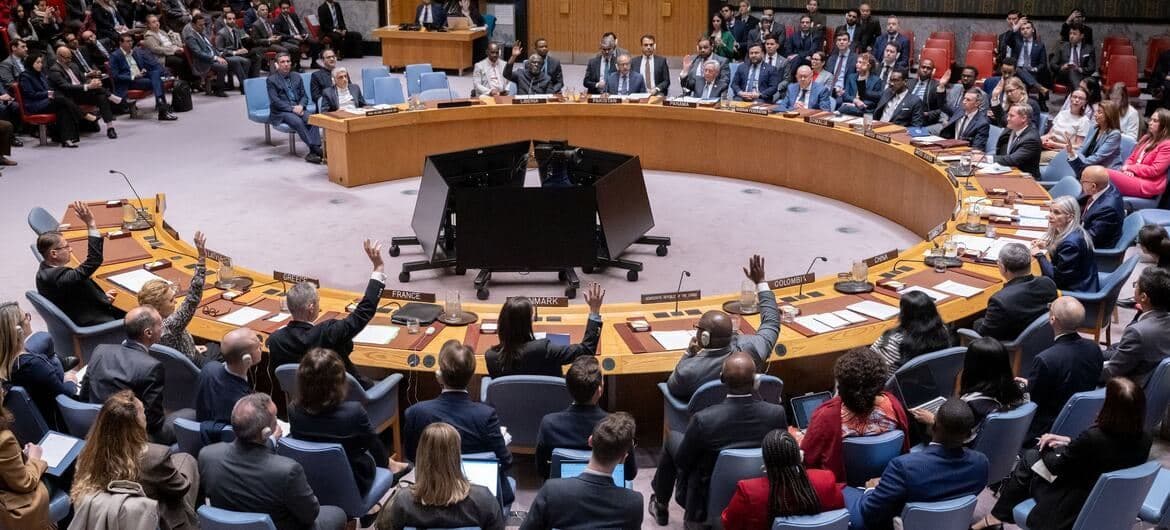
ERBIL, Kurdistan Region - A UN Security Council resolution backed by the United States and Arab Gulf states to reopen the Strait of Hormuz failed on Tuesday after Russia and China vetoed the measure, dealing a setback to efforts aimed at restoring critical global energy and trade flows.
The draft, led by Bahrain, sought to authorize the use of force to guarantee freedom of navigation through the strategic waterway, allowing Gulf countries to export oil and import essential goods. Moscow and Beijing opposed the provision, arguing it risked escalating tensions.
China’s Ambassador to the United Nations, Fu Cong, indicated that the timing of the vote played a decisive role in Beijing’s decision, coming just hours before US President Donald Trump’s deadline tied to threats of massive strikes on Iran’s infrastructure.
“Yes. That's why I said the timing was extremely bad,” Fu Cong told Rudaw when asked whether Trump’s statement influenced China’s vote.
Bahrain’s Foreign Minister Abdullatif bin Rashid al-Zayani defended the decision to proceed with the vote despite concerns over timing, saying delays had already been made in an effort to accommodate such objections.
“To be frank, we introduced the draft last Monday. We initially wanted the vote that same day, but we postponed it several times to address such concerns. However, we cannot tie an issue of this magnitude - one that affects the entire world - to what might be considered the 'right timing' or to media dynamics,” Zayani said.
“The Security Council did not rise to the occasion this time, but as president, we will revisit the issue and work toward a solution, because this is both urgent and critically important.”
The failed resolution underscores deep divisions within the Security Council over how to address the crisis in the Strait of Hormuz.
Diplomatic efforts are ongoing, with both Russia and China now working on an alternative draft resolution. Russia’s Ambassador to the UN, Vasily Nebenzya, offered little detail on the proposal.
“Look it up. It's already in blue,” Nebenzya told Rudaw.
The closure of the strait has had uneven global consequences. While Russia may benefit from rising oil prices due to its vast domestic reserves, China faces greater vulnerability because of its heavy reliance on imported energy supplies.