


The earliest celebration of International Women’s Day (IWD) was on February 28, 1909 in New York. The event was organized by the Socialist Party of America. The tradition has since become globalized, celebrated throughout the world, even in the most patriarchal societies.
Kurdish leaders and politicians issued their own greetings on Sunday, honoring women throughout the region and calling for gender equality in Kurdistan.
“We celebrate this event at a time when our Kurdish Yezidi women have sacrificed their lives in Kurdistan’s ongoing war against ISIS, and terror,” Kurdistan Region President Massoud Barzani said in a statement.
The former prime minister of Kurdistan, Barham Salih, honored women’s day with a tweet: “#IWD, remember my mother saying women are not only half of society, but also mothers of (the) other half. Women rights are (the) essence of human rights.”
IWD is not a celebration of being a woman: it is a campaign to end gender inequality and violence, FGM, the trafficking of women, servitude and patriarchal attitudes towards them.
Last year, Islamic State (ISIS) militants seized control of Iraq’s second-largest city of Mosul, gaining swathes of territory. Their onslaught of Shingal, a predominantly Yezidi town, led to the massacre of thousands of men and the kidnapping of hundreds of women who were sold as sex slaves in Mosul and parts of Syria.
Also last year, a 15-year-old girl known as Dunya was brutally murdered and dismembered by her middle-aged husband in the Kurdistan Region. The case was rumored to have been settled through “blood money,” angering local activists.
The multiple instances of FGM reported in the region -- which the Kurdistan Regional Government has wholly banned -- and other gender-based discrimination and violence against women are issues that local activists continue to campaign against.
The struggle to end violence against women is not exclusive to the Kurdistan Region: in the past week alone, the United Kingdom has faced multiple cases of violence against women.
For example, 16-year-old Becky Watts was murdered, her body dismembered and dumped; 47-year-old Pennie Davis was stabbed to death in an effort to stop her from reporting a sexual assault, a jury heard; not to mention the bullying that led to 15-year-old Tonni Connel’s death.
Throughout the world women continue to face violence -- from the horrors of Boko Haram in Nigeria to the rape epidemic against women in India.
The brutal realities that women face globally highlights why #IWD2015 is still relevant and not just a Hashtag.
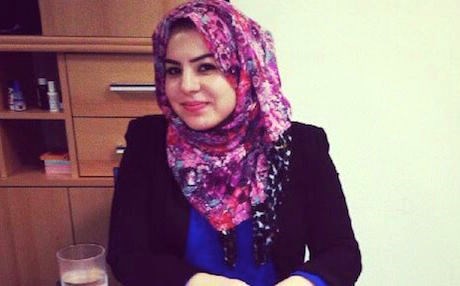
Ruwayda Mustafah is a Kurdish activist and PhD student at the University of Kingston. Her research focuses on the socio-political aspects of the Kurdistan region.
Kurdish leaders and politicians issued their own greetings on Sunday, honoring women throughout the region and calling for gender equality in Kurdistan.
“We celebrate this event at a time when our Kurdish Yezidi women have sacrificed their lives in Kurdistan’s ongoing war against ISIS, and terror,” Kurdistan Region President Massoud Barzani said in a statement.
The former prime minister of Kurdistan, Barham Salih, honored women’s day with a tweet: “#IWD, remember my mother saying women are not only half of society, but also mothers of (the) other half. Women rights are (the) essence of human rights.”
IWD is not a celebration of being a woman: it is a campaign to end gender inequality and violence, FGM, the trafficking of women, servitude and patriarchal attitudes towards them.
Last year, Islamic State (ISIS) militants seized control of Iraq’s second-largest city of Mosul, gaining swathes of territory. Their onslaught of Shingal, a predominantly Yezidi town, led to the massacre of thousands of men and the kidnapping of hundreds of women who were sold as sex slaves in Mosul and parts of Syria.
Also last year, a 15-year-old girl known as Dunya was brutally murdered and dismembered by her middle-aged husband in the Kurdistan Region. The case was rumored to have been settled through “blood money,” angering local activists.
The multiple instances of FGM reported in the region -- which the Kurdistan Regional Government has wholly banned -- and other gender-based discrimination and violence against women are issues that local activists continue to campaign against.
The struggle to end violence against women is not exclusive to the Kurdistan Region: in the past week alone, the United Kingdom has faced multiple cases of violence against women.
For example, 16-year-old Becky Watts was murdered, her body dismembered and dumped; 47-year-old Pennie Davis was stabbed to death in an effort to stop her from reporting a sexual assault, a jury heard; not to mention the bullying that led to 15-year-old Tonni Connel’s death.
Throughout the world women continue to face violence -- from the horrors of Boko Haram in Nigeria to the rape epidemic against women in India.
The brutal realities that women face globally highlights why #IWD2015 is still relevant and not just a Hashtag.
Ruwayda Mustafah is a Kurdish activist and PhD student at the University of Kingston. Her research focuses on the socio-political aspects of the Kurdistan region.
Comments
Rudaw moderates all comments submitted on our website. We welcome comments which are relevant to the article and encourage further discussion about the issues that matter to you. We also welcome constructive criticism about Rudaw.
To be approved for publication, however, your comments must meet our community guidelines.
We will not tolerate the following: profanity, threats, personal attacks, vulgarity, abuse (such as sexism, racism, homophobia or xenophobia), or commercial or personal promotion.
Comments that do not meet our guidelines will be rejected. Comments are not edited – they are either approved or rejected.
Post a comment