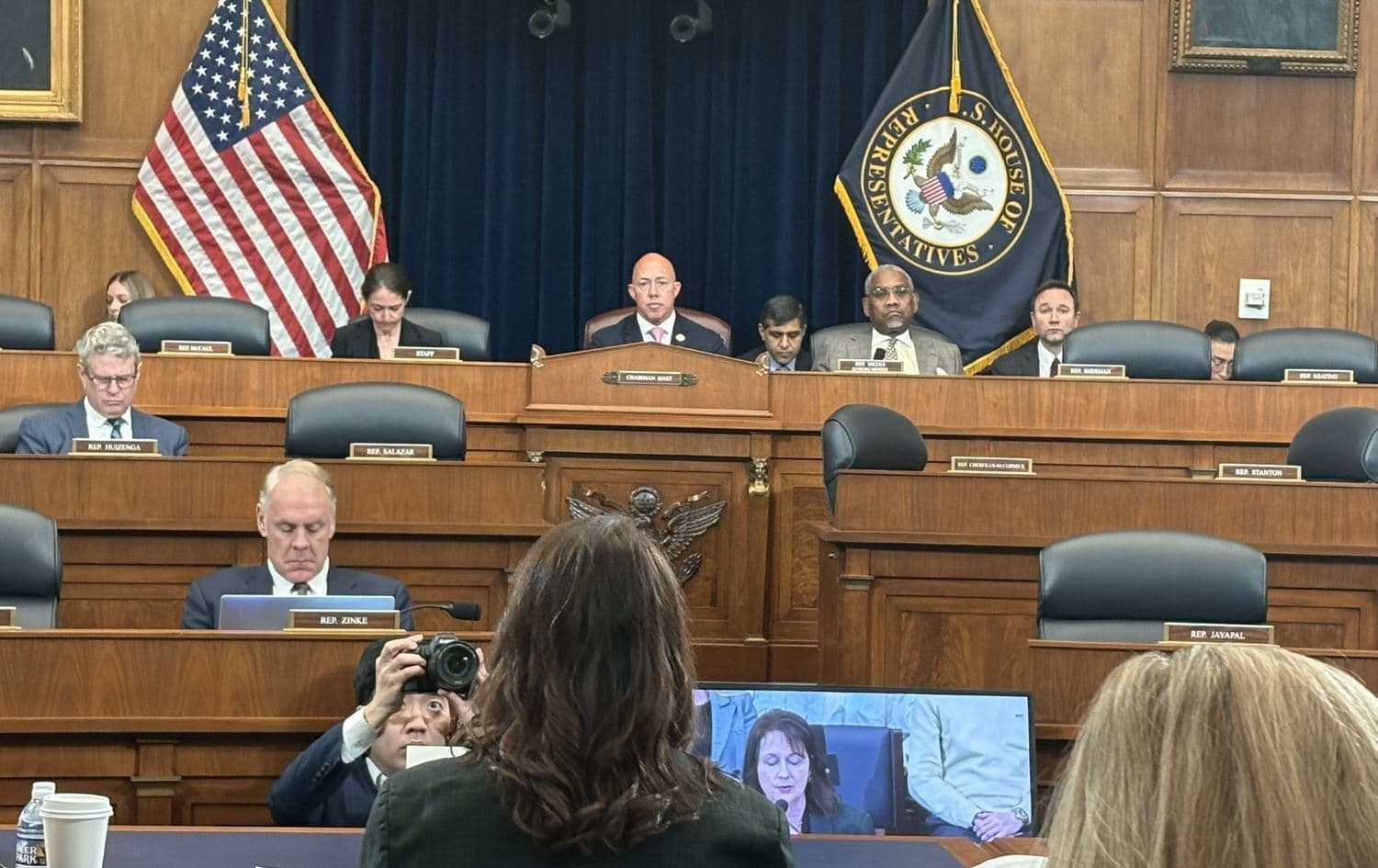

ERBIL, Kurdistan Region - Syria experts and US House Foreign Affairs Committee members expressed concern about stability and minority rights in Syria on Tuesday, with experts warning the country’s future is dependent on the Syrian government honoring an agreement to maintain a ceasefire and build an inclusive government.
Members of Congress at the hearing said they want to see stabilization in Syria and deeper US diplomatic engagement with Damascus but warned Congress could still reimpose sanctions over human rights violations.
The hearing focused on US policy challenges in Syria following atrocities committed against Syria’s Alawite and Druze minorities in 2025 and amid attacks by Syrian forces on minority groups, which seized Kurdish-held areas in January. The city of Kobane remains under siege and humanitarian groups are warning of a humanitarian crisis in the northeast.
Ongoing threats to minorities and human rights violations have raised alarm among lawmakers in Europe and Washington. Some members of Congress have threatened to reimpose sanctions that Congress lifted in November to support the country’s reconstruction and diplomatic ties.
Republican committee chairman Brian Mast noted that sanctions on former Syrian President Bashar al-Assad’s regime, known as the Caesar Act, were imposed for “systemic human rights abuses” under the Ba’athist regime.
“It might make sense for a lot of us to say there should be other sanctions against Syria and entities that work with Syria, but it won’t be right now” due to the Caesar Act being “specific” to the Assad regime, he said.
Alarm over human rights violations
Nadine Maenza, former chair of the US Commission on International Religious Freedom, warned that without stronger US policy protections, Syrian minorities are at risk of genocide over the next four years. She was echoing a stark assessment by Sam Brownback, a former US ambassador for international religious freedom, last week. Maenza said she received reports of sexual assault against Kurdish women and a gruesome video of fighters desecrating and executing Kurdish female fighters was shown at the hearing.
Democratic Representative Pramila Jayapal warned that "sanctions could be reimposed if the Syrian government doesn’t make adequate reforms.” She said Congress should be prepared to reimpose sanctions but must consider how restricting funds could impact the country’s fragile recovery.
Mara Karlin estimated that Syria needs $200 billion in reconstruction and that 90 percent of Syrians are living in poverty, warning that “people are going to find alternatives” if the economy is severely impacted.
Karlin and other experts pressed Congress to continue monitoring Syria’s human rights record and commitment to implementing a January 30 ceasefire agreement, which includes integrating Kurdish local governments in the northeast and the Kurdish-led Syrian Democratic Forces (SDF) into the Syrian military.
“This agreement has to work,” Mara said. “If it does not, we will see profound fragmentation, and it can perhaps push aside dreams of a new and prosperous Syria.”
Karlin said supporting Saudi Arabia and Europe reconstruction investments and pressing Damascus through diplomacy could also support wider US efforts to counter Russian influence in Syria “try to decrease the Russian presence.”
Maenza said the Syrian military includes senior officers sanctioned by the US for human rights abuses, including the 86 Division in Deir ez-Zor which Syrian forces seized from the SDF last month. Maenza said there should be “an enormous amount of pressure to remove these elements from the military.”
“The threshold for allowing violence should be unacceptable to the US,” she said, warning that an economic agreement is “not the way to reward this behavior.”
“A pragmatist will bend when they have pressure, so we’re not doing him any favors by giving [Sharaa] a high-5, by giving him unconditional support, by trying to raise him in the international community when you look at these atrocities that his troops are committing,” she said.
Syria embassy, representative suggested
Republican Representative Marlin Stutzman was among the lawmakers and experts pressing for the US to reopen its embassy in Syria with an independent representative. Tom Barrack, who helped negotiate the ceasefire agreement, currently serves as both US Special Envoy to Syria and Ambassador to Turkey, which experts said wields outsized influence over Sharaa’s government.
Former US Special Representative for Syria James Jeffrey cited New York Times reports stating that US agencies began working with Sharaa years before overthrowing Assad’s regime.
He reported that the ceasefire is holding and encouraged stronger diplomacy, as well as a possible continued military presence.
“It’s always best to have intelligence and troops on the ground,” Jeffrey said.
Andrew J. Tabler, a senior fellow at the Washington Institute for Near East Policy, said Damascus “is not safe.” He advised the US to press Sharaa and independently verify claims - such as Syrian fighters operating alongside troops - through diplomacy and experts who “have not been engaged.”
“We’re doing that from the top,” he said. “We need to do it in a more comprehensive way.”