


World

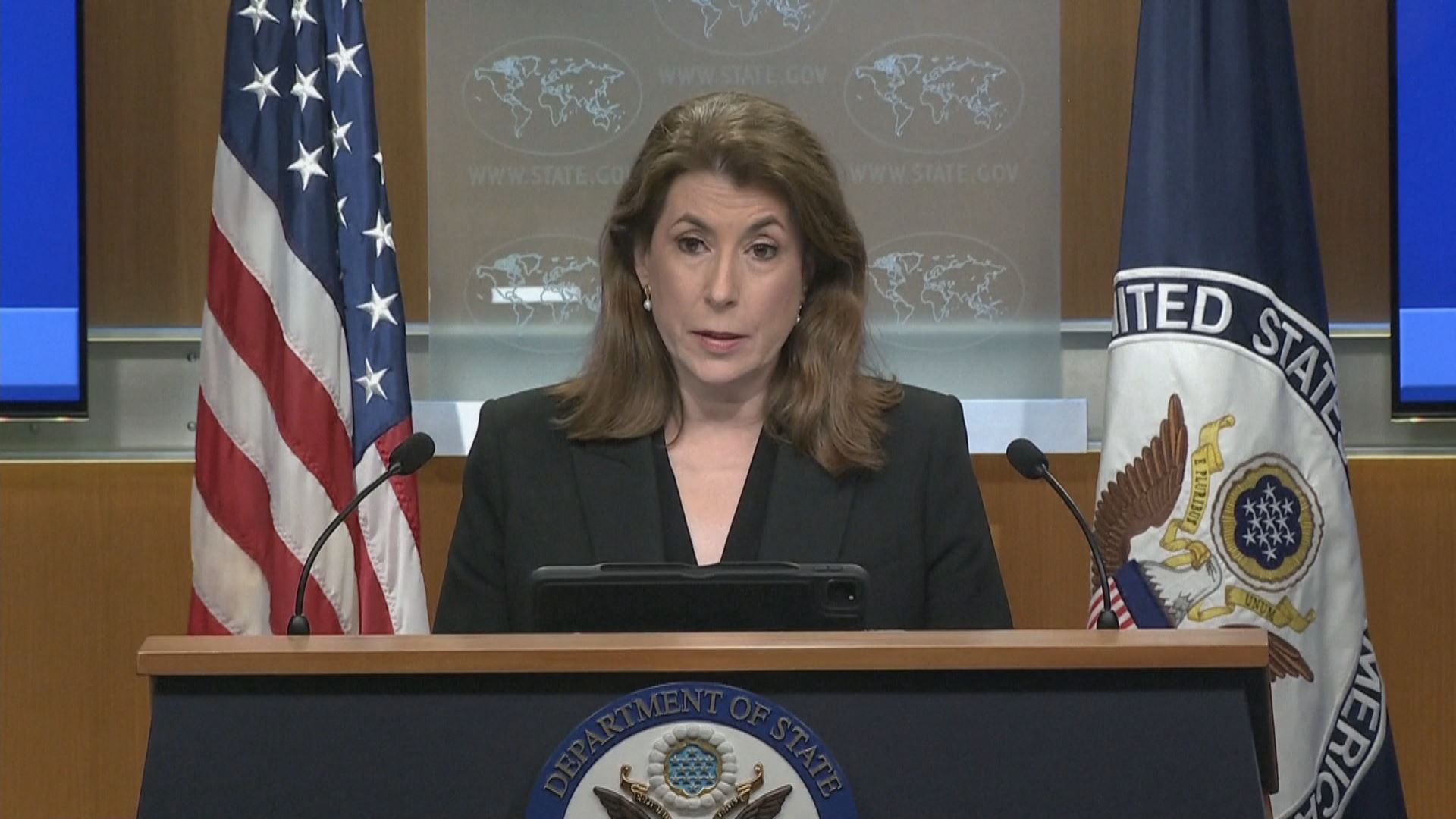
US State Department spokesperson Tammy Bruce speaks to reporters on June 11, 2025. Photo: Rudaw/Screengrab
WASHINGTON DC – The United States on Tuesday urged the Iraqi federal government and the Kurdistan Regional Government (KRG) to resolve disputes through dialogue, including Baghdad’s recent suspension of salaries for over a million civil servants in the Kurdistan Region. Washington also reaffirmed its commitment to a “strong and resilient” Kurdistan as a key component of its relationship with Iraq.
Speaking at a press briefing, US State Department spokesperson Tammy Bruce emphasized, “We urge Baghdad and Erbil to resolve their issues through constructive dialogue, consistent with their constitutional responsibilities.”
Bruce noted that resolving the salary dispute would not only signal political progress but also foster an environment conducive to foreign investment. “A successful resolution would send a signal that Iraq is creating an environment in which US companies would want to invest,” she said.
“It would also signal broader cooperation for the benefit of all Iraqis,” including opportunities for expanded energy exploration, including with US firms.
She also told Rudaw during the same press briefing that resolving Erbil-Baghdad dispute "will entice more companies to get involved in the area, making everyone’s lives in the region better."
Tensions between Baghdad and Erbil have intensified in recent weeks after the federal government halted budget transfers to the KRG.
Iraqi Oil Minister Taif Sami accused Erbil of exceeding its 12.67 percent budget allocation for 2025 by more than 13.5 trillion Iraqi dinars (approximately $10.34 billion), citing rulings from Iraq’s Federal Supreme Court that prohibit further disbursements under such circumstances.
The decision has left over 1.2 million public sector employees in the Kurdistan Region without pay, prompting strong condemnation from Kurdish parties, who have called the move politically motivated.
Earlier on Tuesday, Kurdistan Region Prime Minister Masrour Barzani sharply criticized Baghdad’s decision, calling it “unlawful, illegal, and unconstitutional.” He accused the federal government of using financial pressure to undermine the Region’s development.
“Iraq is a federal country, and the Kurdistan Region is a constitutional and legal entity,” PM Barzani said, asserting, “We will not give up our constitutional rights.”
Bruce said Secretary of State Marco Rubio has reiterated to senior Iraqi officials - including Prime Minister Mohammed Shia’ al-Sudani - and Kurdish leaders such as President Nechirvan Barzani and PM Barzani, “the importance of stability and prosperity in Iraq and the region.”
She reaffirmed that the US remains committed to supporting a “strong and resilient” Kurdistan Region, as “a crucial element of our relationship with Iraq.”
On the topic of Iran, US President Donald Trump had on Monday expressed skepticism over ongoing negotiations with Iran regarding its nuclear program, citing Tehran’s uranium enrichment demands as a major obstacle.
He confirmed that a new round of talks is scheduled for Thursday and warned that failure to reach an agreement could result in “very dire” consequences.
Commenting on the negotiations, the US State Department spokesperson told Rudaw during the presser that in light of the efforts exerted by the negotiators “leading the talks and handling the situation… we hope we can finally have some answers and some agreement.”
Indirect talks between the US and Iran - mediated by Oman - have been ongoing since April 12. The most recent round occurred on May 23.
The revived talks mark the most significant diplomatic engagement between the two countries since 2018, when Trump – during his first term in office - withdrew the US from the 2015 nuclear accord, formally known as the Joint Comprehensive Plan of Action (JCPOA).
Under the JCPOA, Iran agreed to limit its nuclear activities in exchange for sanctions relief. Following the US withdrawal and reimposition of sweeping sanctions, Tehran began gradually reducing its compliance.
A central sticking point in the ongoing negotiations is Iran’s uranium enrichment capabilities. While US negotiators are pushing for “zero enrichment” by Iran, Tehran maintains that this condition is a nonstarter.
Updated on June 11, 2025.


Comments
Rudaw moderates all comments submitted on our website. We welcome comments which are relevant to the article and encourage further discussion about the issues that matter to you. We also welcome constructive criticism about Rudaw.
To be approved for publication, however, your comments must meet our community guidelines.
We will not tolerate the following: profanity, threats, personal attacks, vulgarity, abuse (such as sexism, racism, homophobia or xenophobia), or commercial or personal promotion.
Comments that do not meet our guidelines will be rejected. Comments are not edited – they are either approved or rejected.
Post a comment