کوردیKURDÎENGLISHTÜRKÇEعربي
Rudaw Logo
Live
Kurdistan
Middle East
OpinionsAnalysisWorldECONOMYInterviewCultureMultimedia
Live
Rudaw

Download the Rudaw app

App StoreGoogle Play
Privacy Policy•Terms of Use

© 2026 All rights reserved.

Rudaw

Download the Rudaw app

App StoreGoogle Play
Privacy PolicyTerms of Use

© 2026 All rights reserved.

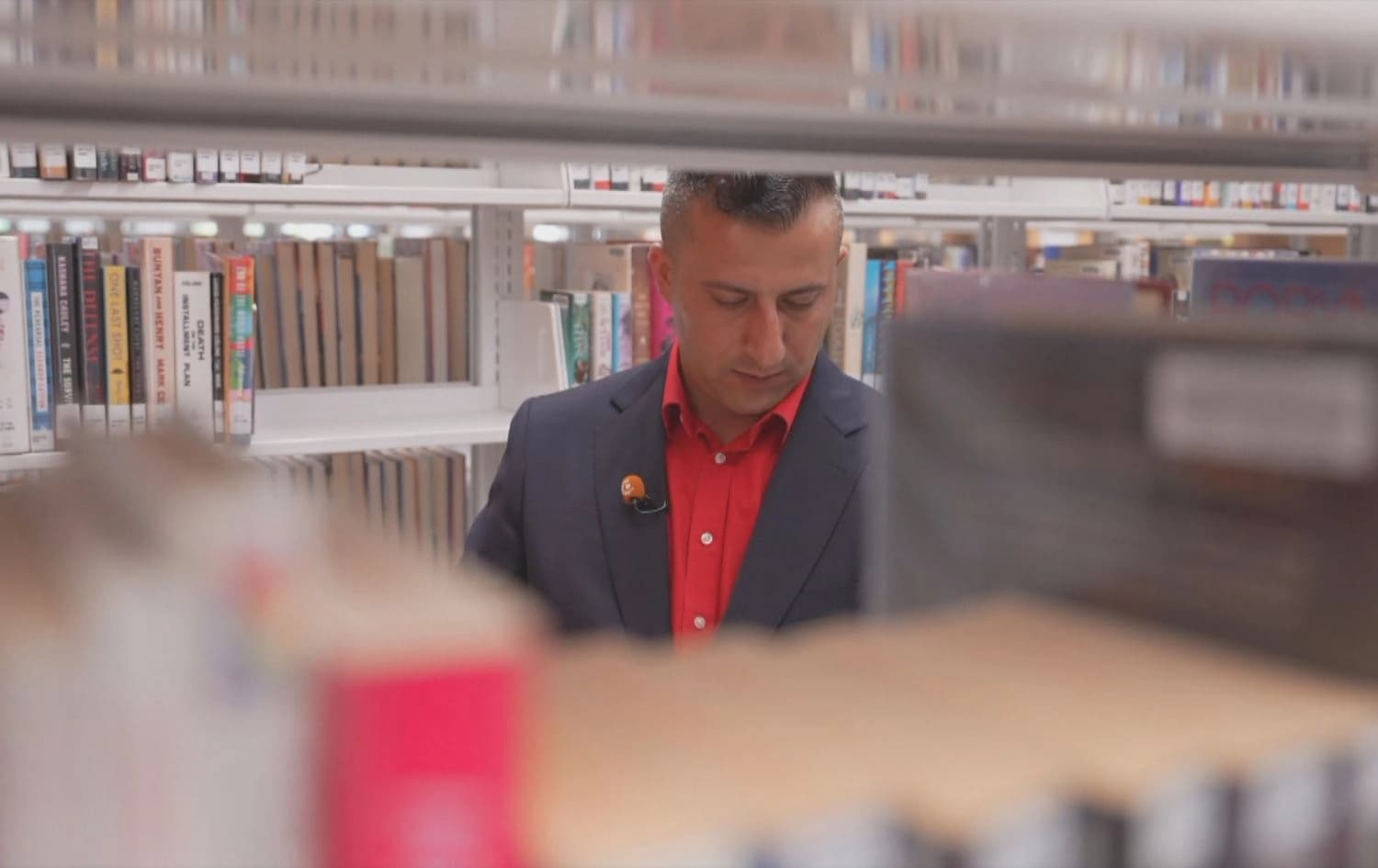
Newzad Brifki. Photo: Rudaw

Newzad Brifki. Photo: Rudaw

World

Author uses literature to document Kurdish tragedies

RUDAW English

RUDAW English

12-07-2025
Listen
0:00
0:00
Text Size
RUDAW English
RUDAW English12-07-2025

Related Articles

UN approves Canada-led resolution condemning Iran’s human rights record
World19-11-2026

UN approves Canada-led resolution condemning Iran’s human rights record

Washington conference explores grid capacity, AI integration in energy sector
World18-11-2026

Washington conference explores grid capacity, AI integration in energy sector

UN official backs Kurdish students’ protests for language rights in Rojava
World18-11-2026

UN official backs Kurdish students’ protests for language rights in Rojava

ERBIL, Kurdistan Region - A young Kurd who migrated to the United States to escape Saddam Hussein’s genocidal campaign is using the written word to document Kurdish tragedies and his personal struggles.

Newzad Brifki left his home in Duhok province with his family in 1988 during the previous Iraqi regime’s genocidal Anfal campaign against the Kurds. In 2017, he wrote his first book about Kurds and their quest for freedom.

“It was very important for me as a Kurd to tell this story, because Kurds, who number 40 to 50 million people, there are still people who do not know us. So it was important for me as a Kurdish-American writer to publish this so those who do not know the Kurds can know them,” Brifki told Rudaw’s Diaspora program that aired on Friday. 

In the late 1980s, the regime of Iraqi dictator Saddam Hussein launched its Anfal campaign. The brutal eight-phase military operation claimed the lives of more than 182,000 Kurds. The 1988 chemical attack on Halabja alone killed more than 5,000, mostly women and children, and injured thousands more.

In 2021, Brifki wrote another book, titled “War Can’t Stop Love: The Story of Two Lovers Through Conflict,” about a young Kurdish man from Duhok province who abandoned his education and took up arms to become a freedom fighter for a girl he loves, before migrating to Turkey and then the US. He later returned to Iraq to assist American forces during the 2003 US invasion. 

“Now it is only available in English, but God willing, in the future my intention is to translate it into Kurdish and other languages,” he said. 

Brifki is in the process of writing a third book, set to be published by next year. 

Diyar Kurda contributed to this report.
 

Related Articles

UN approves Canada-led resolution condemning Iran’s human rights record
World19-11-2026

UN approves Canada-led resolution condemning Iran’s human rights record

Washington conference explores grid capacity, AI integration in energy sector
World18-11-2026

Washington conference explores grid capacity, AI integration in energy sector

UN official backs Kurdish students’ protests for language rights in Rojava
World18-11-2026

UN official backs Kurdish students’ protests for language rights in Rojava

Questions