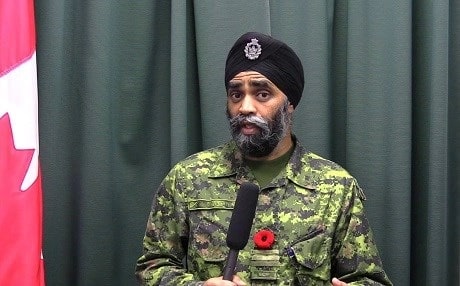

ERBIL, Kurdistan Region--The focus of the coalition’s fight against the Islamic State (ISIS) needs to change from airstrikes to ground combat, said Canada’s Defense Minister Harjit Sajjan on Sunday.
"When ISIL was in the open, you could target them," he told his country’s CBC radio in an interview. "Now the fight has gone into where you need to be able to define and find your target, and then be able to have that impact on the ground."
Sajjan argued that the war against ISIS could only be won by local ground troops.
"It has to be the Iraqi boots on the ground — if you don't have the boots on the ground, you cannot win," he said.
Canada currently has six CF-18 fighter jets in the war which the Liberal government in Ottawa is determined to withdraw.
Sajjan however, said that he would like to expand Canada’s training mission in the Kurdistan Region where 69 Special Forces advisors work with and train the Kurdish Peshmerga.
"Teaching [local troops] how to launch and repel attacks, and doing it in an environment that's close up is extremely important," the Canadian defense chief told CBC.
"We're fulfilling a very important need right now in the training mission ... having troops on the ground able to carry out operations on their own,” he explained.
Kurdish military officials have similarly praised the coalition air support, arguing in the meantime that more arms and ammunition is needed for the Peshmerga ground forces.
“The coalition fighter jets are very essential and have been of great support to the Peshmerga, but their main focus is the frontline and they do not attack ISIS deep inside its territory,” General Najat Ali, Peshmerga commander of the Makhmour front told Rudaw last month.
“The Peshmerga have gained good experience from fighting ISIS and if they are equipped with better arms, better technology and training, I believe, we can deal ISIS a fatal blow.” Gen. Ali added.